

03/03/2022
The Network of Local Entities for the 2030 Agenda strengthens alliances with universities to ensure progress on the SDGs.
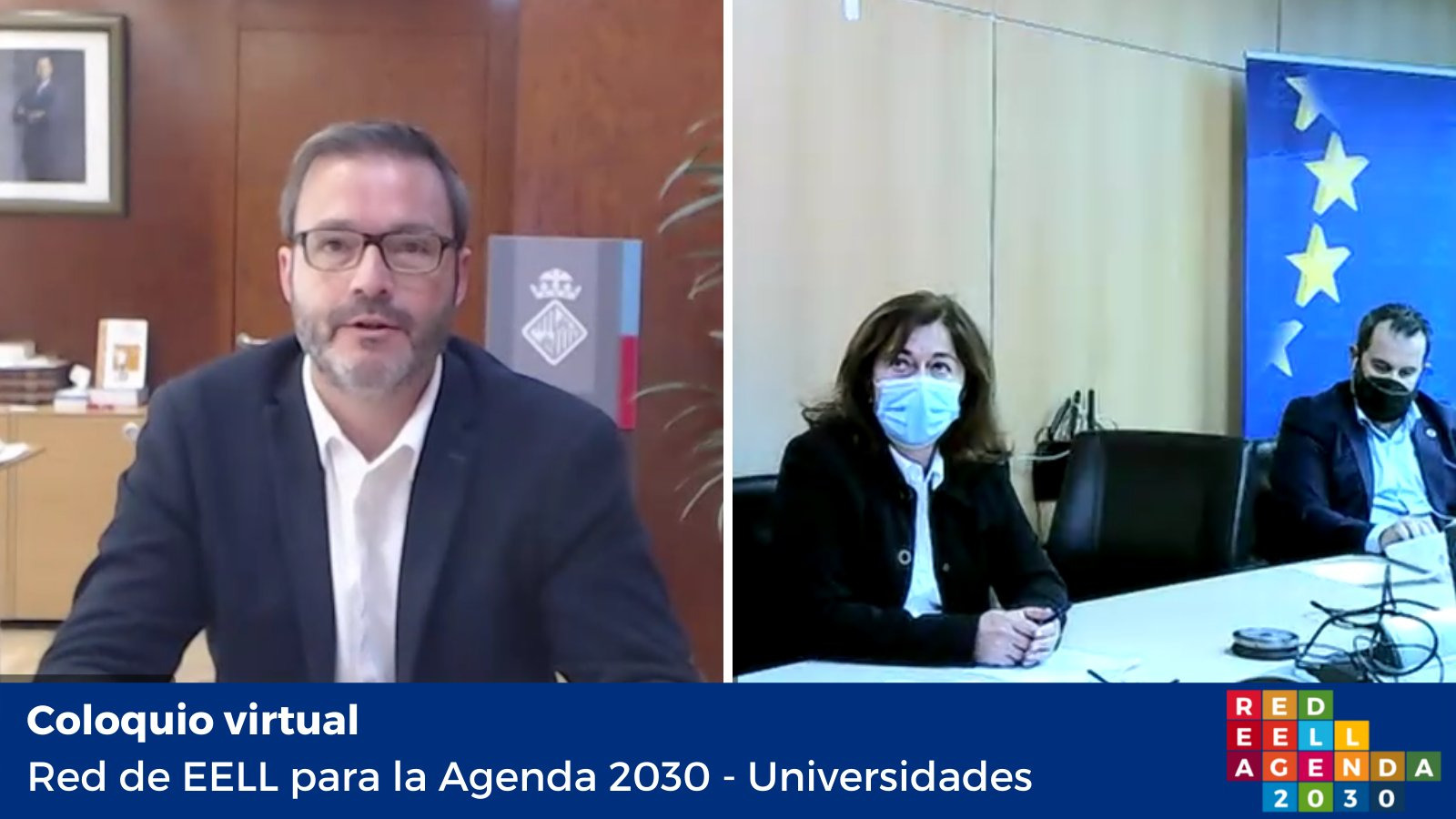
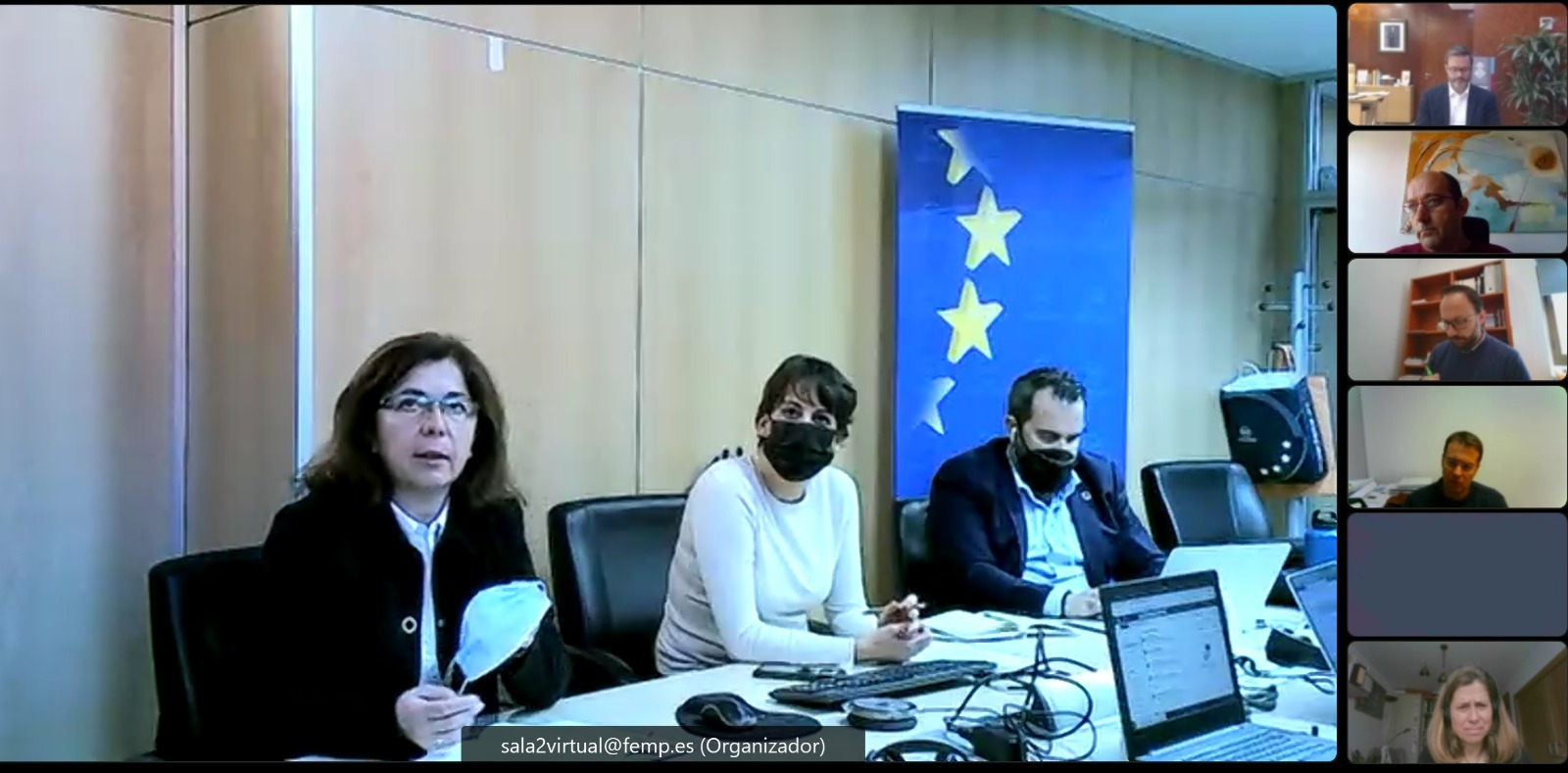
The Network of Local Entities for the 2030 Agenda continues to strengthen alliances with various social agents to ensure progress on the SDGs from a broader perspective. To this end, it has held a colloquium with various academic entities where multiple proposals aimed at addressing the transformative challenges presented by the 2030 Agenda have been heard.
“We want to work hand in hand with universities to implement the SDGs and sustainable development in our municipalities,” with this spirit of collaboration, José Hila, president of the Network of Local Entities for the 2030 Agenda, opened the colloquium. He also welcomed Gloria Pérez-Bustos and Carmen Martínez Escobar (Albacete Provincial Observatory of Sustainability, UCLM), Icíar Carmen Jiménez de Barandalla (Co-director of the UAM Impact Investment Master’s), Luis Carlos Martínez Fernández (Chief of Staff to the Rector, Territorial Projection and 2030 Agenda of the UVA) and Miriam Leiros and Isabel Rey (Coordinators of Teachers for Future).
The participants in the meeting have shown their unequivocal willingness to work, from their respective fields of action, to promote measures aimed at implementing the SDGs. An interest that the Network hopes to broaden with the adhesion of new collaborators to “establish connections and synergies,” an idea that has been emphasized by Teachers for Future: “It is about being an umbrella for synergies between universities and educational centers.”
The ultimate goal is to create a broad front of cooperation that, from the proximity of municipalities and academic entities to citizens, outlines a roadmap to guarantee the successful implementation of the SDGs in public policies. In this regard, Gloria Pérez-Bustos and Carmen Martínez Escobar have highlighted the importance of local and provincial action to achieve the established objectives.
“We want universities to help transform, and the SDGs to help us transform,” said Luis Carlos Martínez, taking on the challenge of undertaking the innovations that the 2030 Agenda poses for universities, and especially for rectorates. The other speakers expressed similar sentiments, asserting the role of academic entities as essential agents for the dissemination and generation of knowledge.
Progress on the SDGs requires all agents of our society. Therefore, the Network of Local Entities for the 2030 Agenda calls for the involvement and commitment of the academic sector to consolidate the foundations and progression towards a sustainable society. The colloquium concluded with the proposal for new meetings to share experiences of academic action with the affiliated Local Entities.