

16/11/2022
The Network of Local Entities for the 2030 Agenda celebrates its 3rd Assembly
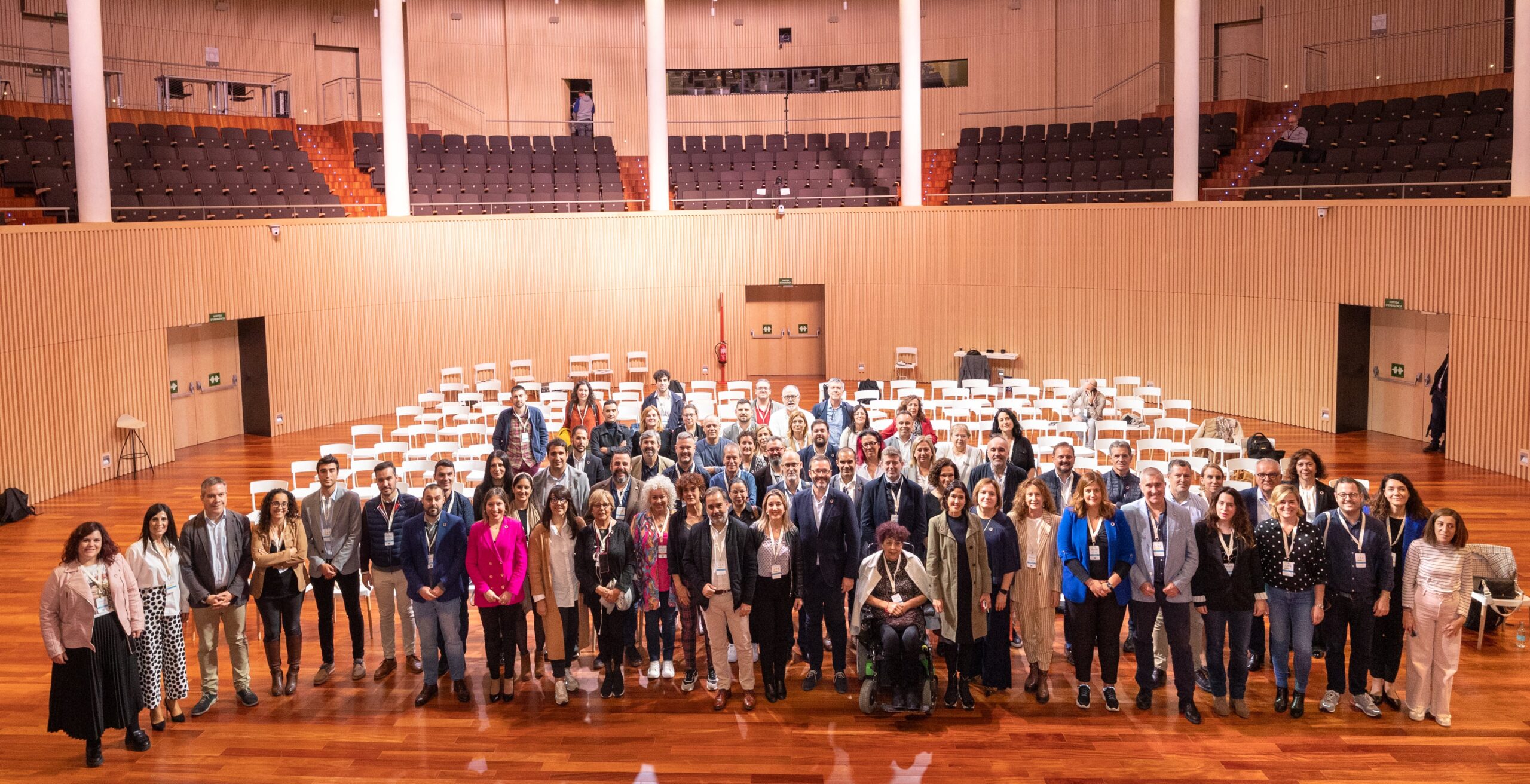
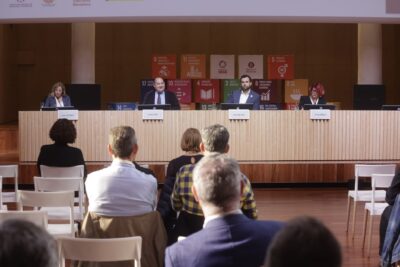
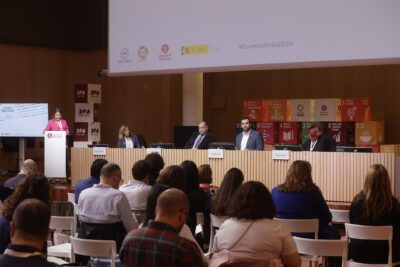
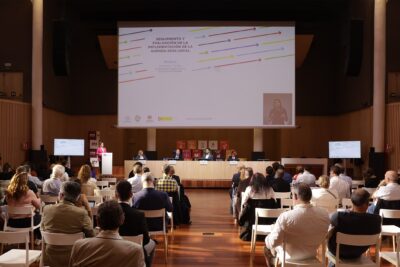
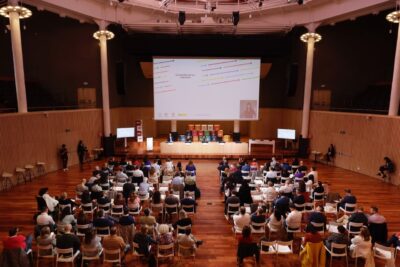
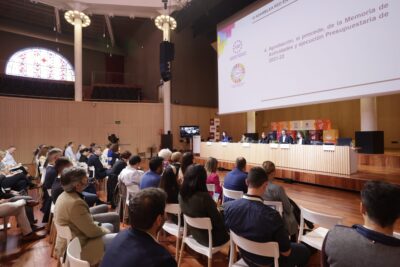
The final session of the Conferences on Municipal Leadership with the 2030 Agenda, organized by the FEMP and the Barcelona Provincial Council, was held this morning at the Paranimf of the Industrial School in Barcelona, leading into the Network’s 3rd Annual Assembly.
Monitoring and evaluation
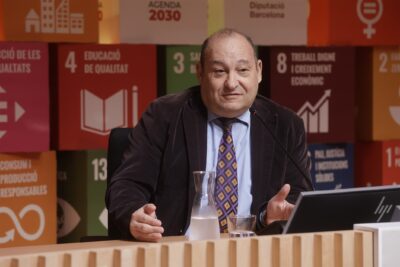
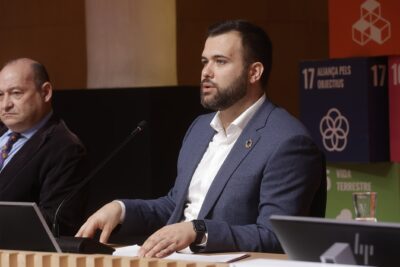
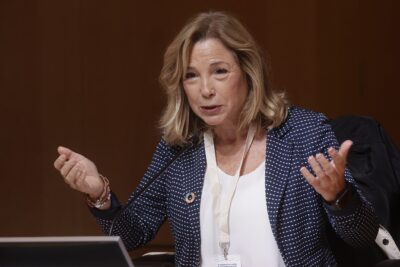
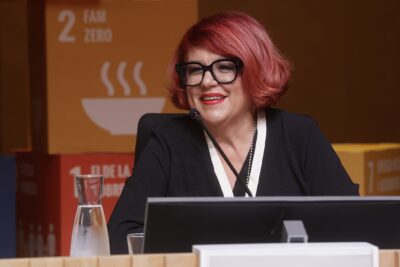
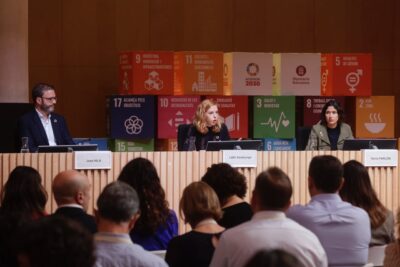
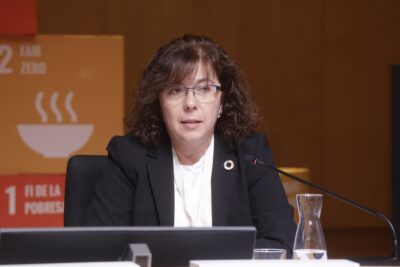
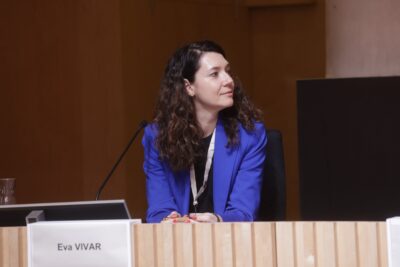
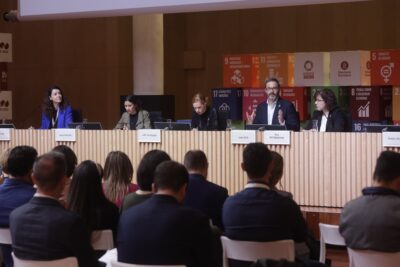
The final panel focused on presenting the experiences of various Local Governments regarding the monitoring and evaluation of the local implementation of the 2030 Agenda. Participants included Carles Ruiz, Deputy for Human Resources, Finance, and Internal Services of the Barcelona Provincial Council and Mayor of Viladecans (Barcelona); Teresa Muela, Secretary General of the Andalusian Federation of Municipalities and Provinces; Joana Ortega, Secretary General of the Catalan Association of Municipalities; and Luis Salaya, Mayor of Cáceres and President of the FEMP SDG 2030 Agenda Commission. The meeting was moderated by Amparo Torres, Second Vice-President of the Albacete Provincial Council and member of the Governing Board of the Network of Local Entities for the 2030 Agenda.
Torres opened the discussion by speaking on the transformative role of Local Entities and the need for clear indicators to monitor and evaluate the challenges we face as a society.
For his part, Carlos Ruiz emphasized the urgency of changing instruments to develop strategic plans, as the new model is global. In this regard, Ruiz explained that the two major challenges for Viladecans are climate neutrality and becoming the first municipality with less inequality and an increase in income, a goal they achieved last week.
From the FAMP, Teresa Muela addressed the role of supra-local entities in providing instruments to City Councils, aligning objectives with higher levels of administration, such as the Central Government and the European Union. “We are the network of networks for municipalism. We must continue to raise awareness for action,” she stated.
Representing another networked body, Joana Ortega cited the Rural Agenda of Catalonia as an example, carried out by the ACM, the region’s largest municipal network. In its municipalist agenda, she explained, there are three priority challenges: the fight against the climate emergency, quality of life, and economic prosperity.
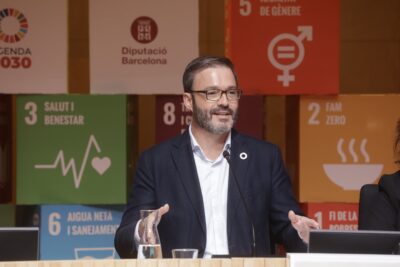
Finally, Luis Salaya detailed the limitations of Local Governments in self-evaluating the actions they carry out in terms of SDGs: “We have very good systems for self-evaluating effort, but self-evaluating results is more difficult: we lack quality indicators that are constant, comparable, and homogeneous across the territory.” He also highlighted the capacity to develop local projects beyond the large investments of the European Administration.
Conclusions and closing
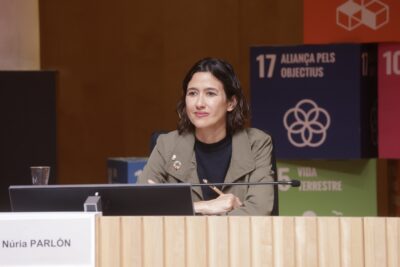
Núria Parlón, Fourth Vice-President and Deputy for Participation Policies, 2030 Agenda, and SDGs of the Barcelona Provincial Council, and Mayor of Santa Coloma de Gramenet (Barcelona); Carmina Ballester, Mayor of Onda (Castellón); and Olga Arnau, President of the Federation of Municipalities of Catalonia and Mayor of Vilanova i la Geltrú (Barcelona), were responsible for reading the final conclusions of these conferences in a declaration reflecting the commitment of local action to the principles of the 2030 Agenda within current realities and challenges.
Finally, the President of the Network of Local Entities for the 2030 Agenda, José Hila, the Secretary of State for the 2030 Agenda, Lilith Verstrynge, and Núria Parlón closed the sessions, expressing gratitude for the participation and attendance, as well as the work of the local technical teams, who are the ones driving the work on the SDGs.
The Secretary of State declared that “The 2030 Agenda is an agenda for the future, and municipalism is the best way to bring politics closer to the people and restore their desire to get involved and raise awareness”; in this sense, Verstrynge praised the effort of Local Governments, considering it “pioneering, having recognized very early the need to implement the SDGs and the principles of the 2030 Agenda on the ground.”
3rd Assembly
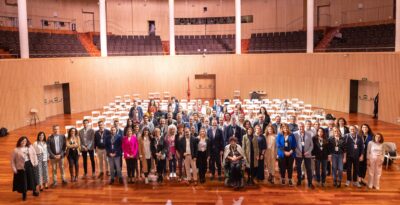
Following the conferences, the members of the Network of Local Entities for the 2030 Agenda held the 3rd Annual Assembly, where the management report and budget for November 2021 to October 2022 and the action plan for 2023-2024, as well as its budget, were approved. The next assembly has been scheduled for the first quarter of 2024, with the priority objective of giving visibility to local initiatives implementing the 2030 Agenda. All of this must be approved by the FEMP Governing Board.
Download the conference conclusions