

Good practices
HEROCOMPOST
El Hierro Island Council
Initiative Description
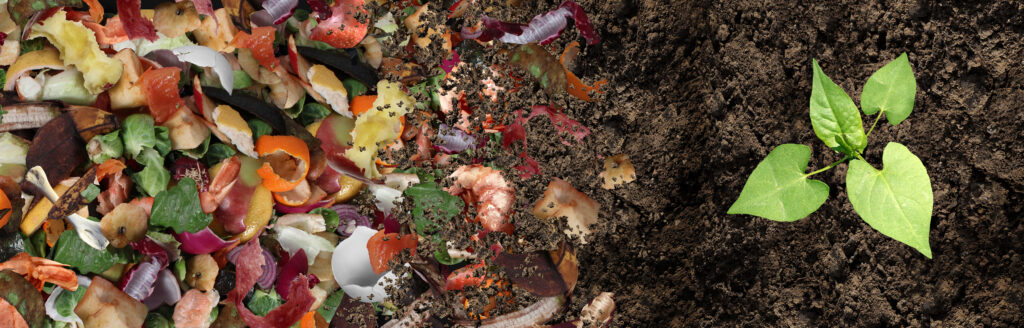
The island of El Hierro aims to reduce waste and promote the utilization of organic matter. Through the HEROCOMPOST project, a network has been created to encourage decentralized composting across the island.
This program was launched in 2021, promoting the separation and recycling of bio-waste in homes and communities, as well as in educational and health centers and private companies.
In addition to reducing waste levels on the island, the initiative seeks to raise public awareness about the need to boost the circular economy in the territory. Future steps include the expansion of the project for the construction of a composting plant on the island.
The project’s priority action areas are:
- Minimization of disposable products (Waste Management Master Plan or PDIR Prevention Program).
- Reintroduction into the production chain of the largest possible quantity of materials contained in the waste generated in each and every activity carried out on the island, specifically municipal waste (PDIR Management Plan).
Execution Period
From 2021 to 2025.
Methodology
The methodology for carrying out the project has been developed by the Environment Department of the El Hierro Island Council, which has coordinated and facilitated the cooperation of all involved stakeholders.
Stakeholder Involvement and Alliance Building
At the beginning of the initiative, a framework document was drafted specifying the participating stakeholders and their respective roles and responsibilities. Currently, the initiative involves citizens and collaborates with schools, high schools, nursing homes, hotels, among others, where community composting is proposed as the best option for organic matter recycling. Involved stakeholders separate organic matter from their waste and reuse this material as compost through composting. In less than 3 years, they have prevented more than 50 tons of organic waste from ending up in landfills, generating 10 tons of compost for gardens and orchards on the island.
What elements should be considered for the replicability of the initiative in another Local Entity?
The optimal conditions for the replicability of this project are based on the involvement of different stakeholders and the degree of involvement of public services. Furthermore, continuous monitoring of the project, an information, awareness, and self-composting education plan, and the implementation of a public policy are essential.
Triple Impact: Is the project environmentally, economically, and socially sustainable?
The project’s success lies in its clear triple impact on the island: it generates economic benefits by saving transportation costs to the landfill, creates social value by involving citizens and businesses, and is environmentally sustainable.
Results, Measurement, and Impact
The impact and reception of the project are very positive. Measurements of the project’s impact and evolution are carried out annually by the Environment Department of the El Hierro Island Council.
In qualitative terms, the development of this project has led to the achievement of various objectives, detailed below:
- Engaging citizens through education and communication to improve collection rates through self-composting.
- Ensuring that domestic and community composting becomes standard practice in household waste management.
- Informing, raising awareness, and disseminating information about the benefits of compost and the importance of classifying and reducing waste.
- Creating an island-wide network of educational centers that improves governance in bio-waste management through domestic composting and
Reducing the kilograms of organic matter introduced into the Dehesa Environmental Complex.
View more casesLocal Entity name: El Hierro Island Council
Province: Santa Cruz de Tenerife
Autonomous Community: Canary Islands
Number of inhabitants: 11.423
Contact person: Mateo Padrón. Project Coordinator. Email: residuos@elhierro.es
SDGs involved: