


29/10/2026
The Network Addresses Local Policy Coherence through the 2030 Agenda in Huesca
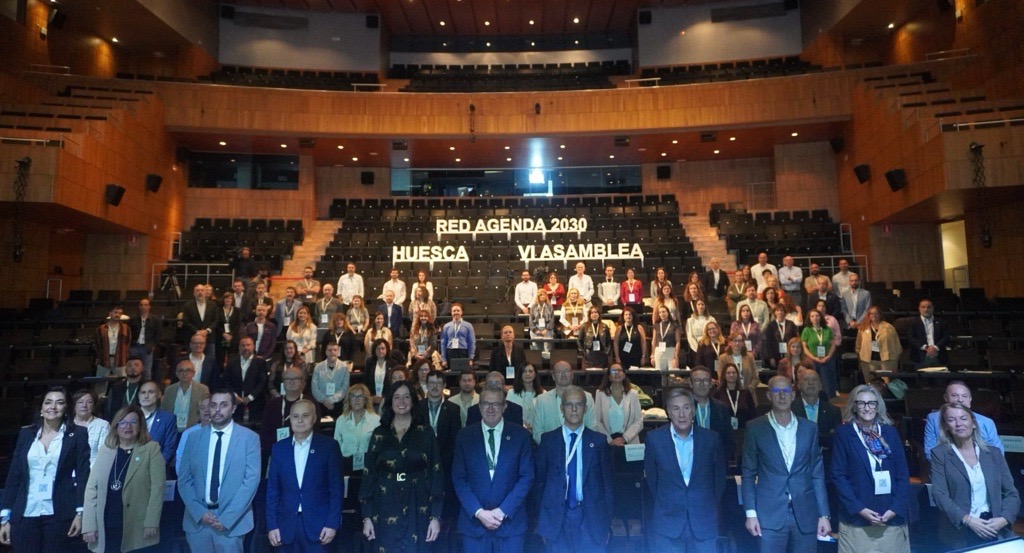
Huesca, 28 October 2026 – The Network of Local Authorities for the 2030 Agenda for Sustainable Development brought together political representatives and technical staff from municipalities and local authorities across Spain in Huesca to share experiences and advance a more coordinated, participatory model of public governance capable of responding to the challenges facing each territory.
Under the theme “Promoting Policy Coherence at the Local Level through the 2030 Agenda”, the event held on 28 October focused on cooperation between administrations, youth participation, and the role of Voluntary Local Reviews (VLRs) as tools for evaluating and improving public policies.
Institutional Opening
The meeting began with a minute of silence for the victims of the railway accident that occurred in the province of Toledo, before proceeding to the institutional opening session.
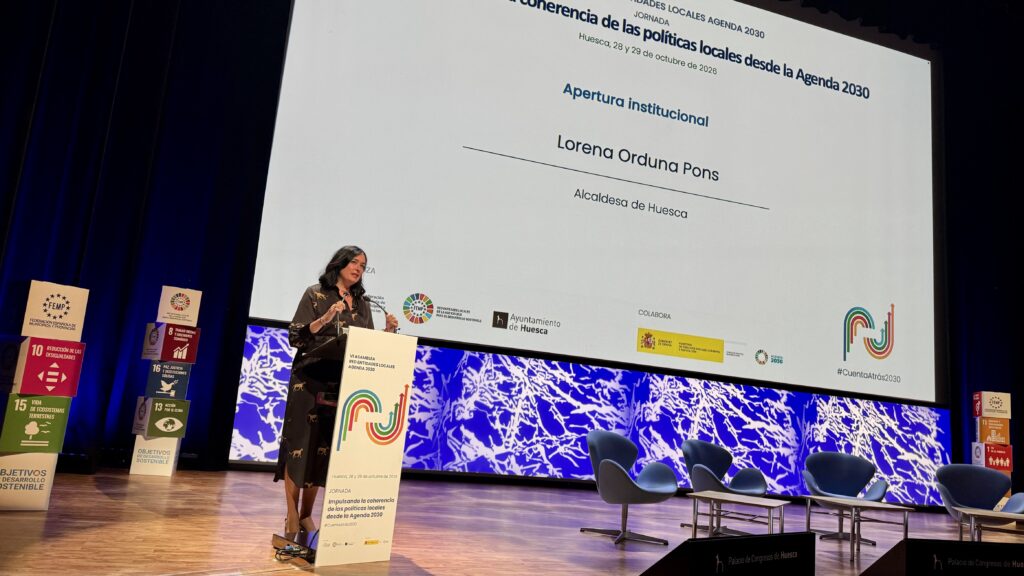
Lorena Orduna, Mayor of Huesca and Second Vice-President of the Network, advocated for a vision of sustainability that integrates environmental, economic, and social dimensions while considering the specific characteristics and needs of each territory.
“Sustainability must, above all, be an opportunity to improve people’s lives,” she stated.
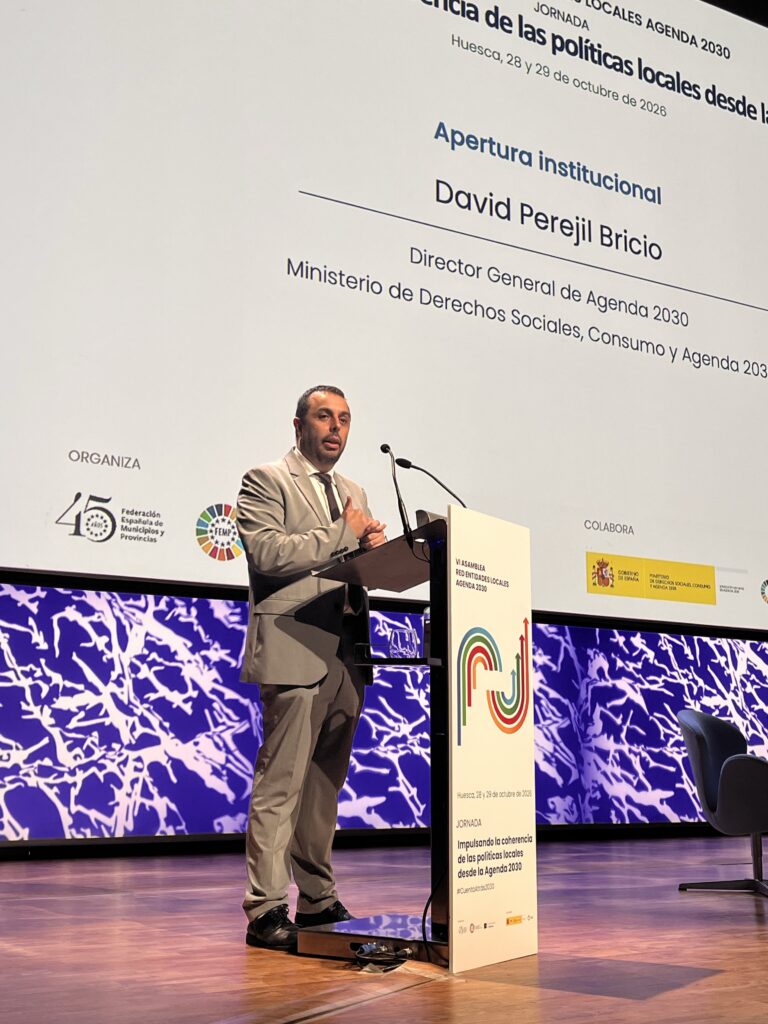
David Perejil, Director-General for the 2030 Agenda, highlighted the leadership of municipalities in localising the Sustainable Development Goals (SDGs) and the need to advance greater policy coherence by integrating different agendas and jointly addressing sustainability and development.
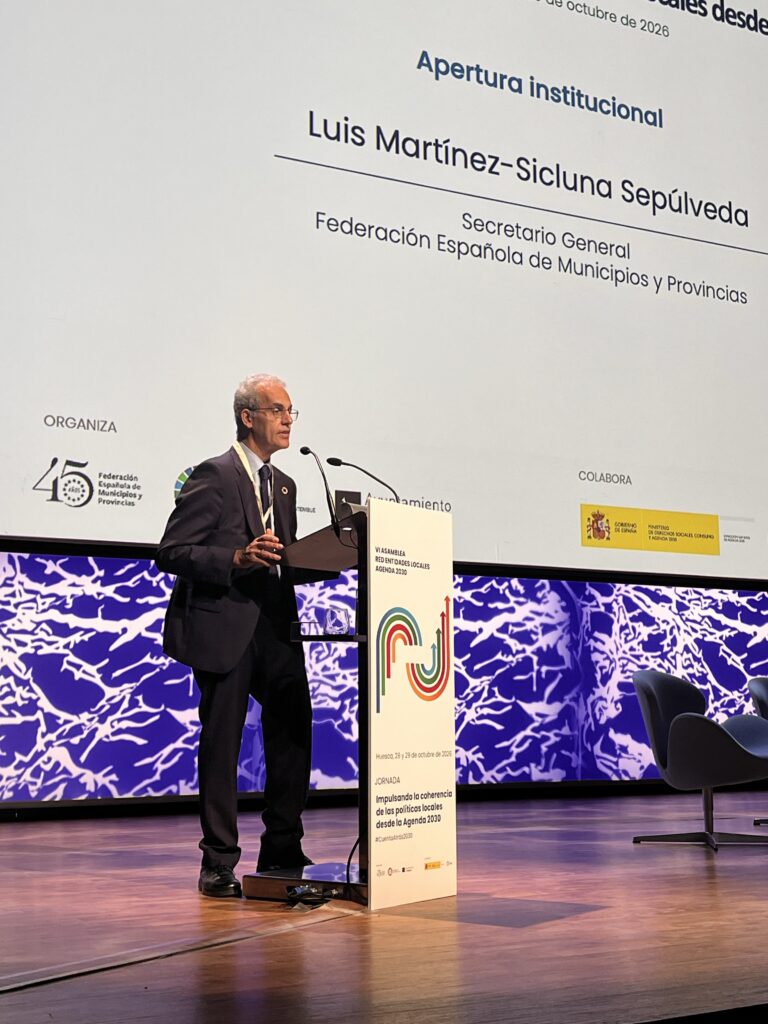
Luis Martínez-Sicluna, Secretary-General of the Spanish Federation of Municipalities and Provinces (FEMP), stressed the need to strengthen coordination among administrations and enhance the capacities of local governments.
“Sustainable development cannot be built by a single administration. We need policy coherence, cooperation among administrations, and partnerships with the stakeholders who know and help transform each territory,” he affirmed.
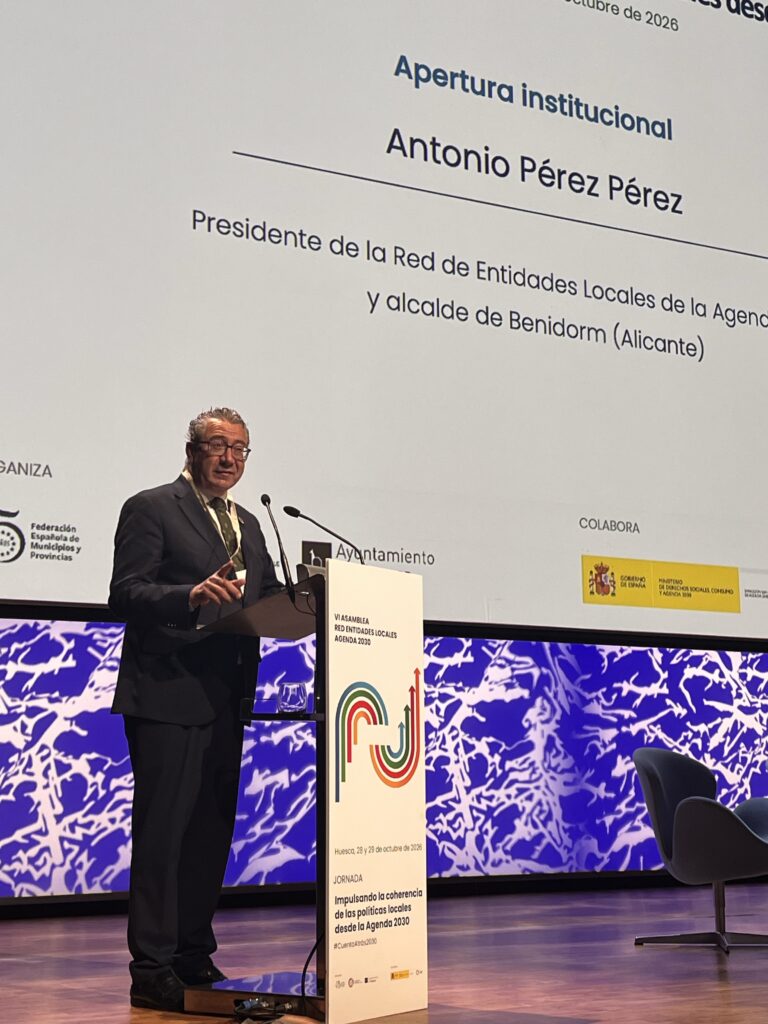
Antonio Pérez, President of the Network and Mayor of Benidorm, highlighted the growth and value of a Network that now brings together 855 local authorities, enabling experiences developed across different territories to be transformed into shared knowledge.
Cooperation Between Administrations
Following the opening session, the first roundtable addressed “Policy Coherence at the Local Level in a Multilevel Governance Context.”
Moderated by Ángel Viveros, First Vice-President of the Network and Mayor of Coslada, the discussion underscored that many of the main challenges facing towns and cities require coordinated responses from local, regional, national, and European administrations.
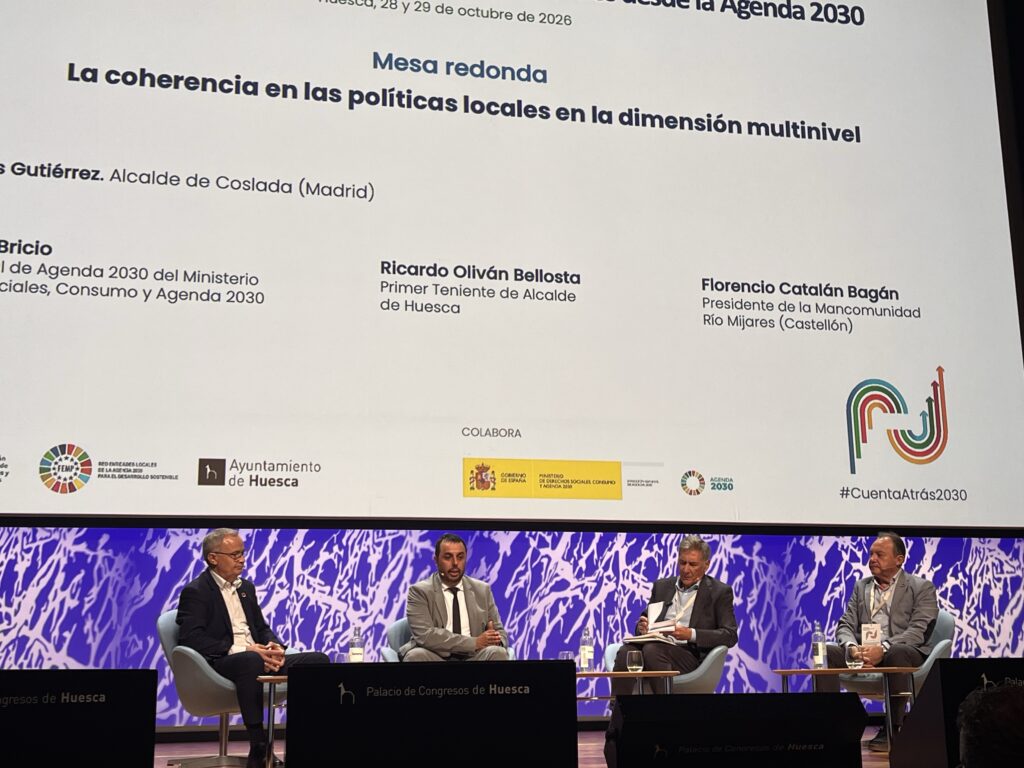
David Perejil presented policy coherence as a tool for improving public management, linking areas such as procurement, budget planning, and social, economic, and environmental policies.
Drawing on Huesca’s municipal experience, Deputy Mayor Ricardo Oliván shared several urban greenings and pedestrianisation projects developed in the city and emphasised the importance of planning, technical capacity, and clear objectives in making the most of intergovernmental cooperation opportunities.
Florencio Catalán, President of the Río Mijares Commonwealth, described the reality of small rural municipalities, where sharing services and resources enhances the ability to address challenges such as depopulation, ageing, environmental management, and sustainable tourism development.
Participants in the panel shared a common conclusion: multilevel cooperation enables administrations to combine capacities, make better use of available resources, and develop responses tailored to diverse territorial realities.
The Role of Youth
The second panel of the morning focused on “Youth Engagement in Local 2030 Agenda Policies.”
Moderated by Mónica Mercedes Arceiz, Mayor of Calahorra, the session showcased a range of youth participation initiatives promoted at the local level.
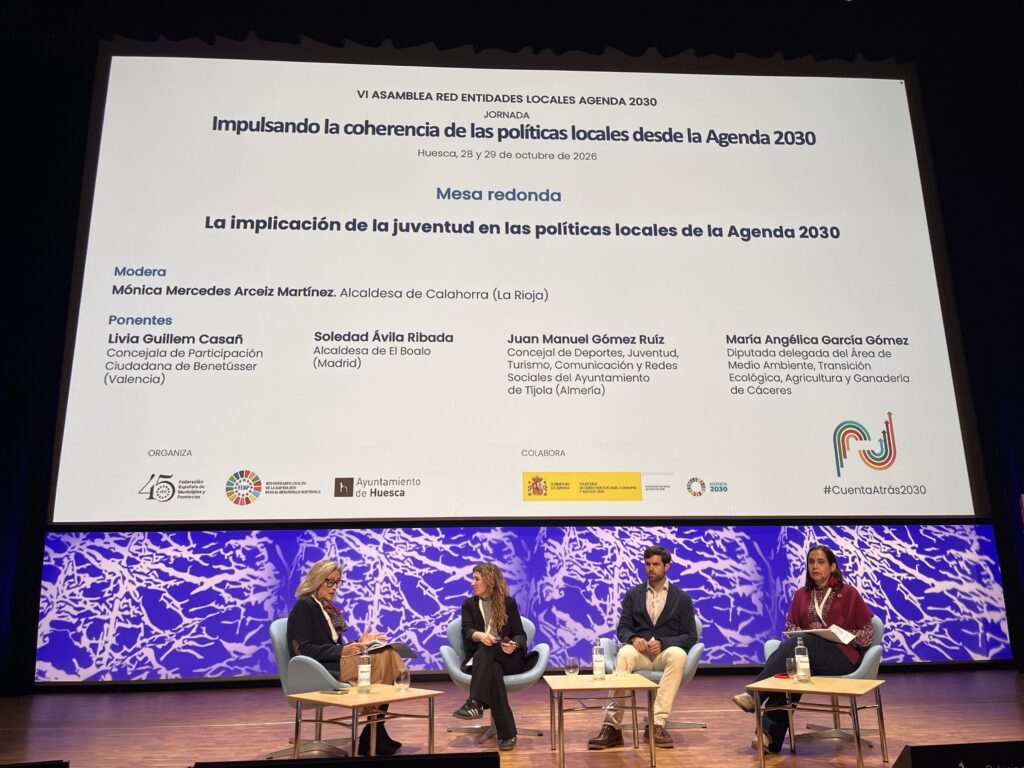
Livia Guillem, Councillor for Citizen Participation in Benetússer, presented the project “Out of Coverage”, developed in the context of post-DANA reconstruction efforts. The initiative enabled young people aged 18 to 25 to identify spaces, resources, and needs related to their well-being, incorporating issues such as emotional health, communication, and peer education.
Representing the municipality of Tíjola, home to around 3,500 inhabitants, Youth Councillor Juan Manuel Gómez explained how volunteering, collaboration with schools, self-managed spaces, and intergenerational activities can strengthen young people’s engagement and sense of belonging within their communities.
María Angélica García, member of the Provincial Council of Cáceres, addressed the need to guarantee opportunities for young people regardless of the size or location of their municipality, particularly in rural and dispersed territories.
The experiences presented demonstrated that youth participation is most effective when there are genuine spaces for listening and when young people’s proposals are reflected in public decision-making and action.
Voluntary Local Reviews as a Tool for Improvement
The morning continued with a panel devoted to “Policy Coherence at the Local Level through Voluntary Local Reviews.”
Moderated by Javier Francisco Cainzos, Mayor of Curtis, the panel examined experiences from Alhaurín de la Torre, Rafelbunyol, and Alcobendas.
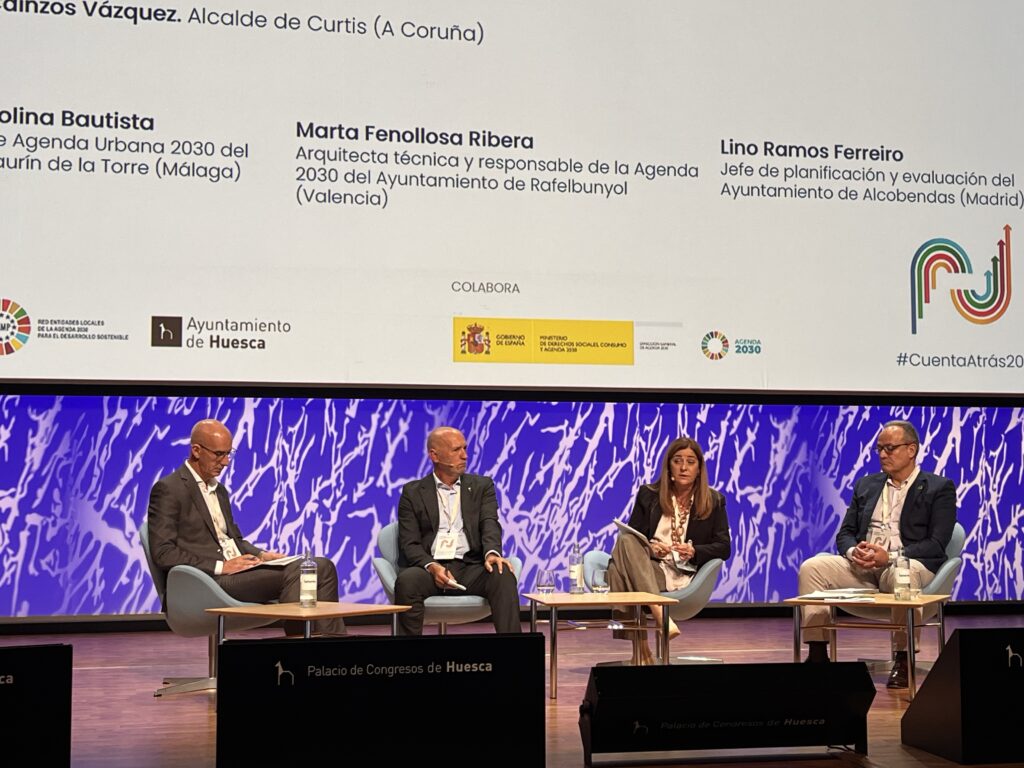
The presentations highlighted the value of Voluntary Local Reviews not only as instruments for monitoring the SDGs, but also as tools for planning, evaluating, and guiding municipal policies.
José Manuel de Molina, Councillor for the Urban Agenda 2030 in Alhaurín de la Torre, stressed the importance of strategic planning capable of extending beyond electoral cycles, engaging different municipal departments and incorporating citizen participation.
Marta Fenollosa, Head of the 2030 Agenda for the Municipality of Rafelbunyol, described the town’s experience in preparing its Voluntary Local Review and linking it to the local 2030 Agenda observatory. Her intervention highlighted the importance of interpreting and sharing indicators to assess progress and identify areas for further improvement.
Lino Ramos, Head of Planning and Evaluation at the Municipality of Alcobendas, demonstrated how data analysis can reveal disparities and needs within a municipality itself, helping to target public priorities more effectively.
All three experiences shared a common understanding of Voluntary Local Reviews as living tools: mechanisms that help local authorities better understand their realities, assess implemented policies, and use available information to make better decisions.
Programme for 29 October
Following the tragic railway accident and the declaration of national mourning, the Spanish Federation of Municipalities and Provinces (FEMP) cancelled the programme scheduled in Huesca for Thursday, 29 October. The programme had included additional experience-sharing sessions and the 6th Assembly of the Network of Local Authorities for the 2030 Agenda.
Through the FEMP and the Network of Local Authorities for the 2030 Agenda, we extend our deepest condolences to the families and loved ones of the victims, as well as our solidarity with all those affected and our recognition of the emergency services and professionals involved in the response effort.
The 6th Assembly of the Network of Local Authorities for the 2030 Agenda will be held virtually on 6 November at 9:00 a.m.


