

14/02/2023
Citizen Participation and Local Governance in the 2030 Agenda, Debated in Onda
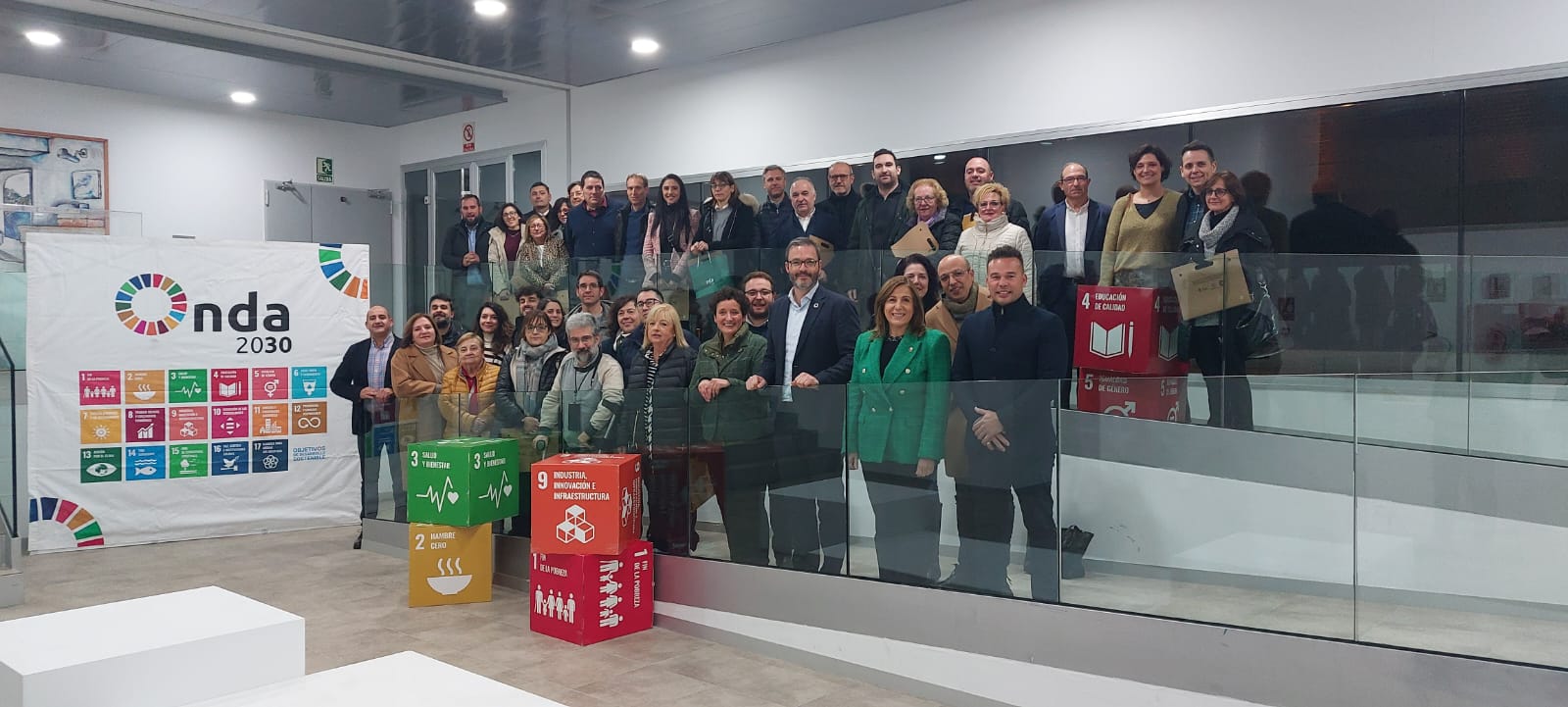
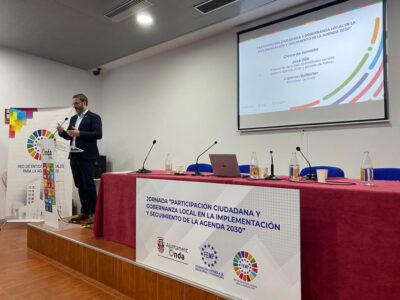
The municipality of Onda hosts a conference on “Citizen Participation and Local Governance in the Implementation and Monitoring of the 2030 Agenda”, discussing how Local Governments within the Network are adopting the 2030 Agenda as an opportunity to engage with citizens, highlight their contribution and commitment to sustainable development, and are therefore integrating the SDGs into their strategic planning and local policies. This approach generates innovative projects aimed at achieving sustainable, comprehensive, equitable, and inclusive development, driving the necessary transformation from the bottom up.
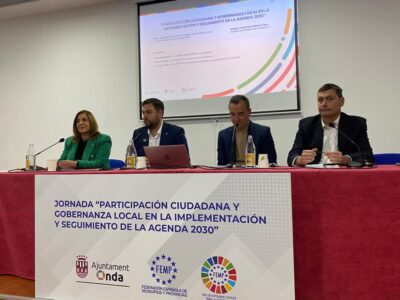
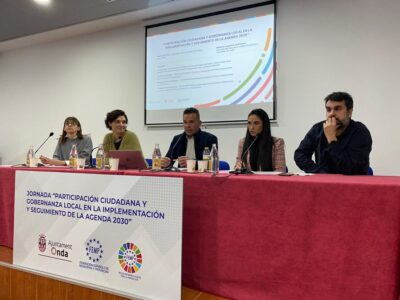
Citizen participation and local governance are key to the development and implementation of the 2030 Agenda. However, their implementation and monitoring are not homogeneous, as they must adapt to the needs and realities of each municipality. For this reason, the Spanish Federation of Municipalities and Provinces, the Network of Local Entities for the 2030 Agenda, and the Onda City Council (Castellón) decided to address this issue through a conference held on February 2nd at the Manolo Safont Tile Museum in Onda. The event aimed to share and highlight a coordinated working approach, promoting new, more inclusive and participatory governance systems, where business, social, and territorial agents participate in decision-making, and citizens play an active role in shaping our policies. During the conference, experiences will be shared that can assist us in our commitment to implementing the 2030 Agenda from a local perspective.
The event featured the participation of mayors from various municipalities in the Valencian Community, who presented their own cases to illustrate how citizen participation and local governance successfully work together to implement and evaluate the achievement of their respective 2030 Agenda action plans. The first step, the speakers agreed, is education and awareness.
“We work to instill in citizens and our own officials the meaning of belonging and committing to the implementation of the SDGs and the 2030 Agenda, which result in benefits for society and citizens and, above all, for a better world,” stated Susana Marqués, Mayor of Benicàssim. From there, the key lies in setting objectives that, while having a global impact, must be localized so that citizens understand that they “can contribute their grain of sand” to the 2030 Agenda and that it is, in fact, fundamental. For this reason, since launching the ’17 objectives, 17 months’ initiative, based on the SDGs, the Benicàssim City Council has carried out various educational and citizen participation initiatives, in addition to establishing new communication channels and forums among different associations to gather their initiatives and proposals; a dialogue that has also incorporated young people “who have much to contribute.”
Something they discovered almost by chance in Riba-Roja de Túria (Valencia) when they came across a thesis on water reuse. Roberto Raga, the town’s mayor, explained how he and his technician brought that work to life, turning it into a pioneering project that has allowed them to develop Europe’s largest and the world’s second-largest fire prevention system. This is the Guardian Project, which reuses treated water to hydrate forests and prevent fires without altering the natural order of their forests and without any environmental impact. This last point is key, as Raga indicated, because following the 2030 Agenda, “it was decided that the priority is to fight climate change because we are destroying the planet.” He emphasized this by adding that “we cannot forget that we have an obligation to face this climate challenge. Therefore, within all our agendas, the main focus must be to reduce CO2 to mitigate the brutal consequences it is having.”
However, sometimes it’s not just about innovating, but about reinforcing initiatives already in operation that have a positive effect on achieving the SDGs. With this in mind, the Alicante Provincial Council has worked on its 2030 Agenda plan. As explained by the Head of the Environment Service, José Luis Nuín, they inventoried about 500 lines of action that were already being carried out in accordance with the Sustainable Development Goals. “This was the most powerful work we have done, but I must admit that it has been quite useful because we were able to categorize specific lines that people were familiar with,” he assured. With this inventory, they carried out an open public participation process for all city councils, management centers, dependent entities, and political groups to determine which lines were worth reinforcing for 2030. These contributions were incorporated into the action plan, which is summarized in 7 leverage policies with 150 lines of work.
The 2nd Onda 2030 Information Council
During the conference, there was also space to present an example of Good Practice in monitoring the 2030 Agenda, focusing on the host, the Onda City Council. This involved the celebration of the 2nd Onda 2030 Information Council, where the monitoring of the ‘Onda 2030 Action Plan: the path to a more friendly and sustainable city’ was presented. “It is supposed to be a plan independent of the political party in power and is transversal, meaning it affects all actions the City Council may undertake,” contextualized Inma Escrig, Environmental TAG of the Onda City Council, responsible for the implementation of the 2030 Agenda and, specifically, the Sustainable City Axis. “The plan itself already establishes a governance model,” she added, explaining that the information and dissemination of the plan’s progress and monitoring are constant and encourage citizen participation to incorporate new proposals. “The plan is a living document that must adapt to new needs and the reality of each moment,” she noted.
Onda’s 2030 Agenda Plan is structured around 4 axes: Economy and Prosperity, People, Sustainable City, and Innovation and Governance. Each pursues its own objectives and has a selection of indicators for monitoring. The set of actions covers multiple areas, from improving the industrial sector, supporting local agriculture, developing and improving the municipal protection system, reducing the gender gap, or improving skills for quality employability, to regenerating and renovating urban spaces, promoting sustainable mobility, consolidating new administrative tools, and developing Onda’s smart city. “All the projects we work on are aligned with our main axis, which is the 2030 Agenda,” explained Vicente Caruncho Ramos, IT technician responsible for Innovation and Governance in Onda and for the Innovation and Governance Axis.
Among the most notable indicators for monitoring this 2030 Agenda plan, municipal technicians highlighted the increase in citizen participation in the different activities proposed across the 4 axes and the reception of new funding. Specifically for the Innovation and Governance axis, 627,000 euros were obtained from various European funds in 2022, compared to less than 90,000 euros in 2021.
Events like the one in Onda, attendees agreed, are key to seeing how other municipalities execute their plans, gather ideas, and absorb other examples that enrich the achievement of the objectives set by the 2030 Agenda.