

15/11/2022
Mayors share proposals to overcome the challenges of the 2030 Agenda in time
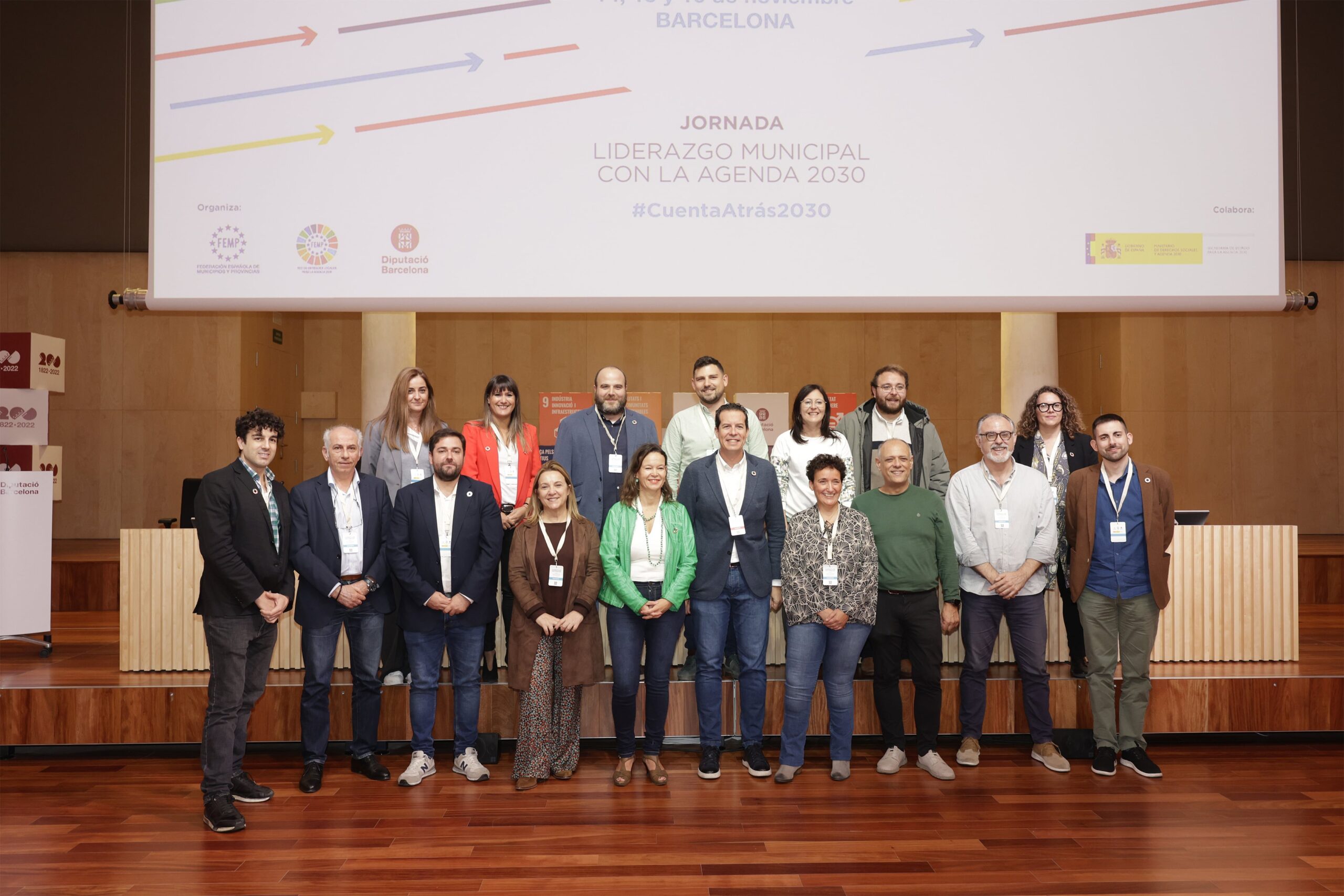
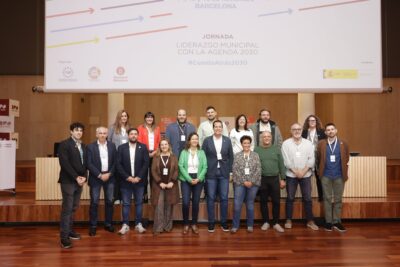
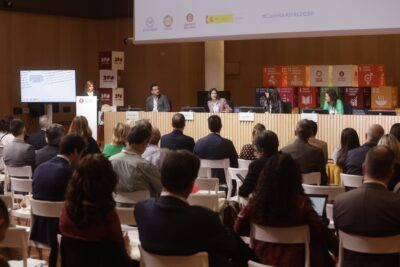
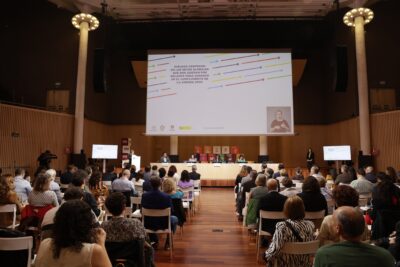
Combating climate change, ending poverty, advancing gender equality, and ensuring work for all are some of the global challenges that remain over the next seven years within the framework of the 2030 Agenda. Local Governments have much to say and contribute toward achieving these goals, especially now that half of the time available until the final deadline has passed. Reflections on progress made and pending tasks, the commitment and leadership of Local Governments, and the policies and management methods that have reached City Councils, Provincial Councils, and Island Councils through the 2030 Agenda are being discussed today at the forums of the second Conference on Municipal Leadership with the 2030 Agenda. The event, organized by the FEMP and the Barcelona Provincial Council, continues to be held at the Paranimf of the Industrial School in Barcelona.
Drivers of the 2030 Agenda
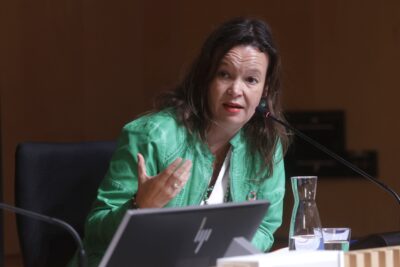
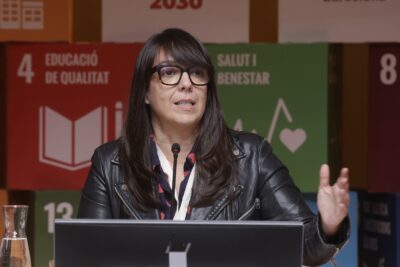
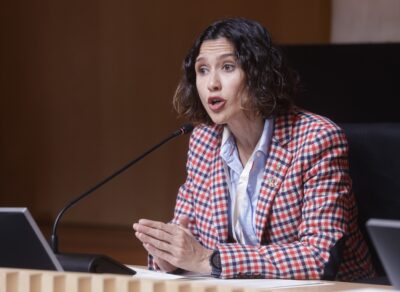
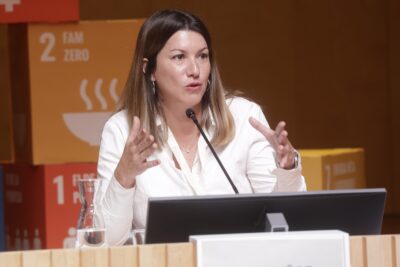
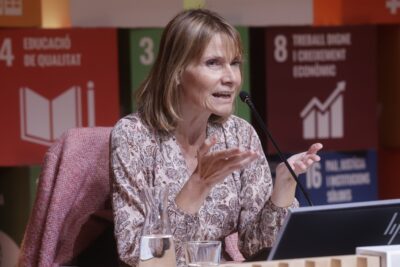
Local Governments are drivers of the 2030 Agenda because they have turned this roadmap, initially designed for States, into their own agenda. This was confirmed in the dialogue moderated by the Mayor of Canyelles, Rosa Huguet, with the participation of the President of the Spanish Network for Sustainable Development (REDS), Leire Pajín; the Deputy for Ecological Transition, Environment, Architecture, and European Projects of the Pontevedra Provincial Council, Iria Lamas; the Mayor of Santa Coloma de Gramenet and Vice-President of the Barcelona Provincial Council, Nuria Parlón; and the Mayor of Táliga, David Fernández.
Leire Pajín recalled that with the approval of the 2030 Agenda at the United Nations, “for the first time, municipalities were knocking on the door and negotiating to be part of this agenda. Mayors understood that this was going to be an absolutely local agenda and that it would be part of their political roadmap.” Now, she stated, “cities today are the main engine in the fulfillment of the SDGs; towns and cities have made great progress” because they have ensured citizen participation by creating a “narrative that citizens understand” with the 2030 Agenda. In her view, “change is only possible if we do it together, and we will only move forward if we socialize that need for change with the different actors.”
For her part, Iria Lamas pointed out that global objectives are “achieved from the local level” and called for aid so that small City Councils can be part of SDG policies. After highlighting that the Network of Local Entities for the 2030 Agenda “is a young network, but it already has almost 500 member entities and reaches 26 million people,” she demanded “more means and resources” for Local Administration to develop its policies. Lamas emphasized the importance of alliances to achieve the goals, stating that “SDG 17 is fundamental,” and raised what she considers the three most important challenges for the country: social justice, the international dimension of the 2030 Agenda, and the climate emergency. “There is no plan B, there is no planet B,” she concluded.
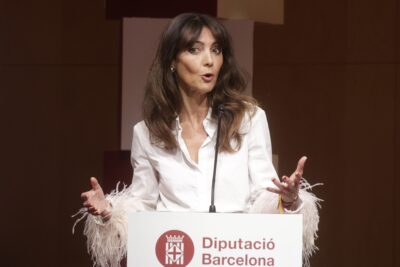
In Nuria Parlón’s opinion, the 2030 Agenda has revolutionized the way Local Administrations work: “there is a before and an after, because local leaders were able to see the importance of acting within their municipalities, even though the agenda is designed to be led by States.” Future indicators will show that with this new way of working, Local Governments “have passed the test; they not only comply but also innovate,” she highlighted. Looking ahead, to accelerate and advance, Parlón considered it necessary to have staff stability, the application of the principle of subsidiarity to strengthen Local Governments in specific SDG policies, and the guarantee of citizen participation in the design of transformative public policies to “avoid doubts or distrust.”
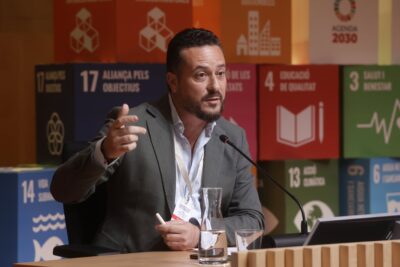
The Mayor of Táliga (Badajoz), David Fernández, explained that the greatest challenge for small towns is depopulation—“towns are dying”—and advocated for “thinking positively” to discover the possibilities of rural environments and develop projects so that young people have life options in the villages. Fernández, who also claimed “more funding and qualified technical teams” for small City Councils, called for “everyone to row” in the same direction: “Our future is today, and we must all join it by working side by side.”
Facing the 2030 Agenda
“Municipalities have been doing the 2030 Agenda all their lives,” stated Concepción Campos Acuña, moderator of one of this morning’s panels, which included the Secretary General of the Madrid Federation of Municipalities (FMM), Cristina Moreno; the Mayor of Rivas-Vaciamadrid, Aida Castillejo; the Mayor of Elda and Second Vice-President of the Network, Rubén Alfaro; and the Mayor of Onda, Carmina Ballester.
In her speech, Cristina Moreno referred to the role of Territorial Federations, Associations of Municipalities, and Provincial Administrations in supporting smaller towns within the scope of the 2030 Agenda. For Moreno, the 2030 Agenda is already part of the daily language of cities, “and there are many small municipalities that, without knowing it, are carrying out initiatives aligned with the Agenda.” For the Secretary General of the FMM, they are “exemplary” in this sense, although support from supra-municipal entities is necessary to achieve some SDGs. In her view, the 2030 Agenda is not for four-year planning but for the long term “because the end result is worth it.”
For Aída Castillejo, Mayor of Rivas-Vaciamadrid (Madrid), the 2030 Agenda constitutes a milestone in itself and a great opportunity to make a radical change regarding the “development we are generating, through production and consumption models that are as unsustainable as they are unjust.” In her opinion, “the problems we have are not new; we continue to talk about armed conflicts, violations, human rights, and we continue to grow in global inequality, poverty, and exclusion.” Castillejo, who stated that Local Governments “must also play a role in the global challenges we are suffering,” said that Sustainable Development Goal number one is precisely the first to which attention must be paid “to then continue scaling up to all the others.” The 2030 Agenda is an opportunity for change, Castillejo assured.
From the Network of Local Entities for the 2030 Agenda, Rubén Alfaro stressed that the interest of Local Governments in the Agenda is shown by the high level of adherence to it and their “desire to participate.” For the Mayor of Elda, “the 2030 Agenda is an easy, understandable, and very acceptable discourse for City Councils and the population.” In fact, he explained, numerous City Councils have strategic plans aligned with the SDGs of the 2030 Agenda. “The 2030 Agenda,” he specified, “is a fair and ethical citizen roadmap.”
Finally, Carmina Ballester, Mayor of Onda (Castellón), said that the current energy crisis must be taken as “the most powerful and notorious argument” to commit ambitiously and decisively to sustainable development. “The time for debating, studying, analyzing, and proposing is over; it is time to take action,” she added. Ballester, who considers it fundamental to involve citizens, especially children and adolescents, “so that society takes the lead in the 17 SDGs,” explained some of the actions carried out in Onda, such as “vinyl-wrapping” the town’s main square with all the objectives or launching a website open to participation. “We have to ensure that this narrative resonates with the public,” she concluded.
More participatory Governance Systems
Achieving the objectives requires more participatory governance models, stated David Padrón, from the Government of the Canary Islands, in his opening remarks for the panel he moderated late this morning.
The Director of the Pluralism and Coexistence Foundation, Inés Mazarrasa, spoke at the panel, indicating that the 2030 Agenda places human rights at the center with the commitment to leave no one behind. In this inclusive process, religious diversity and the rights of individuals, regardless of their religious beliefs, cannot be forgotten. In the case of Spain, many faiths are recognized by the State, and the exercise of that right must also be taken into account in local policies in line with the 2030 Agenda.
Javier Ayala, Mayor of Fuenlabrada and President of the FEMP International Relations Commission, referring to the words of a young girl from his municipality, said that the role of a Mayor is to “lead well,” and to lead well, he assured, we have two tools: on one hand, the 17 SDGs of the 2030 Agenda, “which serve to do things clearly well,” and on the other, citizen participation, because “it is essential in the application of the SDGs that residents participate and tell us which way we should go.”
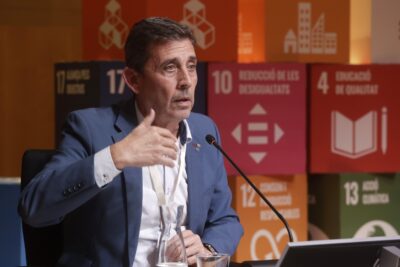
Another participant in the panel was Carlos Martínez, Mayor of Soria and special envoy for the New Urban Agenda of the global municipal organization United Cities and Local Governments (UCLG). In his speech, he claimed “the institutionalization of the participation of Local Governments in strategic planning and the development of funds” and added that the 2030 Agenda is “an opportunity for decentralization that is not being exploited, at least not at the level that we in the local sphere would like.”
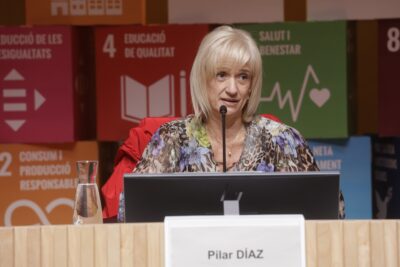
For Pilar Díaz, Mayor of Esplugues de Llobregat and Provincial Deputy of Barcelona, governance is a “difficult concept to explain.” She pointed out that Local Entities “have a very high responsibility for achieving the SDGs and, although funds are needed to carry it out, not everything is done with money. A change of attitude is required” both among local leaders and citizens—a new strategy that includes “thinking about today and tomorrow” when acting. In her opinion, “coordination in the exercise of co-governance is still not well resolved,” due, among other causes, to the recentralization processes affecting many countries.
Sonia Gaya, First Deputy Mayor of Seville, advocated for a change in the way “we behave, act, and dialogue” and concluded that “leadership must be shared.” In her view, “there is a need for diagnosis, an evaluation of processes, and more transparency and pedagogy.”
Common Goal: 2030 Agenda and Urban Agenda
At 4:00 PM, the final meeting of the day took place, moderated by Gabriel Castañares, Director General of Leverage Policies for the Fulfillment of the 2030 Agenda at the Ministry of Social Rights and the 2030 Agenda. The panel, focused on the intrinsic relationship between the Sustainable Development Goals and the various urban and rural agendas, featured Lidia Muñoz, First Deputy Mayor of Sant Feliu de Llobregat (Barcelona); Lluïsa Moret, Deputy for the Equality and Social Sustainability Area of the Barcelona Provincial Council and Mayor of Sant Boi de Llobregat (Barcelona); Francisco Reyes, President of the Jaén Provincial Council; and José Leocadio Ortega, Mayor of Pilas (Seville).
Lidia Muñoz explained the extent to which we want to achieve real transformation in our municipalities, using the generation of alliances as the main engine, in line with SDG 17 and beyond the channels proposed by the Central Administration, bringing local coordination to intermediate levels.
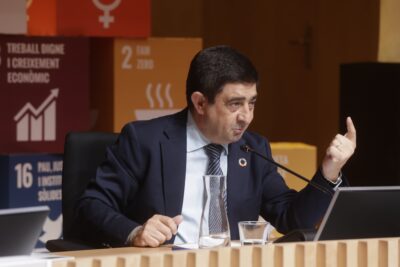
Francisco Reyes, speaking from the leadership of a Provincial Council, stated that “Provincial Councils are the 112 (emergency service) for small municipalities, but mayors are the 112 for the residents in the territory,” emphasizing the need for Local Governments to acquire greater capacity to accelerate the fulfillment of the SDGs.
For Lluïsa Moret, the agendas are an “instrument of the city,” in which everyone must participate, and only then can the dignified, fair, and inclusive balance sought by these tools be achieved.
Finally, José Leocadio Ortega resolved the relationship between both agendas: “the Urban Agenda is the tool to ground the SDGs,” and he highlighted the technical and personnel limitations faced by many city councils, for which the support of Municipal Federations is of great help.
Agreement with CEDAES
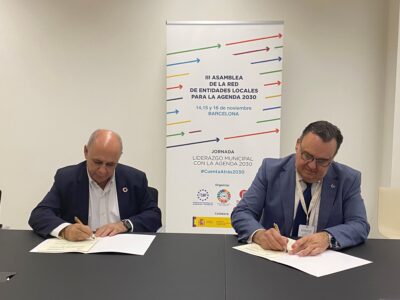
During the conference, the Secretary General of the FEMP, Carlos Daniel Casares, signed a Collaboration Agreement with Santos Prieto, President of the Spanish Confederation of Business Areas (CEDAES), which makes this organization a collaborating partner of the Network of Local Entities for the 2030 Agenda.