

Good practices
2030 Agenda Workshops for Primary Education
Sant Llorenç des Cardassar Town Council
Summary
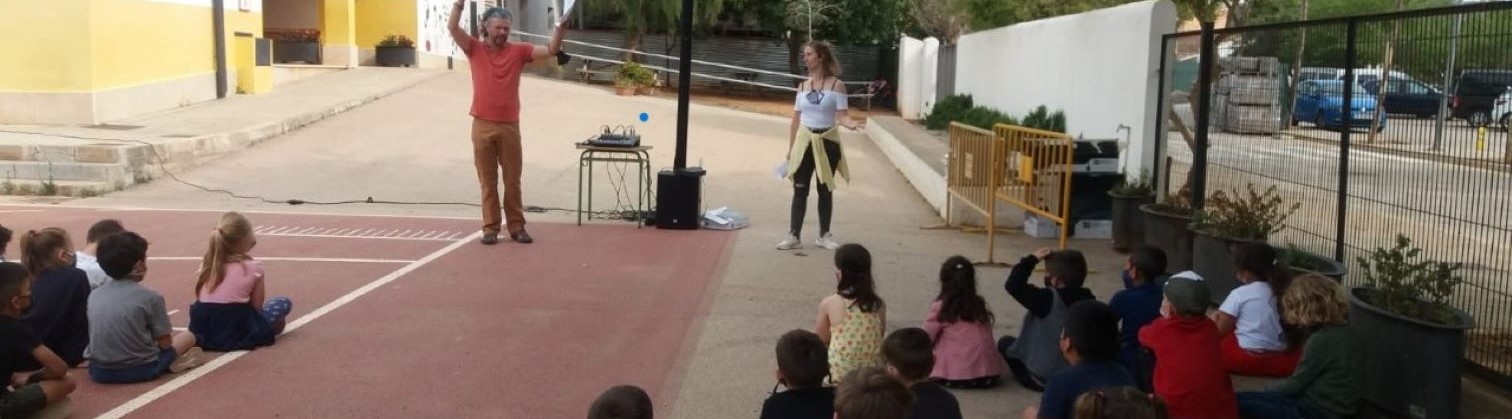
In 2021, at the start of the implementation of the 2030 Agenda in the municipality of Sant Llorenç des Cardassar (Mallorca-Illes Balears), the school workshop “The 2030 Agenda in our municipality” was prepared and delivered. In total, the workshops were delivered in the three primary schools in the municipality, reaching 34 class groups (from 1st to 6th year of primary) in the schools of Sant Llorenç, Son Carrió and Sa Coma. Specifically, 585 pupils took part in the workshops, with great satisfaction from both pupils and teachers.
Naturally, issues such as social, economic and environmental challenges were addressed.
Project Classification
This activity forms part of the 2030 Agenda awareness-raising and outreach actions among the public.
Goals involved:
.SDG 17. Partnerships for the Goals.
Timeline
From January to June 2021
Self-assessment section
PLANNING What were the objectives set for the project?
-To promote the values and culture of Social Responsibility (specifically the 2030 Agenda) and encourage knowledge of it among the public in general.
-To involve the entire municipality in understanding and incorporating Social Responsibility strategies for the development and economic growth of the municipality of Sant Llorenç.
-To create spaces for exchanging experiences and knowledge between Social Responsibility professionals, companies and the Town Council.
-To promote activities with an SDG perspective.
INNOVATION What are the most innovative aspects? What challenge/problem is addressed?
This initiative focuses on raising awareness of the 2030 Agenda and its 17 SDGs among primary school pupils.
METHODOLOGY What methodology was followed to implement it?
Telephone communication and email
CONDITIONAL FACTORS What conditions must be in place for the project to be successfully replicated (in a similar context)?
* Participation of pupils and teachers.
* Promotion of initiatives that encourage sustainability.
* Funding through a grant, which meant zero cost for participants.
REPLICABILITY/SCALABILITY/TRANSFER What elements must be taken into account to replicate the project in another Local Entity?
* Adaptation or reprinting of the workbooks.
* Preparation of the workshop by other facilitators.
* Funding for the workshops.
RESOURCES What technical, human and financial resources were used?
Human resources: 2 external facilitators; administrative staff; teaching staff.
Technical resources: production of printed materials for pupils.
Financial resources: 100% grant from the Island Council for the activity.
STAKEHOLDER INVOLVEMENT Which local stakeholders were involved in the project (public, third-sector organisations, private sector, academia, etc.)? How was this involvement achieved?
Education sector (management and teaching staff) and local administration (technical staff and elected officials).
Briefly, what role did each play or is each playing?
Organisation, delivery and evaluation of the activity.
INTERNAL COORDINATION How was the project coordinated internally within the Local Entity? Could you tell us what the main actions carried out by the initiative were?
Design and delivery of training workshops.
PARTNERSHIPS. Were other institutions involved in achieving the objectives set?
Yes.
If the initiative involved collaboration with other levels of government, how was that collaboration implemented?
We received a grant to finance or co-finance the initiative.
Did the launch of the initiative involve local stakeholders outside the local authority?
Yes.
If you answered yes to the previous question, could you indicate what process was followed to secure the involvement of the different stakeholders?
Meetings with the management teams of the 3 schools in the municipality; working meetings with the team of facilitators who prepared and delivered the activity.
Is there any participation body or structure established with the different stakeholders?
No. This is a small municipality, and ad hoc meetings were organised.
RESULTS/MEASUREMENT Were the project results measured based on local indicators?
The results were measured by the number of pupils who participated and the level of teacher satisfaction.
TRIPLE IMPACT Is the project sustainable from an environmental, economic and social point of view?
The triple impact was taken into account to a moderate degree.
OBSTACLES What were the main obstacles encountered in all phases of the project?
Lack of continuity. It would have been very interesting to be able to continue the workshops in subsequent school years.
CONCLUSION. Project impact and usefulness.
During May and June 2021, the Sant Llorenç Town Council and the Consell de Mallorca organised these 2030 Agenda school workshops, in which approximately 600 pupils from the municipality’s three schools took part: Sant Llorenç, Son Carrió and Sa Coma.
Information section
FURTHER INFORMATION
You can visit the website:
| 2030 Agenda (santllorenc.es)
https://www.santllorenc.es/noticies-ajuntament/acaben-els-tallers-escolars-de-lagenda-2030
View more casesLocal Entity name: Sant Llorenç des Cardassar Town Council
Province: Balearic Islands
Autonomous Community: Illes Balears
Number of inhabitants: From 5,001 to 10,000 inhabitants
Contact person: Pere Santandreu, 2030 Agenda Coordinator and Director of the Municipal Auditorium
Contact phone:971 587 373
Email: director@samaniga.es
SDGs involved: