

Good practices
Door-to-door separate collection of commercial cardboard
Mancomunidad del Carraixet
Summary
This initiative was launched after observing that paper and cardboard waste was not being recycled correctly. In most municipalities, containers were being misused, as people were not folding cardboard before placing it inside, but rather leaving it next to the containers, occupying public space and causing inconvenience. From this, we began to develop a proposal to solve the problem: on the one hand, to prevent cardboard from accumulating in public spaces due to overflowing containers, and on the other hand, to help local businesses manage the residual cardboard they generate, leaving more available space in the containers for other citizens and avoiding the need to increase truck frequency, with the associated economic cost and carbon footprint.
Project Classification
This is a Project. Dissemination/awareness-raising actions for the 2030 Agenda among citizens.
Timeline
Start: January 2022. Still in operation.
Self-assessment Block
PLANNING What were the objectives set for the project?
The general objective of this activity is to increase paper and cardboard recycling rates.
The more specific objective is to help local businesses recycle the residual cardboard they generate so that public street containers do not become saturated and overflow, leaving space for them to also be used by the rest of the population, thereby preventing cardboard from accumulating in public spaces.
INNOVATION What are the most innovative aspects? What challenge/problem is addressed?
This initiative aims to meet the needs of the population as outlined by the 2030 Agenda and has also involved internal reorganization processes.
What target population is it aimed at?
Alfara del Patriarca. Almàssera, Bonrepòs i Mirambell, Foios and Vinalesa.
METHODOLOGY What methodology was followed for its implementation?
First, we coordinated with the waste collection company to assess the viability of this service. Once confirmed, we opened a period to inform merchants in the municipalities. A registration process was carried out using an adhesion form for all participating businesses. Subsequently, a collection calendar and a route were established for each municipality. This service is weekly and incurs no extra cost for merchants. The Mancomunidad has assumed the cost of the service, approved in plenary session. Since the service was launched, a decrease in cardboard next to public containers and an increase in the percentage of cardboard recycling have been observed.
CONDITIONING FACTORS What conditions must be met for the project to be successfully replicated (in a similar context)?
Communication, coordination between the collection company and the environmental technician. Good acceptance of this service among local merchants.
REPLICABILITY/SCALABILITY/TRANSFER What elements should be considered for the project to be replicated in another Local Entity?
Communication, coordination.
RESOURCES What technical, human, and economic resources have been used?
– Involvement of the technician for service coordination.
– Operators from the waste collection company
– Collection vehicle.
– Budget allocation for the service.
INVOLVEMENT OF STAKEHOLDERS What local stakeholders have been involved in the project (citizens, third sector organizations, private sector, academic sector, etc.)? How was this involvement achieved?
Waste collection company manager, merchants, municipal technicians.
Briefly, what role has each played or is playing?
Waste collection manager: service coordination
Merchants: commitment to deposit cardboard at their door each week
Technicians: Service coordination.
INTERNAL COORDINATION How has the project been coordinated internally within the Local Entity?
Weekly collection of cardboard directly from establishments adhering to the service.
ALLIANCES Have other institutions been involved in achieving the stated objectives?
No.
Has the implementation of the initiative involved local stakeholders outside the local corporation?
Yes.
If you answered affirmatively to the previous question, could you indicate the process followed to achieve the involvement of the different stakeholders?
Information provided to merchants and establishment managers in the municipalities, with a circular to publicize the service and an adhesion form. Negotiations with the waste collection company managers to establish collection days and times and coordinate the service with them to facilitate cardboard removal from establishments. At the political level, approval in plenary session of the increased cost of this service for the Mancomunidad.
Is there any participation body or established structure with the different stakeholders?
Yes, a collaboration agreement has been signed with the different stakeholders.
RESULTS/MEASUREMENT Have the project results been measured based on local indicators?
Through the recycling percentages obtained, which show an increase in the percentage of recycled paper and cardboard, and on the other hand, less cardboard is now observed invading public spaces.
TRIPLE IMPACT Is the project sustainable from an environmental, economic, and social point of view?
At a social level, it implies improving the quality of life of citizens by allowing municipalities to be cleaner.
At an environmental level, it allows for an increase in the percentage of waste recycling and prevents it from ending up in landfills.
At an economic level, it implies a reduction in waste taxes for the local administration.
OBSTACLES What have been the main obstacles encountered in all phases of the project?
There have been no obstacles.
CONCLUSION. Project impact and utility.
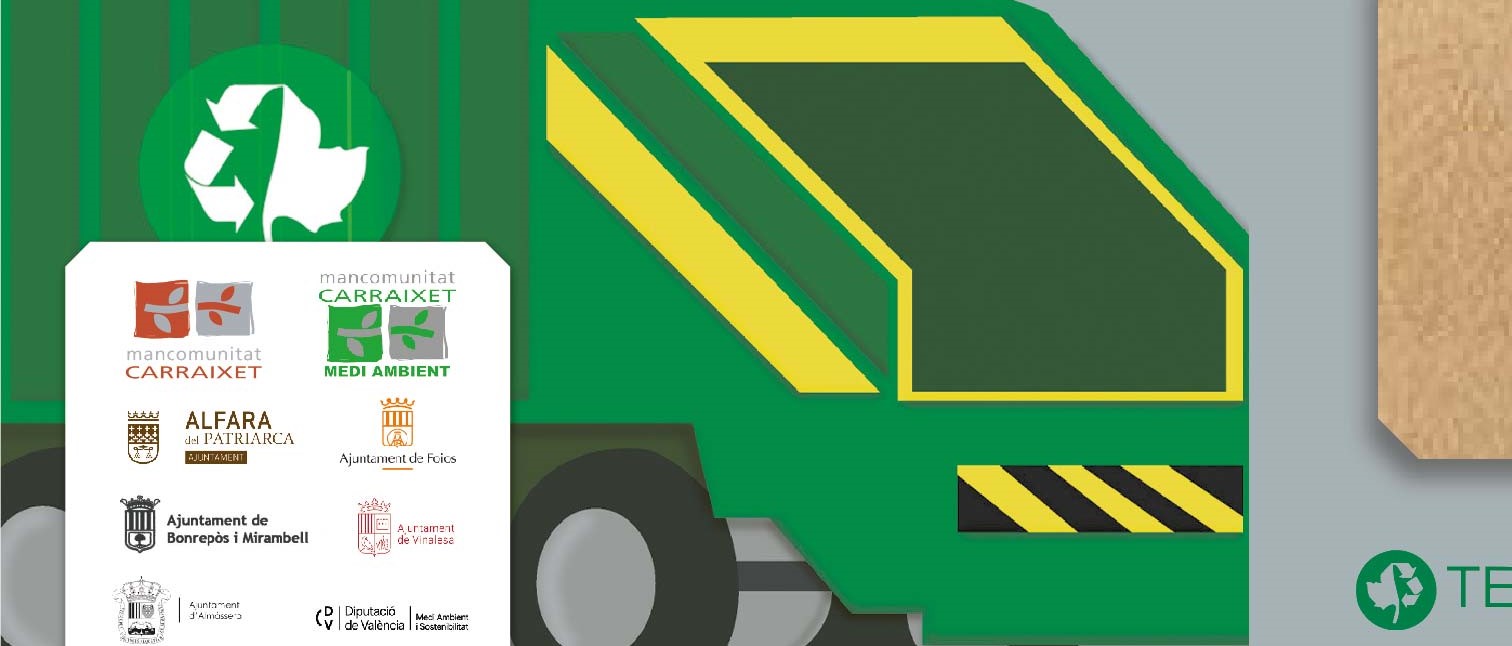
Thanks to this ongoing initiative, we have managed to decongest containers so that they can be better utilized by the population, and on the other hand, we have helped local businesses manage their waste. Weekly and at no cost to them, they hand over the cardboard they generate during the week. This work is carried out by waste collection company operators who, using a small vehicle, can reach all establishments adhering to the service.
The service has been in operation for a year, and the results have been positive; the percentage of recycled cardboard and paper has increased over the last year.
Information Block
FURTHER INFORMATION
https://www.mancocarraixet.es/es/noticia/servicio-recogida-carton-grandes-comerciantes
https://www.mancocarraixet.es/es/noticia-pagina/medio-ambiente
View more cases
Local Entity name: Mancomunidad del Carraixet
Province: Valencia
Autonomous Community: Valencian Community
Number of inhabitants: From 20,001 to 50,000 inhabitants
Contact person: Sonia Pinar Navarro Environmental Educator Technician
Contact Phone: 961 391 946
E-mail: medioambient@mancocarraixet.es
SDGs involved: