


20/09/2021
25S: Six years of commitment to the 2030 Agenda
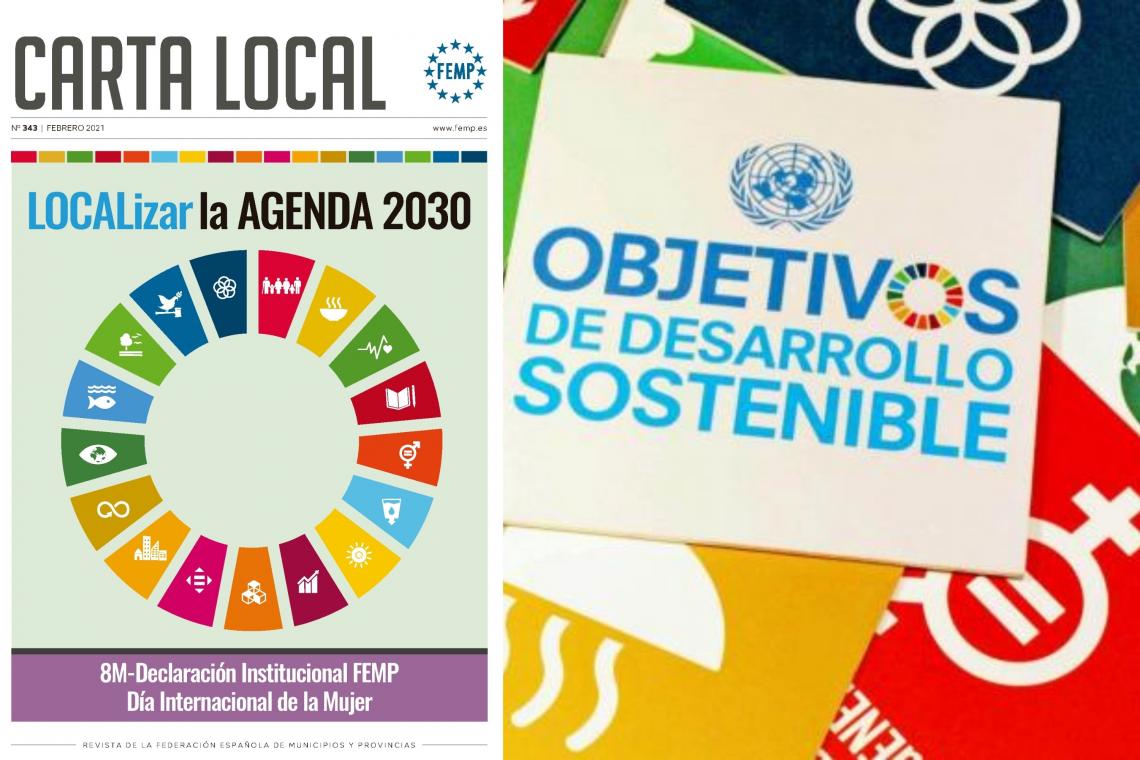
The 2030 Agenda for Sustainable Development Goals (SDGs), approved by the United Nations General Assembly on September 25, 2015, is the international political framework that United Nations Member States have adopted as a roadmap for the sustainability of people’s lives from a social, cultural, economic, and environmental perspective. Hence, the five pillars on which the Agenda is built are planet, people, peace, prosperity, and partnerships.
Seventeen Goals that directly connect international, national, and local action, and that position cities and their governments as essential public powers for their effective achievement. This is recognized by the United Nations Resolution that adopted the Agenda.
A legitimate recognition based on the emergence of cities as global benchmarks for policies in favor of human sustainability, and the result of intense advocacy work by local governments and the associations that represent them, to ensure that the voice of local powers counts, making our own an international responsibility that emphasizes not only ‘leaving no one behind’ but also ‘leaving no place behind.’
Six years have passed since the approval of this ambitious agreement, a time in which the unequivocal leadership of cities for its successful implementation has been demonstrated, but also a time in which the need for a new distribution of responsibilities has become clear, based on a new governance model that materializes the necessary reforms to respond to the pressing challenges posed by the 2030 Agenda in the country.
Within the framework of the XII FEMP Plenary, the Federation has reinforced and intensified the commitment to land the SDGs from the bottom up. To this end, the Network of Local Entities for the 2030 Agenda is underway, whose main mission is to assist and encourage Local Entities to begin working within the framework of the 2030 Agenda.
2021 is also the year in which the FEMP celebrates its fortieth anniversary, during which the networking of Local Government has been essential for the search for solutions and for the promotion of instruments that favor the better design and implementation of public policies. This networking effort is being fostered by the Federation during this mandate for strategic alignment with the Sustainable Development Goals.
There are enormous challenges and uncertainty about how to achieve this Agenda, but there is also a unanimous consensus recognizing that its achievement will depend on the capacity to make them a reality in our cities and towns. We are the level of government capable of translating a universal and broad agenda into concrete and tangible public policies.
Finally, we encourage local governments, on the sixth anniversary of the approval of the 2030 Agenda on September 25, to join the Network of Local Entities for the 2030 Agenda and take action towards the fulfillment of the seventeen Sustainable Development Goals.


