


08/07/2024
Conference: “Local Commitment to the 2030 Agenda”
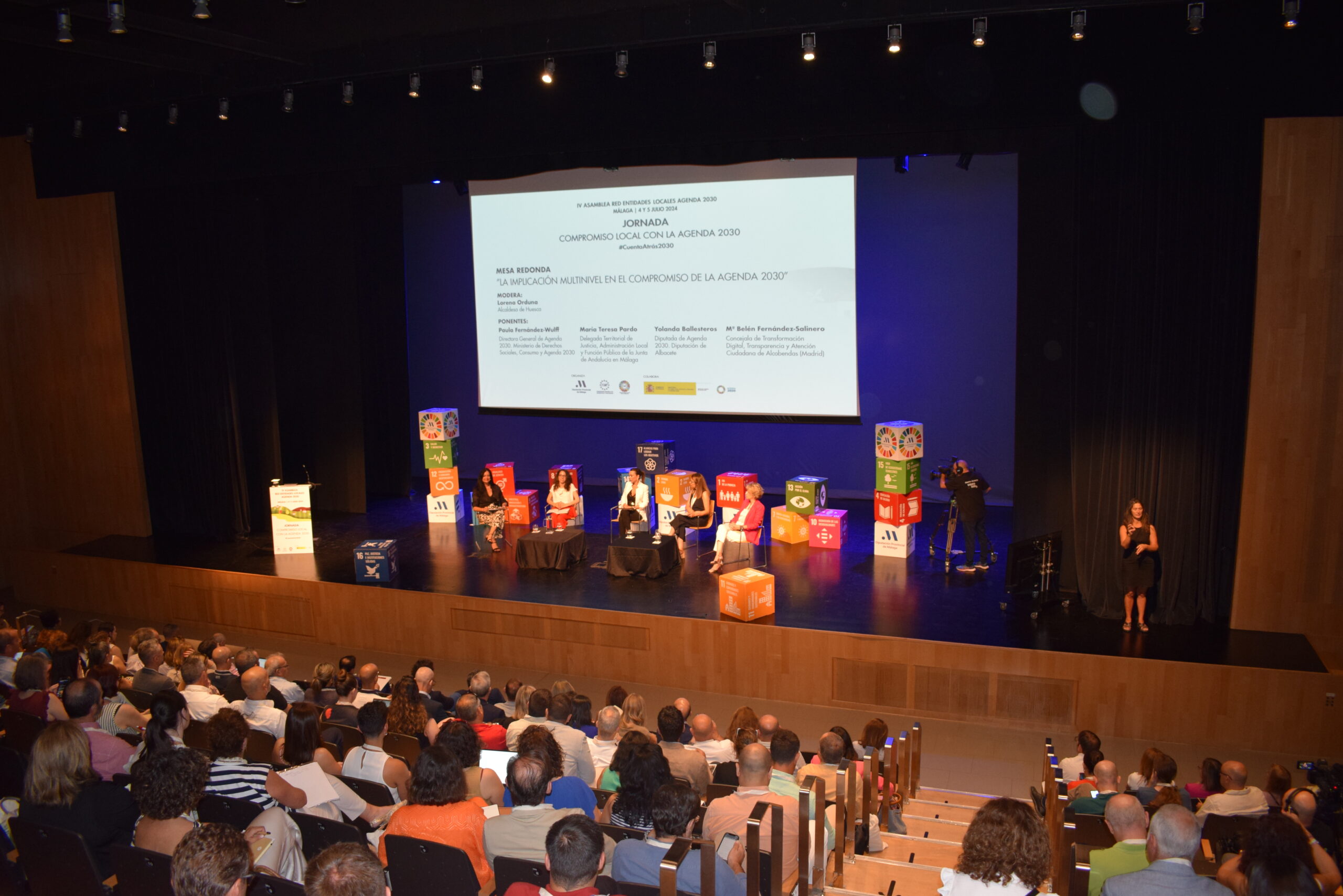
The Network of Local Entities for the 2030 Agenda for Sustainable Development held the conference “Local Commitment to the 2030 Agenda” as part of its IV Assembly in Malaga. This event brought together more than 200 participants and served as a space for coordination and momentum for local policies oriented toward environmental, economic, and social sustainability.
Institutional Opening
The Secretary General of the FEMP, Luis Martínez-Sicluna, highlighted during the opening of the conference the Network’s capacity as a key instrument in the coordination of local policies that promote the Sustainable Development Goals (SDGs). Martínez-Sicluna stressed that the FEMP’s collaborative work dynamics facilitate the creation of alliances between local governments, allowing for the sharing of knowledge, tools, and experiences.
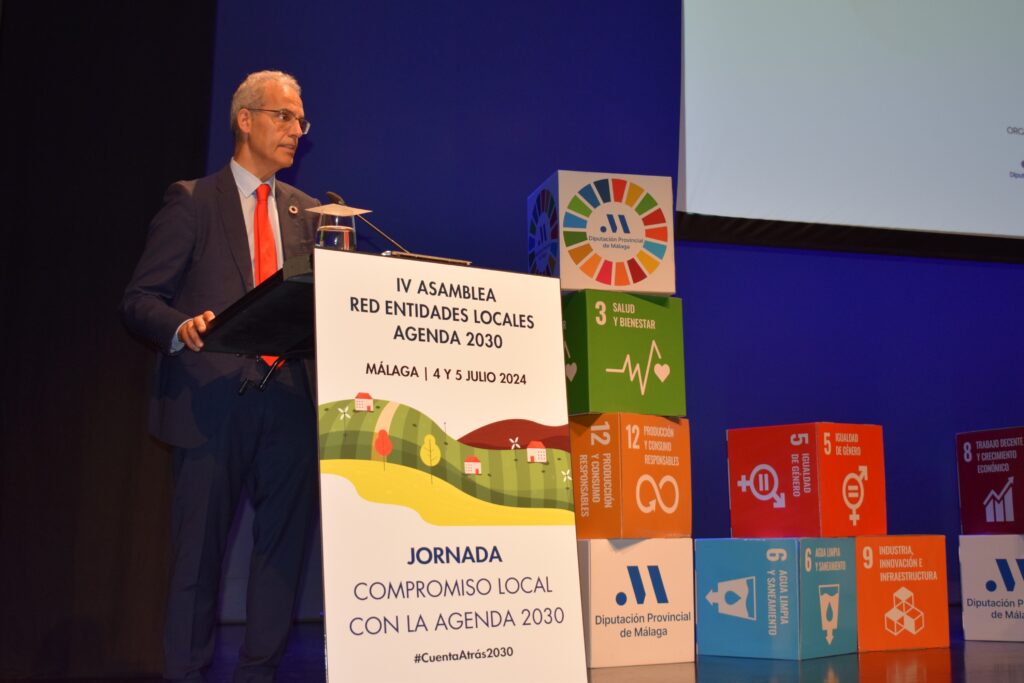
In his speech, Pablo Bustinduy, Minister of Social Rights, Consumption, and the 2030 Agenda, emphasized the need to implement bold policies and continue pedagogical work to explain the actions taken and their purposes. Bustinduy also advocated for efficient cooperation between all levels of administration to achieve the localization of the SDGs.
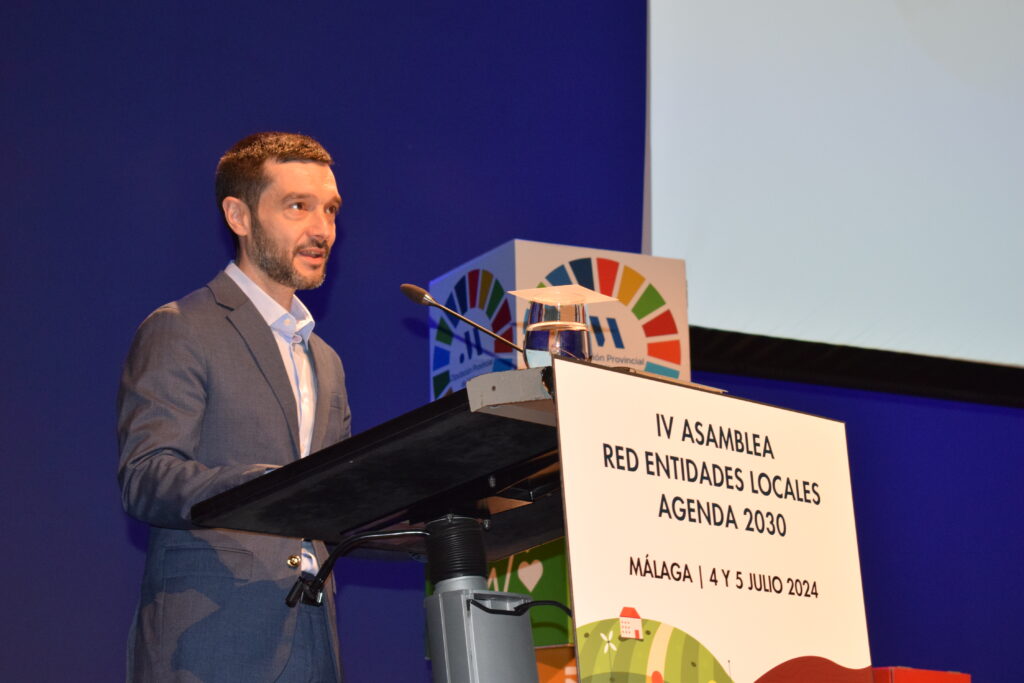
Antonio Pérez, President of the Network of Local Entities for the 2030 Agenda, highlighted the importance of local governments in promoting sustainability and noted that the Network includes 637 local administrations representing 66% of the Spanish population. Pérez added that the FEMP has become a fundamental tool for acquiring knowledge and commitments.
José Francisco Salado, President of the Provincial Council of Malaga, stated that the objectives of the 2030 Agenda cannot be achieved without the active participation of local governments, which are closest to citizens and the fastest to solve problems. Salado stressed the need to be proactive to achieve global results through local actions.
Round Table: “Multilevel Involvement in the Commitment to the 2030 Agenda”
The conference began with a round table moderated by Lorena Orduna, Mayor of Huesca, in which four experts provided their vision on multilevel involvement in the commitment to the 2030 Agenda.
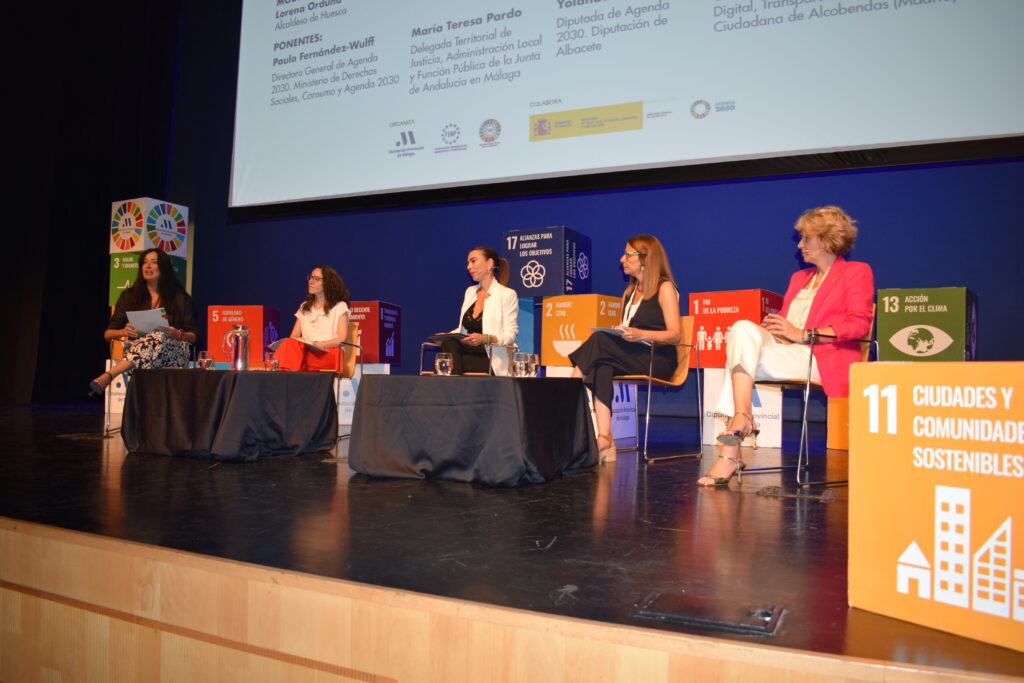
Paula Fernández-Wulff Barreiro, Director General for the 2030 Agenda at the Ministry of Social Rights, Consumption, and the 2030 Agenda, stressed the importance of the #SummitOfTheFuture and the need to establish a hopeful post-2030 framework. She highlighted the FEMP’s leadership with its Localization Guide and announced that the Ministry will continue to provide new tools to support the Network of Local Entities in its efforts toward a sustainable future.
Mª Teresa Pardo Reinaldos, Delegate for Justice, Local Administration, and Public Service of the Regional Government of Andalusia in Malaga, highlighted the strong commitment of the Regional Government and the Provincial Council to City Councils to advance the SDGs, through both concrete actions and financing. She stressed the importance of educating both businesses and citizens about the 2030 Agenda to counter opposing movements and ensure sustainable progress.
Yolanda Ballesteros Esteban, Deputy for the 2030 Agenda of the Provincial Council of Albacete, emphasized the crucial role of local administrations in implementing the SDGs. She detailed how Albacete is actively working to ensure that urban development plans are sustainable and measurable in the long term.
Mª Belén Fernández-Salinero García, Councilor for Digital Transformation, Transparency, and Citizen Services of Alcobendas (Madrid), shared her municipality’s experience in long-term planning and the importance of a measurable approach to sustainable urban development. She stressed that this type of planning is essential to achieve urban development that meets the sustainability goals of the 2030 Agenda.
This round table highlighted the importance of collaboration between different levels of government and the need for a collective commitment to advance the goals of the 2030 Agenda.
Experience Panel on the Commitment of Local Entities to 2030 Agenda Awareness
In the first experience panel of the conference, moderated by Ángel Viveros Gutiérrez, Mayor of Coslada (Madrid), the relevance of the commitment of local entities to raising awareness about the 2030 Agenda was highlighted.
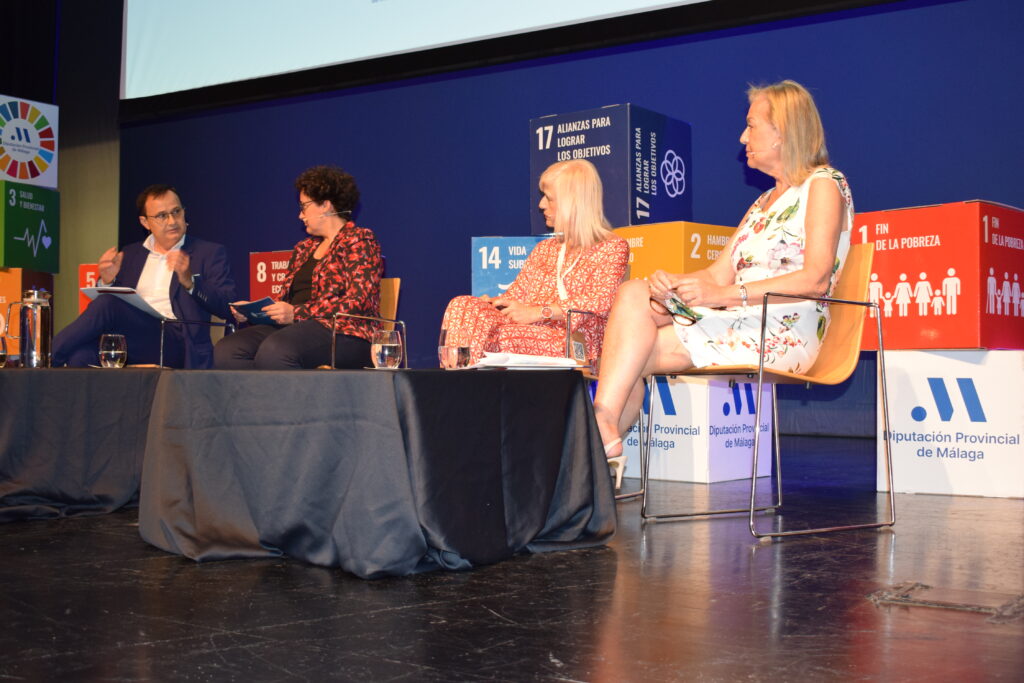
Carmen Ballester Feliu, Mayor of Onda (Castellón), shared how her city council has developed a strategic plan for the 2030 Agenda. This plan has been widely communicated to the public through visual impacts that have made the Sustainable Development Goals (SDGs) accessible and understood by all.
Pilar Díaz Romero, Mayor of Esplugues de Llobregat (Barcelona), described the organization of a quality week aimed at municipal staff and specific training on the 2030 Agenda. Furthermore, she highlighted the “SDG Mission” project, a gamification initiative that has sensitized citizens to the SDGs.
María Francisca Caracuel García, Vice-President of the Provincial Council of Malaga, explained the “Malaga se Agenda” initiative, which brings interactive training on the 2030 Agenda to small towns in the province. Through face-to-face and interactive workshops, sustainability is being promoted in every corner of Malaga.
This panel underscored the importance of local actions to drive awareness and implementation of the SDGs, highlighting the fundamental role of local entities in the transformation toward sustainability.
Experience Panel on the Importance of Indicators to Increase Local Government Commitment
Under the moderation of Ramón Díaz Farias, Third Vice-President of the Provincial Council of Badajoz in the Area of Human Resources and Internal Affairs, various speakers shared significant experiences.
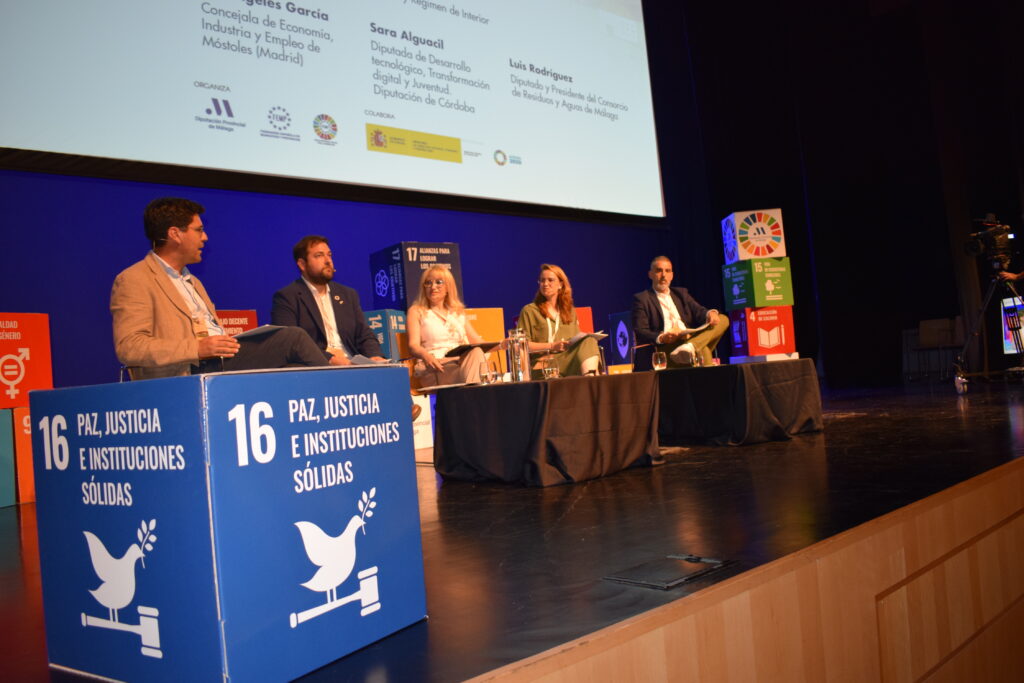
Francisco Alberto López López, Mayor of Rafelbunyol, stressed how the integration of indicators has driven his municipality’s commitment to the 2030 Agenda, visible even on the City Hall facade. He highlighted inter-municipal collaboration as key to this process. Mª Ángeles García González, Councilor for Economy, Industry, and Employment of Móstoles, mentioned the importance of indicators to guide sustainable development in her city, based on exhaustive mapping and working groups dedicated to the Sustainable Development Goals (SDGs).
Sara Alguacil Roldán, Deputy for Technological Development, Digital Transformation, and Youth of the Provincial Council of Córdoba, highlighted how indicators are being used to improve energy efficiency in the region, especially in public lighting. Luis Rodríguez, Deputy and President of the Malaga Waste and Water Consortium, shared how the Provincial Council of Malaga has incorporated the SDGs into its 2024 budget, setting clear targets and a list of indicators that will guide its management toward sustainability.
These experiences underscore the crucial role of indicators in the effective implementation of the 2030 Agenda at the local level, promoting collaboration and innovation to achieve global sustainable development goals.
Round Table: “Challenges in Communication and Commitment to the 2030 Agenda”
In the round table on “Challenges in Communication and Commitment to the 2030 Agenda,” moderated by Antonia Jesús Ledesma, Vice-President of the Provincial Council of Malaga in the Area of Citizenship and Territorial Balance, key strategies were addressed to improve communication on sustainability at the local level.
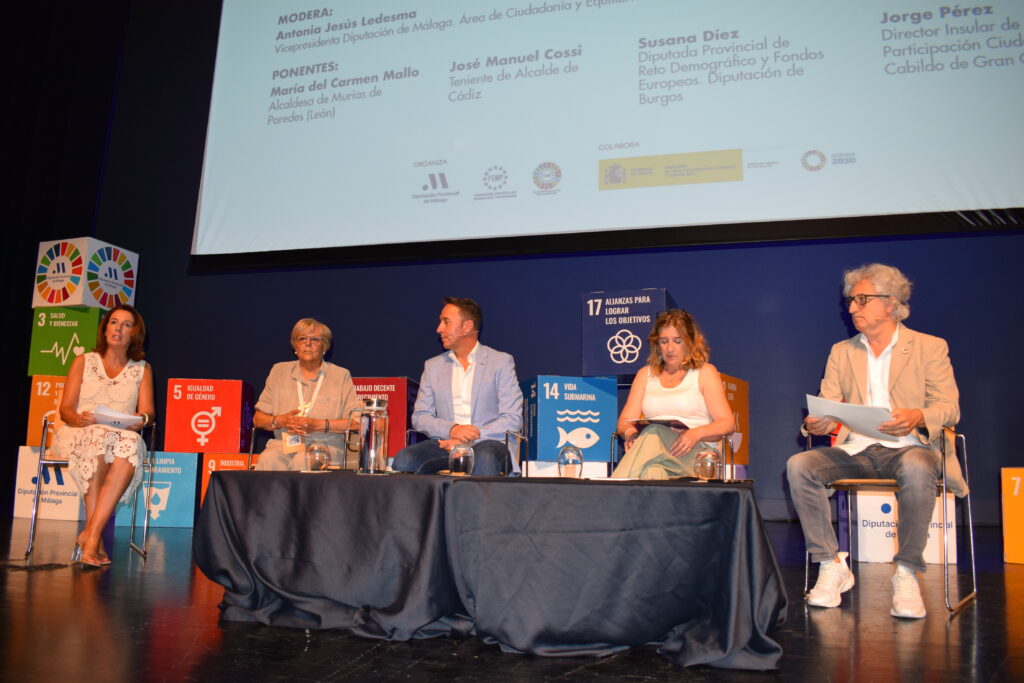
María del Carmen Mallo Álvarez, Mayor of Murias de Paredes, highlighted the importance of direct and understandable communication to respond to local needs regarding the 2030 Agenda. José Manuel Cossi González, Deputy Mayor of Cádiz, mentioned the development of a comprehensive plan to sensitize citizens to the sustainable development goals, beyond European funds, through training campaigns.
Susana Díez Martínez, Provincial Deputy for Demographic Challenge and European Funds at the Provincial Council of Burgos, discussed communication challenges in large areas with numerous small municipalities, focusing on improving the efficiency of message delivery to citizens and SMEs. Jorge Pérez Artiles, Insular Director of Citizen Participation at the Cabildo of Gran Canaria, stressed the need to communicate clearly and attractively to involve the community in sustainable development initiatives, adapting messages to accessible and effective formats.
These interventions demonstrate how effective communication plays a crucial role in the commitment to and implementation of the 2030 Agenda at the local level, facilitating understanding and active citizen participation in building a more sustainable future.
Experience Panel: “The Commitment of Local Industry and Business to the 2030 Agenda”
The experience panel on “The Commitment of Local Industry and Business to the 2030 Agenda,” moderated by Víctor Manuel Martínez Muñoz, Mayor of Santomera (Murcia), highlighted innovative and collaborative initiatives to advance toward sustainability.
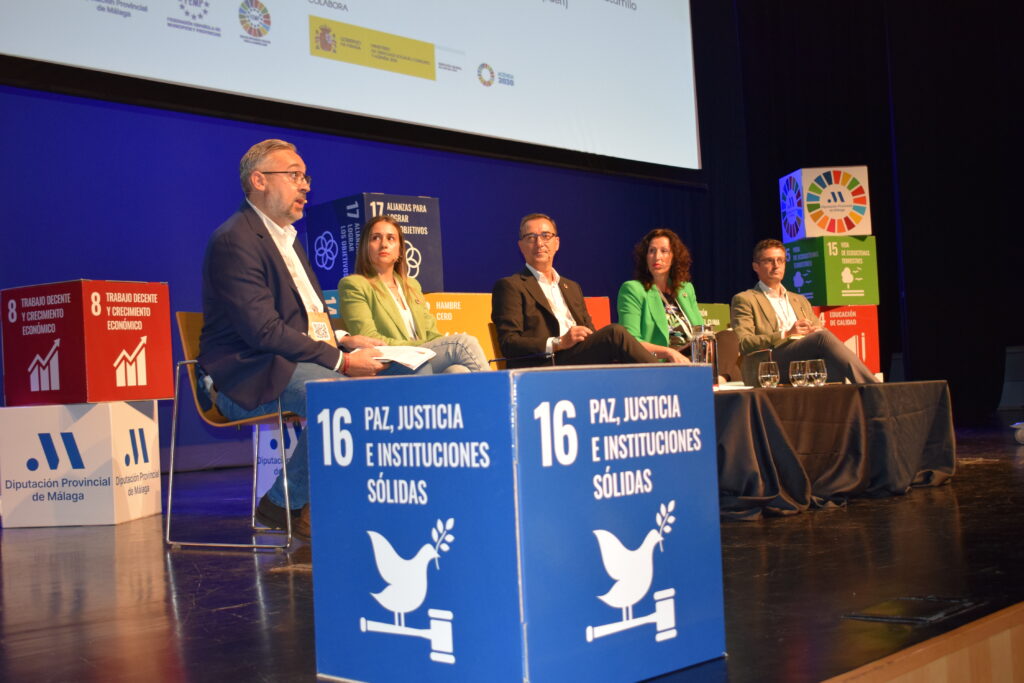
Tania Baños Martos, Mayor of Vall d’Uixó, highlighted close collaboration with local companies through joint agreements, investing significantly in projects aligned with the Sustainable Development Goals (SDGs). Roberto Pascual Raga Gadea, Mayor of Riba-roja de Túria, mentioned the ECORIBA plan focused on energy efficiency and CO2 compensation through collaborations with business areas, facilitating aid from the City Council to promote sustainable practices.
María del Mar Vázquez Agüero, Mayor of Almería, highlighted the development of an inclusive strategic plan with public-private collaboration, focused on water management, renewable energies, and the promotion of equality in local companies. Francisco Miralles Jiménez, Mayor of Villacarrillo, highlighted the key role of the local olive oil cooperative in promoting the SDGs, facilitating the transition to renewable energies and supporting local businesses with sustainable infrastructure.
These testimonies show how collaboration between local governments and the private sector is fundamental to achieving the goals of the 2030 Agenda, promoting innovation and sustainability in the business and industrial spheres.
The interventions in the experience panels reflect a firm commitment by local governments and businesses toward the implementation of the 2030 Agenda. From effective communication strategies to innovative public-private collaborations and concrete actions to promote sustainability, these initiatives show a clear path toward a fairer and more sustainable future for all. The integration of the Sustainable Development Goals not just as a theoretical framework, but as a practical guide in daily management, demonstrates the transformative potential of local actions in building a better world.
Note:
Images of the conference are available at:
https://drive.google.com/drive/folders/10gge_usPRCUkWhqnghmC9Brmyqc55zFF?usp=sharing


