

31/03/2023
Córdoba launches its first Alliance 2030 strategy to promote sustainable development in the province
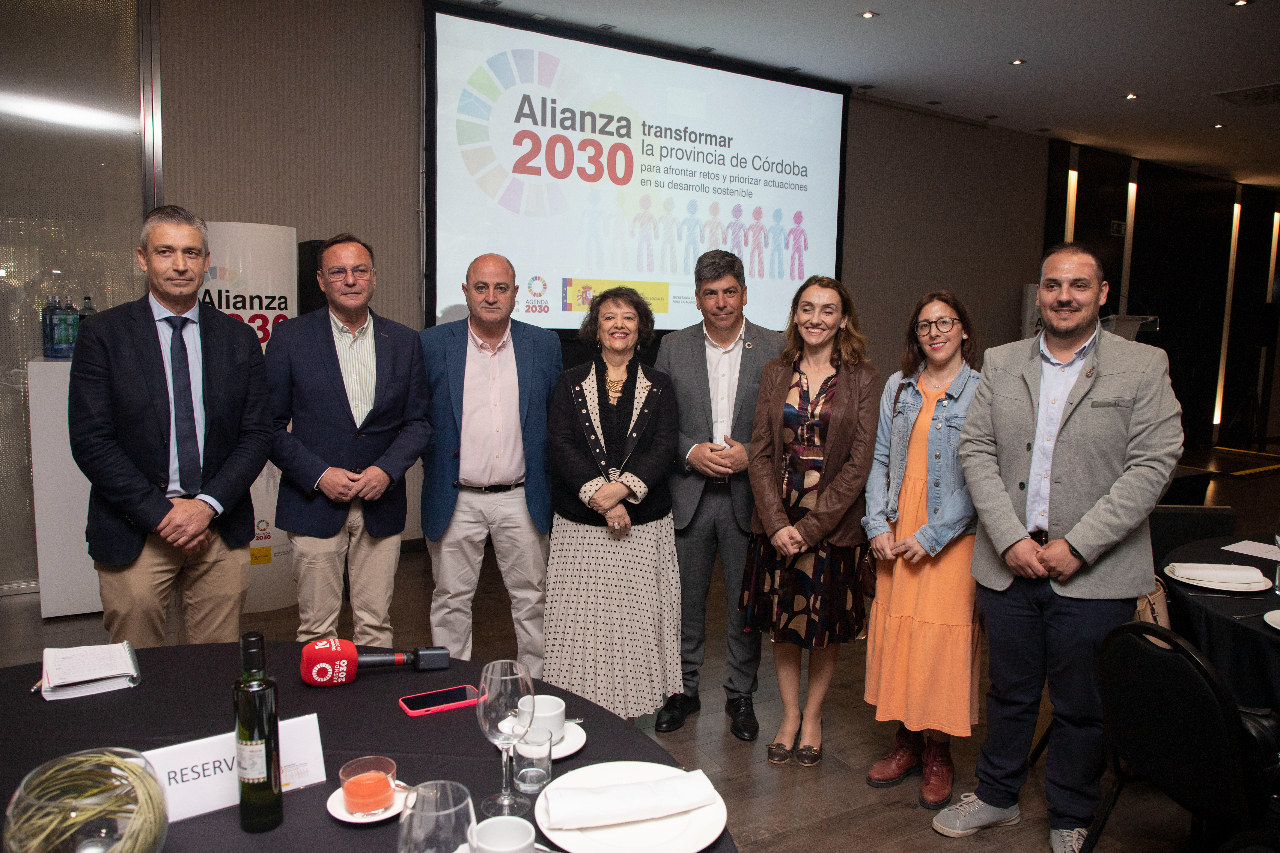
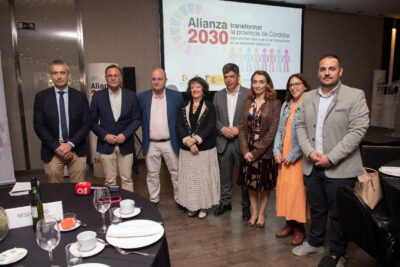
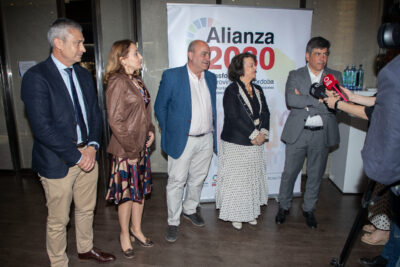
Analyzing the major challenges facing the province of Córdoba and establishing priorities for implementing the Sustainable Development Goals (SDGs). This is the main objective pursued by the project ‘Alliance 2030: transforming the province of Córdoba‘, presented on March 29 at an event that featured the participation of the Network of Local Entities for the 2030 Agenda of the Spanish Federation of Municipalities and Provinces (FEMP).
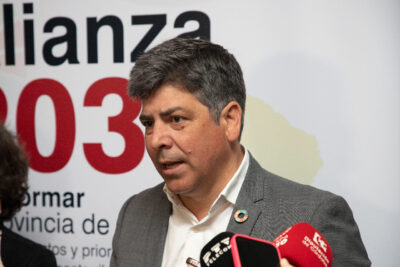
“It is an important opportunity for the province of Córdoba if we are able to develop it and engage in the project,” stated Rafael Llamas, delegate of the Area of Presidency, Economic Assistance to Municipalities and Commonwealths, and Civil Protection of the Provincial Council of Córdoba. The Córdoba project “arises from the need to understand that, in order to change things, we must act, and to act we need a roadmap and a project to support us in defining the actions to be carried out.”
The Provincial Council of Córdoba, which has been part of the Network since July 2020, is working on developing its strategy for the 2030 Agenda based on four pillars. The first is to create a provincial network of SDG promoters, involving all stakeholders and establishing itself as a forum and driving group to develop different lines of work in relation to the Provincial Council of Córdoba that facilitate the decision-making process regarding the various initiatives to be carried out. Secondly, they will seek to strengthen relations with the Network of Local Entities for the 2030 Agenda, as the main support in carrying out the sustainable development of the province.
Furthermore, in the third point, the Provincial Council will enhance the provincial Sustainability Observatory, as “a thermometer” that allows them to measure compliance with the Agenda and, finally, they will create a digital platform that provides resources to all stakeholders involved to facilitate the management and implementation of the plan.
“Ultimately, the main objective is to improve the quality of life of citizens. We all want to live better, in the best conditions. And it also represents a commitment to future generations for whom we are currently responsible,” concluded Llamas.
The role and commitment of the Network
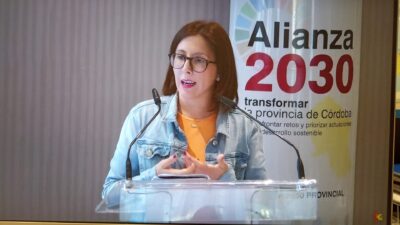
The role of the Network of Local Entities for the 2030 Agenda is essential for municipalities, especially the smallest ones, to be able to comply with the SDGs at the local level. Currently, it is the largest network of the FEMP, with 541 local entities involved, of which more than 40% belong to municipalities with fewer than 5,000 inhabitants. “They are the ones who need the most help because they lack technical staff to accompany them,” clarified Judith Santano, councilor of the Municipality of Torrejoncillo (Cáceres) and member of the Governing Council of Local Entities for the 2030 Agenda, who added that “the more of us there are, the more information and access to knowledge of good practices we can acquire.”
In fact, explained Santano, her municipality has particularly benefited from the Network’s support. “We have been able to apply for national-level subsidy programs that would otherwise have been impossible,” she exemplified before adding that “learning about the experiences of other municipalities has helped us grow, create alliances, and launch our own initiatives.” Among them, she highlighted the Health and Sports in Equality project, which was launched thanks to a line of aid to Local Entities for inclusive sports actions within the framework of the 2030 Agenda, as one of the actions carried out thanks to the grant awarded to the FEMP by the Higher Sports Council for the promotion of sports programs to reduce inequality within the framework of the 2030 Agenda.
She also emphasized the commitment of the Municipality of Torrejoncillo to the intergenerational plan of Extremadura, being one of the few municipalities implementing it at the regional level. “We have a very aged population and it is essential that we think about young people, but also that we work in an intergenerational manner,” she asserted. And, finally, she highlighted a project in which citizen participation has been the protagonist. ‘An exciting and sustainable school’ is an initiative promoted by the municipality’s public school with the support of the Town Council, with which they have managed to disseminate the 2030 Agenda among the educational community and with the involvement of families.
Santano concluded her participation by informing about the call for the promotion of the 2030 Agenda at the local level, which has been open until April 28. “I encourage local entities to consult the guidelines because it is a very good opportunity to obtain assistance and launch that Agenda,” she indicated. “I encourage you to continue fighting to achieve the SDGs and thereby create a better, more humane, and more just world,” she concluded.
Alliances between institutions and companies
The event also featured the participation of Asier Aranbarri, Director of Social Innovation of the Lehendakaritza Department of the Basque Government and promoter of the United Nations Secretariat of the Local 2030 Coalition in Bilbao, who, via video call, summarized the Basque contribution to the SDGs by focusing on the governance system they have created. “A couple of years ago we established the Forum for Social Transition and 2030 Agenda with the three institutional levels: Basque Government, provincial councils, and municipalities. Civil society, both organized and unorganized, which we call anonymous, is also represented,” he explained. This governance system concentrates its efforts on aligning budgets with the SDGs, but they also work on creating “a single umbrella to internationally project what the 2030 Agenda is. This is something we link with the role of the Local 2030 Secretariat in the Basque Country, which will be a Local Secretariat of the United Nations, and whose objective will be to localize the 2030 Agenda globally with specific projects.” The purpose is to account for the governance system they have established, to model it, conceptualize it, and be able to transfer it to other geographical areas.
Governments, both national and local, are the main actors of the change that the 2030 Agenda represents, but companies also play a key role in this regard, and this was also evident during the event with the participation of Juan Nieto del Río, president of the Environment and Sustainable Development Commission of the Confederation of Entrepreneurs of Córdoba (CECO). “Companies have a very clear objective, which is the responsibility and commitment to our workforce and investors to create added value, aligned with social development,” he explained.
However, there is a significant handicap, he added, which is that “to reach that level of contribution we need to invest in sustainable innovation and have the support of all sectors,” including universities, which must also be involved in the implementation and development of the 2030 Agenda, as pointed out by Sara Pinzi, Vice-Rector for Equality, Inclusion, and Social Commitment of the University of Córdoba. “Alliances are the only way for the 2030 Agenda to have that transformative effect,” she stated.
And as part of that action for change, she explained that “the University of Córdoba extends its hand and makes available our institutional experience, our research, the capacity to train the generation of the future, and our capacity to transfer, not only economically, but also socially.” She also detailed some of the initiatives carried out regarding SDGs at the institution, which range from developing an initial situation diagnosis and promoting working groups to incorporating the objectives into teaching guides, among others. “All of this allows us to transform the institution and the people within it and, obviously, the students who will form the companies of tomorrow,” added Pinzi.
Local administrations at the center
Events on the 2030 Agenda usually highlight the fundamental role played by local administrations, and this one in Córdoba has been no exception. Provincial councils and municipalities “are a central element for deploying the SDGs and since 2020 have played a leading role in the governance system in Spain,” stated Gabriel Castañares, Director General of Lever Policies for the fulfillment of the 2030 Agenda, in his intervention. He also took the opportunity to highlight, in this regard, the role of the FEMP, as a “key agent” whose cooperation has been “fundamental” in identifying the needs of local entities for the Sustainable Development Strategy.
There are many examples of small municipalities that, with the support of the Network and the FEMP, have achieved significant progress on their path toward sustainable development. One of them is the Municipality of Posadas, which is currently a reference in environmental matters at the national level, with several recognitions in land stewardship from the FEMP Biodiversity Network. Its mayor, Emilio Martínez, acknowledged the work of the technicians and highlighted the effort carried out to create the Malena Local Network of SDG Promoters. “It is a social structure in which more than 50 groups are represented, including what we call target groups, which are educational. Education is the most powerful weapon we can have,” he explained.
As a result of the dialogue and participation of all these groups, a Local Environment Council was created to implement the 2030 Agenda, and thanks to a subsidy they will be able to hire two facilitators who will develop the action plan. “The objective is that all public money that circulates has an impact and we see effective results and can create a roadmap, which many towns and municipalities need,” he added.
And it is precisely this last point, the need for an action guide, that marked the final part of the event, which concluded with a discussion on the Córdoba project with the different attendees. Municipalities, training centers, civil society groups, and companies participated in the event and raised different questions regarding the application and achievement of the SDGs.
A project to implement the SDGs in Córdoba
Alliance 2030 is a project subsidized by the Ministry of Social Rights and 2030 Agenda of the Government of Spain.
Its general objective is to promote the implementation, alignment, and localization of the 2030 Agenda in the local entities of the province. In this regard, the involvement of local governments, the different actors of Córdoba society, citizens in general, and the Provincial Council of Córdoba itself is sought.