


19/11/2021
FEMP and the COE reaffirm their commitment to sustainability and to the 2030 Agenda in sport
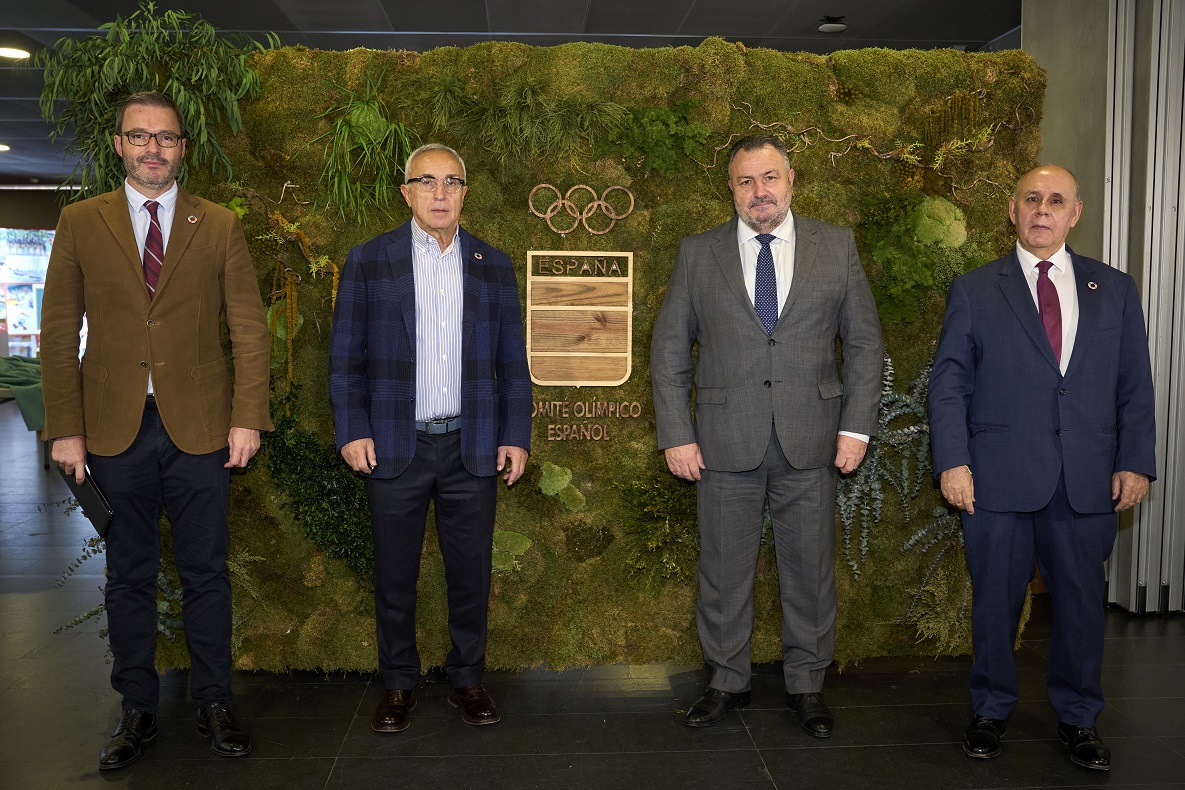
Casares: “Achieving the 2030 Agenda SDGs will not be possible without Local Governments”
Madrid, November 18, 2021.- The Secretary General of FEMP, Carlos Daniel Casares, and the President of the Spanish Olympic Committee, Alejandro Blanco, reaffirmed this morning their commitment to sustainability in sport and to the goals of the 2030 Agenda. During the 2nd COE Sustainability Congress, “The Race for the 2030 Agenda”, held at the Committee’s headquarters, the Secretary General of FEMP highlighted the leadership of Local Governments in driving projects aimed at achieving the SDGs and stated that reaching those Goals will not be possible without City Councils because “everything goes through the local level”.
Casares noted that FEMP launched the 2030 Agenda SDG Commission and the Network of Local Entities for the 2030 Agenda with the aim of promoting compliance with the goals set by the United Nations from the local level; the result, he said, is that every day more City Councils and Provincial Councils include the SDGs in their agendas, and also among the investments planned in their budgets. And within those sustainable investments, he added, physical, recreational and sporting activity is already part of an important chapter for meeting the SDGs.
The Secretary General of FEMP also recalled that Local Governments manage more than 93% of sports facilities, organise activities and promote sports associations across the territory, among other actions, and in this regard he reiterated the importance of the collaboration that has been maintained with the Spanish Olympic Committee “within the framework of an agreement that develops actions from proximity and closeness” because, he concluded, “City Councils are key when it comes to promoting healthy, safe and sustainable territories”.
For his part, Alejandro Blanco, President of the Spanish Olympic Committee, acknowledged in his speech that sport generates a carbon footprint that harms the environment, adding that “we are part of the problem without any doubt, but we can also, with everyone’s collaboration, be part of the solution”. In this regard, during his opening remarks, he summarised the COE’s three main objectives to fight “for a better and more sustainable world through sport”.
“We are going to be the first Olympic Committee in the world to put forward three initiatives: first, the COE seal for a sustainable sports entity, something the COE already has, and we want to apply it to any sports entity that wants to align with the 17 SDGs; second, the COE seal for a sustainable sporting event for all those events that want to have this certificate and that care about sustainability; and third, the Spanish Olympic Forest, so that all Spanish sport can offset the carbon footprint that we have to try to reduce,” Blanco said.
In the view of the President of the Spanish Olympic Committee, “the great medal, the great objective here is not to become world champion on a given day in a given place; the great objective, the great medal, is to achieve that more sustainable world, that better world, that we have to leave as a legacy”.
Blanco, who congratulated FEMP for the work it is carrying out, also took stock of the COE’s latest actions on sustainability, including the elimination of single-use plastic bottles (“the first Olympic Committee in the world to do so”), 100% waste sorting, 100% consumption of energy from renewable sources, and the application of the SDGs in corporate social responsibility.
Against climate change
Throughout the morning, three roundtables were held. The first, “Climate change and sport”, analysed the problem that climate change poses for sport and how sporting events generate CO2 emissions and a carbon footprint. Eduardo Morán, President of the Provincial Council of León and President of FEMP’s Sports Commission, took part.
In the second, “COE solutions proposal against climate change”, the COE presented solutions and tools to reduce the carbon footprint of sports entities and sporting events (through the COE Seal for a Sustainable Sports Entity and the COE Seal for a Sustainable Sporting Event), as well as the carbon footprint offsetting programme of the Spanish Olympic Forest. José Hila, Mayor of Palma de Mallorca and President of the Network of Local Entities for the 2030 Agenda, participated in this roundtable.
Finally, at the roundtable “Sustainability Programmes with COE Partners”, the sustainability programmes that this COE body is carrying out with its partners were presented.
FEMP’s Sports Commission, chaired by the Mayor of Camponaraya and President of the Provincial Council of León, Eduardo Morán, also held a working meeting within the framework of the Congress.


