

20/09/2025
Service-learning (SL) as a tool to advance the SDGs
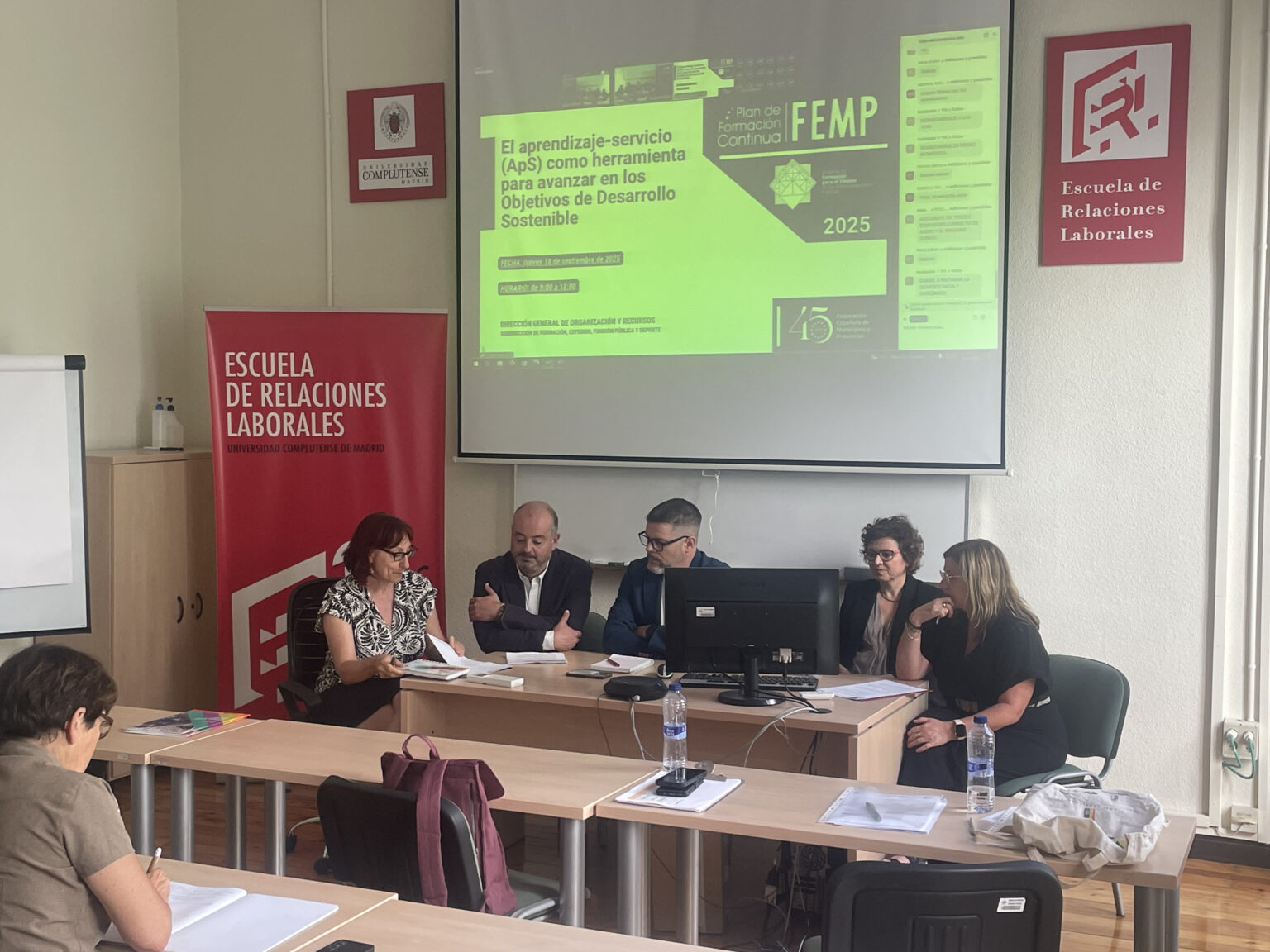
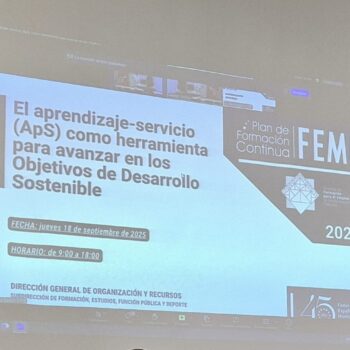
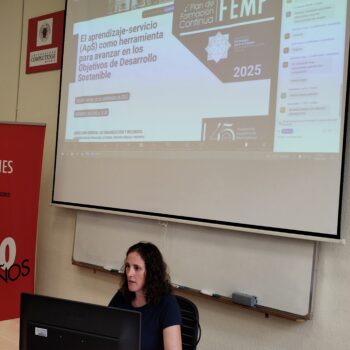
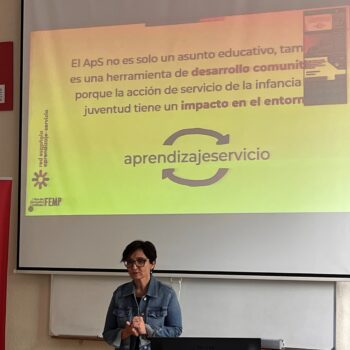
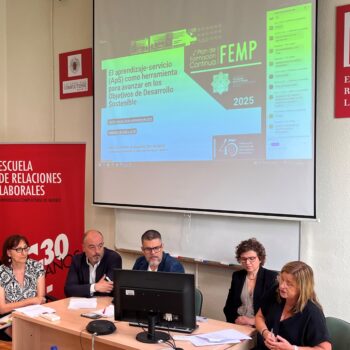
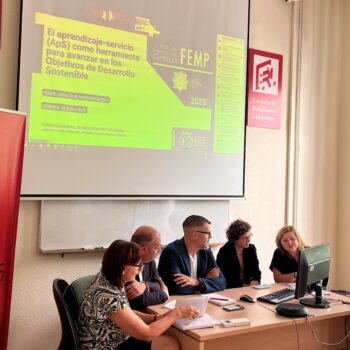
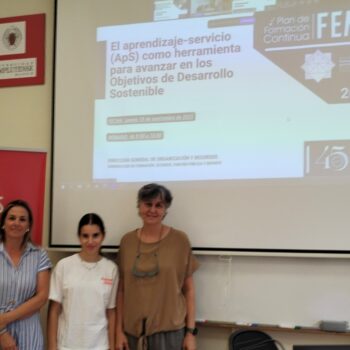
Last September 18, the FEMP and the Spanish Service-Learning Network (REDAPS), as a collaborating partner of the Network of Local Entities for the 2030 Agenda, organised, within the framework of the Continuous Training Plan, the course “SL as a tool to advance the SDGs”.
The event brought together teachers, municipal officials and local technical staff with the aim of exploring how service-learning drives the achievement of the Sustainable Development Goals through educational experiences with social and community impact.
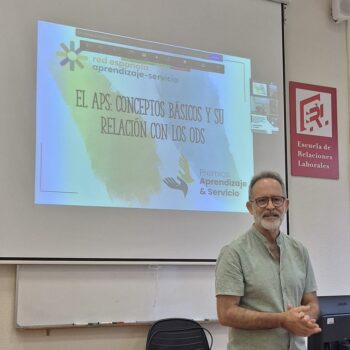
The course opened with a presentation by Francisco Barea, President of REDAPS, who underlined the ethical and humanitarian need for this methodology in a world that demands solidarity, empathy and cooperation.
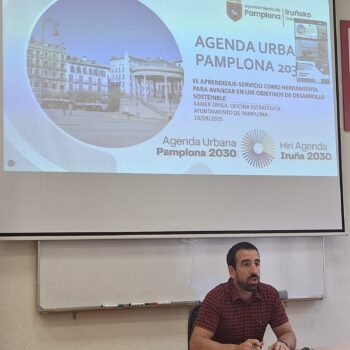
Subsequently, Xavier Errea, sociologist at the Strategic Office of Pamplona City Council, explained how the city has incorporated SL into its 2030 Urban Agenda and portfolio of strategic projects, unanimously approved in 2021, as an example of its contents, but also of its cross-cutting nature.
Good practices from different municipalities were also presented, such as:
– L’Hospitalet de Llobregat (Barcelona): María José Pérez Triviño, Head of the Educating City Unit, highlighted the municipality’s commitment, as a member of the International Association of Educating Cities since 1996, and its support for SL as a tool for social transformation.
– Salar (Granada): Miguel Sevilla Garrido, a teacher at Ecoescuela La Inmaculada, showed how projects such as “Our river needs you” have linked learning and community action, winning the National SL Award in 2021.
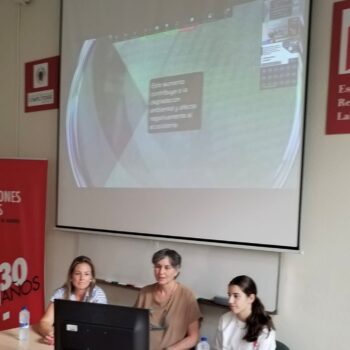
– El Molar (Madrid): IES Cortes de Cádiz presented “You breathe with the Soil”, a project led by Ana Norkus Rodero, a teacher at the school, with the participation of student Claudia Sánchez and councillor Laura Gamito, which gives new life to forest waste to regenerate degraded soils.
The international dimension came with the contribution of Nieves Tapia, founder of CLAYSS (Latin American Centre for Service-Learning and Solidarity), who presented examples of SL projects in countries such as Singapore, Colombia, Poland and Argentina, and their alignment with UNESCO educational declarations and the SDGs.
Likewise, Arantzazu Martínez-Odria, a professor at San Jorge University (Zaragoza), presented the results of a study on the social impact of SL in the community, carried out with 28 managers from 22 social organisations in 10 autonomous communities, which underlines the need to strengthen networking as a tool for community development.
The session closed with a round table of local councils promoting local policies based on SL:
– Iván López Marina, Councillor for Youth in Coslada, explained how SL has led to a Municipal Office, multiple projects each academic year and agreements with universities.
– Nuria Rovira Costas, Councillor for Green Transformation and the 2030 Agenda in El Vendrell, highlighted environmental and community restoration as key lines of action with young people.
– Vicky Sánchez, technician at the Volunteer Bank of Alcalá de Henares City Council, presented joint initiatives with educational centres, social organisations and the local university, including the Solidarity Olympics.
– Sergio Calleja Muñoz, Councillor for Education and Youth in Segovia, shared the SL project in vocational training as a pathway to comprehensive youth education.
The FEMP Network of Local Entities for the 2030 Agenda and REDAPS have assessed this training activity very positively, as it strengthens collaboration between local entities and the education sector to harness synergies between the 2030 Agenda, municipal policies and service-learning.