

21/09/2022
Spanish mayors and local leaders in Vigo defend sport’s power to bring people together within the framework of the FEMP’s 2030 Agenda

In his address, the President of the FEMP, Abel Caballero, defended municipalism and local political action—“an all-encompassing action involving the people” and “a backbone of the country”—and described sport as a “culture of life”
Carmela Silva, President of the Provincial Council of Pontevedra, referred to sport as “a right”, underlined its integrative capacity and advocated local management of funding for sport because Local Governments “are the best at managing what is close to people”
For the President of the CSD, José Manuel Franco, sport is perfectly linked to all the SDGs and has equality as one of its defining values
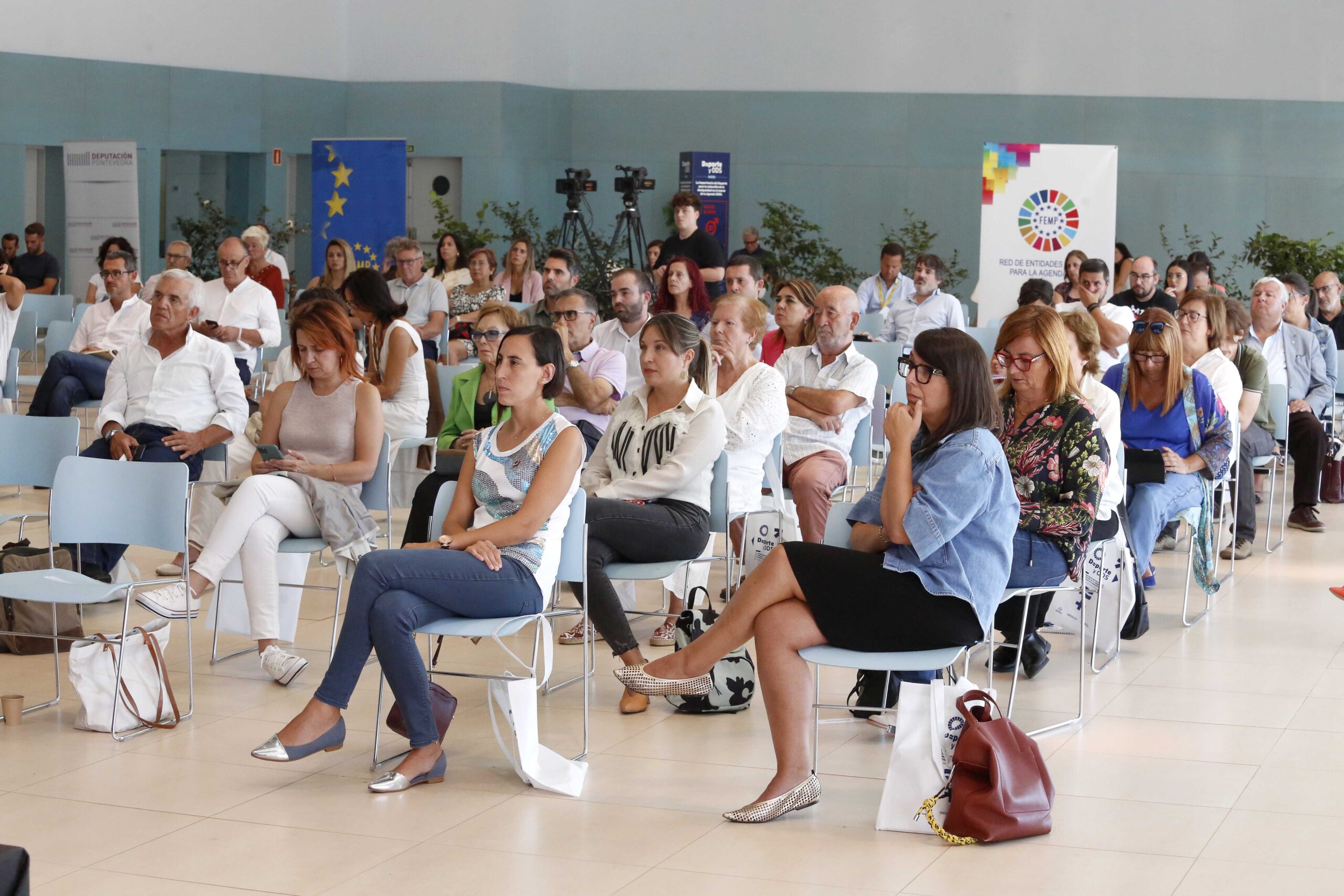
More than a hundred mayors took part in the event, organised by the FEMP, the Provincial Council of Pontevedra and the CSD, which highlights the importance of sport in reducing inequalities
Throughout today, the Mar de Vigo auditorium is amplifying municipal experiences that show the weight of sport in progress towards the goals of the 2030 Agenda
Vigo, 21 September 2022.- More than a hundred mayors and local and provincial leaders from across Spain took part today in the event, which analysed the importance of sport as a tool to fight inequality within the framework of the Sustainable Development Goals of the 2030 Agenda. The President of the FEMP, Abel Caballero; the President of the Provincial Council of Pontevedra, Carmela Silva; and the President of the Higher Sports Council (CSD), José Manuel Franco, highlighted the integrative capacity of sports practice and referred to the role of Local Government in everything related to its management, since most sports facilities in our country are municipally owned.
In his opening address, Abel Caballero defended municipalism as “the total political action, the one carried out for the people and with the people”, and noted that, from the FEMP, local politics is seen as “global politics, as a way of collectively feeling each municipality in Spain”. Caballero insisted on the capacity of Local Governments to serve as the backbone of the territory, and advocated “making sport a fundamental expression of our policy”. “Sport,” he said, “is a culture of life, a way of understanding life, whose values signify and encapsulate many things”, and one of those values is the defence of equality, which the FEMP works on in line with the SDGs of the 2030 Agenda.
For the President of the Provincial Council of Pontevedra, Carmela Silva, “sport is a right and public administrations must commit to making it easier to practise”. For Silva, “society is better when people practise sport”, because it not only “moves millions of people through major events”, but also promotes values: “Those who practise sport have enormous respect for the territory”. For the member of the Governing Council of the Network of Local Entities for the 2030 Agenda, of the FEMP, sport is a fundamental instrument to foster integration and equality, especially between women and men, “as a right, as established in the SDGs of the 2030 Agenda and in most national Constitutions”. Silva also defended the importance of Local Governments managing the resources that other governments allocate to sport because, she explained, city councils and provincial councils “are the most aware of what their territories need”. “It is a just cause,” she concluded; “we are the best managers of sport, because we are the best managers of proximity, which is where sport is practised”.
The opening of the event concluded with remarks by the President of the CSD, José Manuel Franco, who echoed Carmela Silva’s words about proximity and added that “it is city councils that answer to citizens” and that, in this context, “municipalism is the future”. He also stressed the role of sport in reducing inequalities and referred to Nelson Mandela when pointing to sport’s ability to “break down all kinds of barriers”. In his view, sport is perfectly linked to all the SDGs, and just as it supports the empowerment of women and young people, it “brings the SDGs closer in terms of health, sustainability, equality and social inclusion, and participation. Few elements have the catalytic power of sport”—a power which, he explained, accounts for 3% of GDP.
2030 Agenda and sport
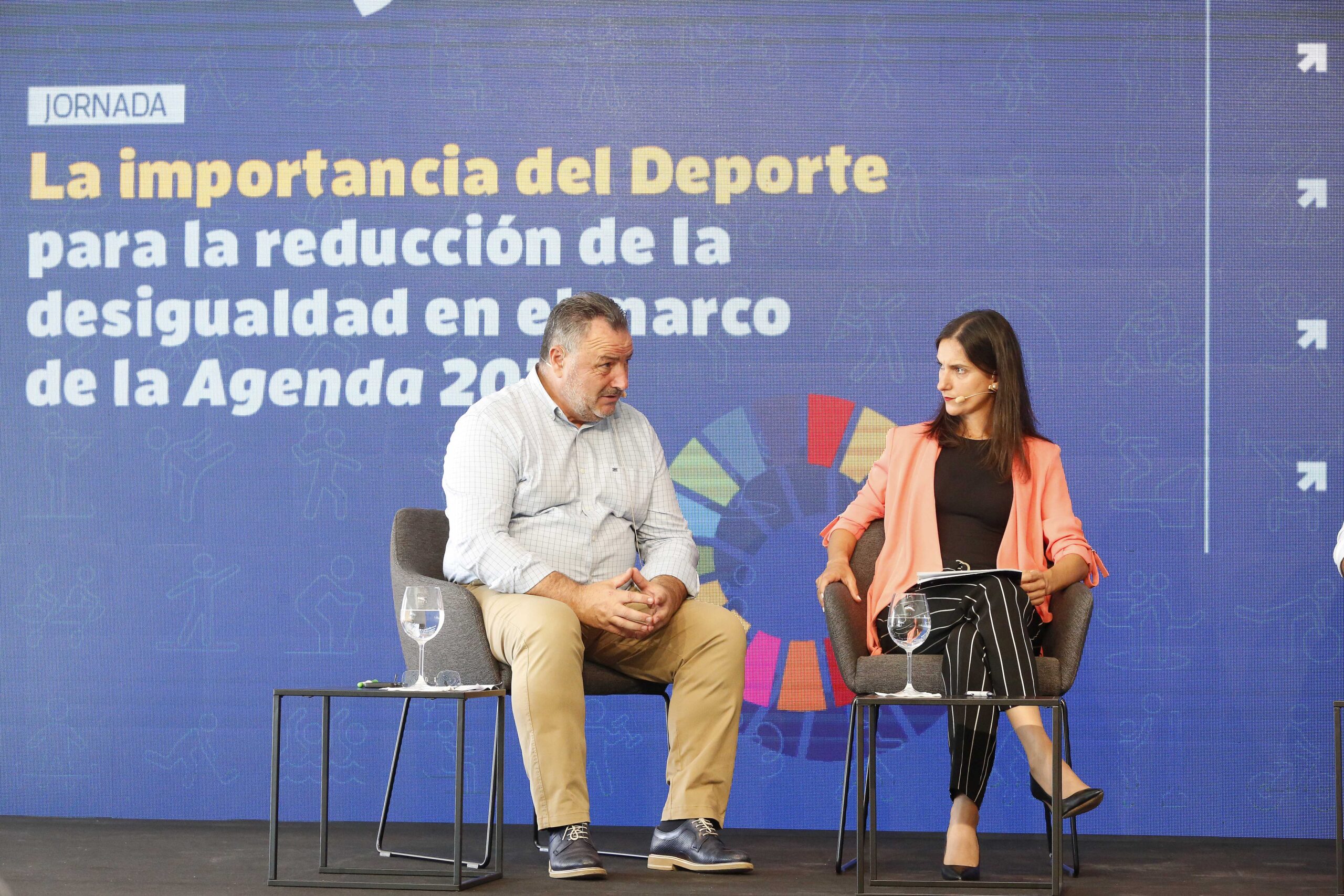
The Mayor of Cáceres, Luis Salaya, President of the FEMP’s SDG 2030 Agenda Commission, and the Deputy Mayor of Sant Feliu de Llobregat, Lidia Muñoz, took part in the dialogue and presentation of experiences on the 2030 Agenda and Sport, moderated by Julián Triguero, Mayor of Pozuelo de Calatrava.
Salaya stated that in Cáceres, sport has generated new dynamics with gender criteria to strengthen women’s teams.
In Lidia Muñoz’s view, sport should have been included as an SDG—which, “as such, does not exist”—because it is a backbone. In her municipality, she has promoted sports policies such as the Consell d’Infants, which she explained to attendees.
Co-governance between administrations was the topic of the second panel. For its moderator, Mercé Barrientos, President of the Association of Galician Women Athletes, “when we have achieved equality in sport, we will almost certainly have achieved it in the other areas of civil life”.
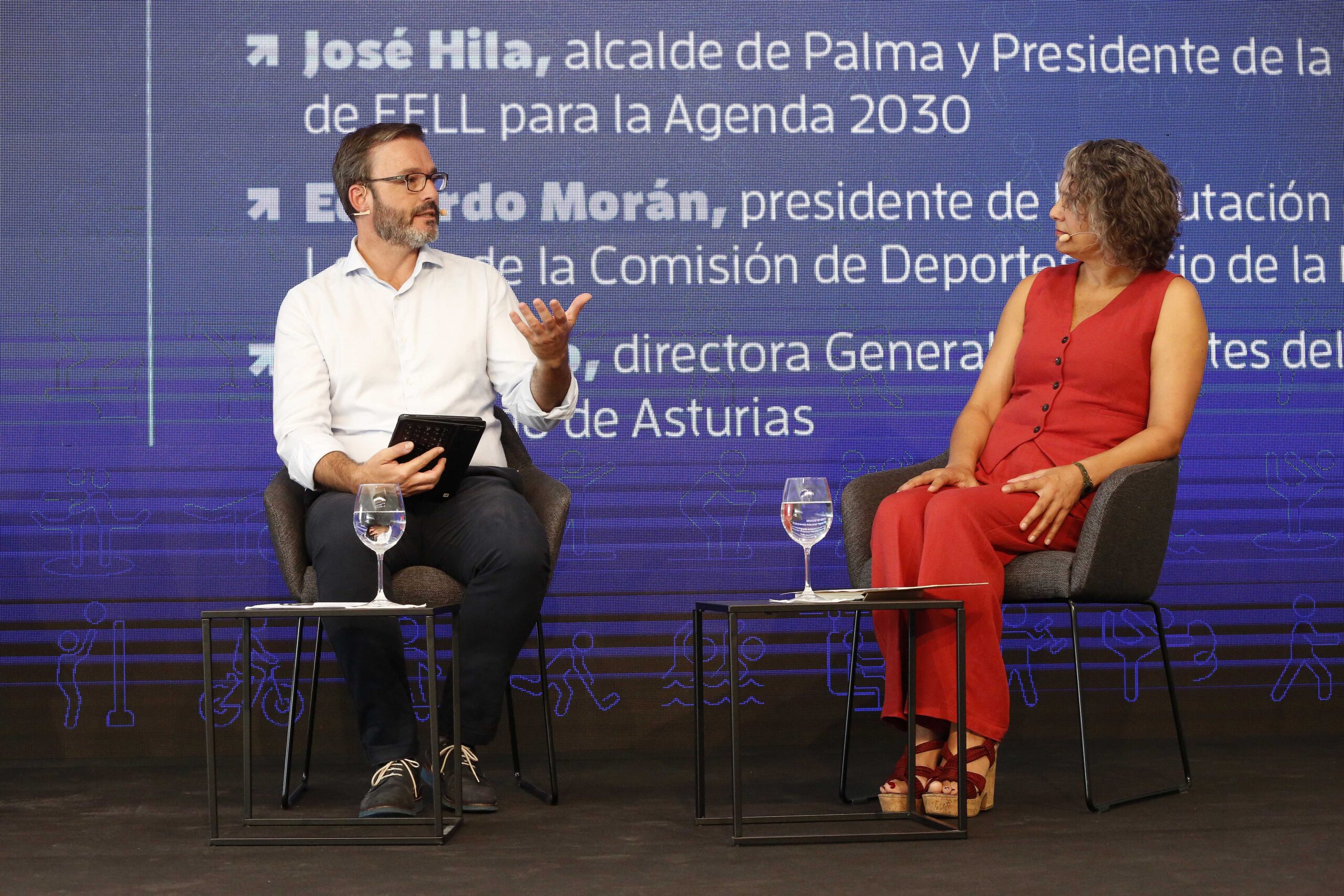
The President of the FEMP’s Network of Local Entities 2030, José Hila, Mayor of Palma, explained that this Network emerged from the United Nations’ commitment to the 2030 Agenda, which States have embraced. However, he said, the SDGs will not be achieved unless Local Governments also embrace them. “The same happens with sport.”
Eduardo Morán, President of the Provincial Council of León and also of the FEMP’s Sports Commission, said that “provincial councils have to play the role of tutors for those small municipalities without budgets or facilities so that anyone can access sport”. To modernise sports facilities—most of them municipal—he called for funding and support.
Finally, the Director General of Sport of the Principality of Asturias, Aida Nuño, explained to attendees that the physical activity and sport law approved in her region establishes sport as a right for everyone and is aligned with the 2030 Agenda, and has been developed among the different administrations. Nuño also referred to the fact that Spain is the only country that has included sport in the European Funds.
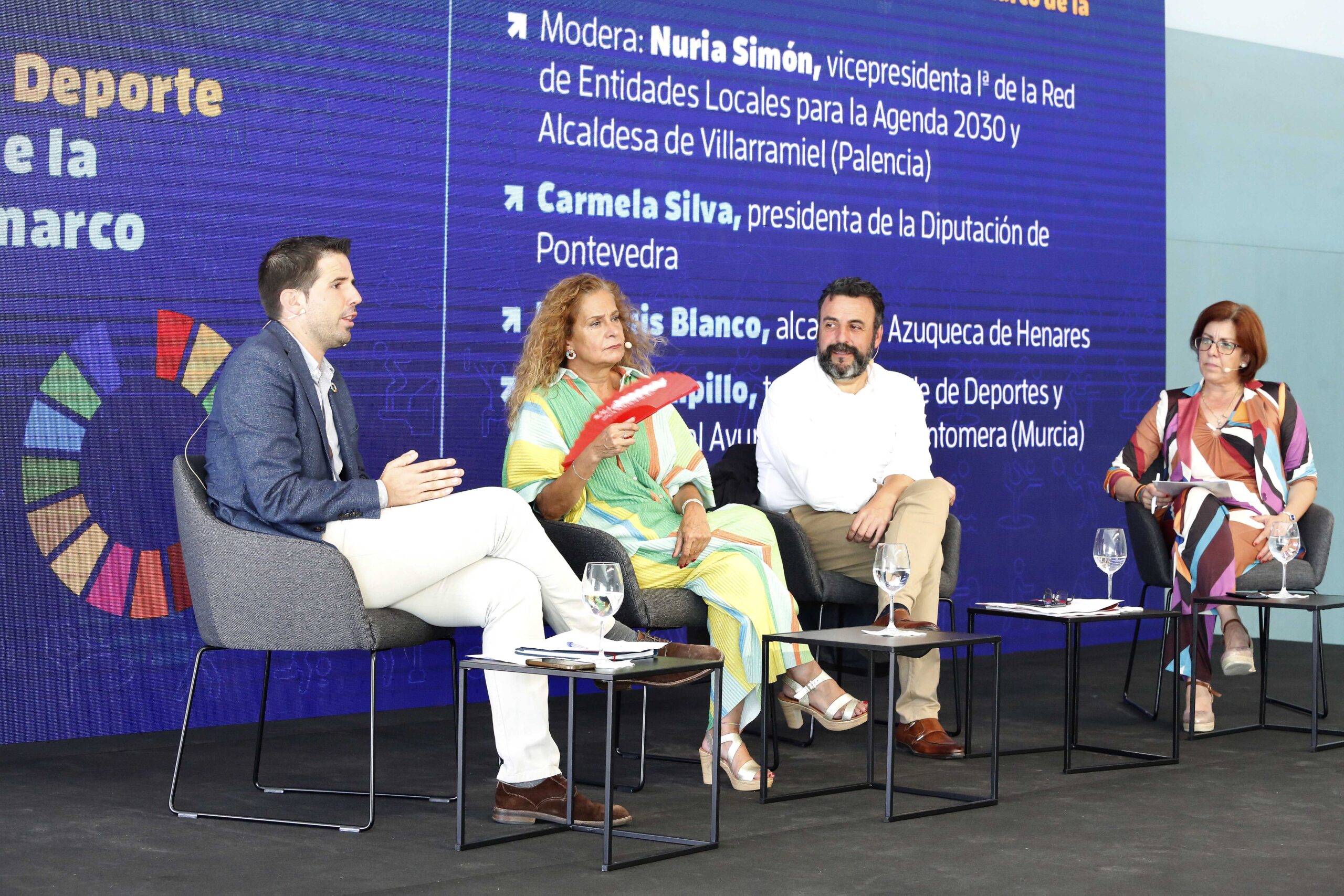
The morning session closed with a round table in which local sport was analysed as a tool for reducing inequality. Nuria Simón, Mayor of Villarramiel and First Vice-President of the Network of Local Entities 2030 Agenda, moderated the contributions of Carmela Silva, José Luis Blanco, Mayor of Azuqueca de Henares, and Javier Campillo, Deputy Mayor for Sport and Security of Santomera (Murcia). In this forum, the President of the Provincial Council of Pontevedra defended equality between women and men (“it seems indecent to me that there is a single administration that does not have equality at the centre of its political activity”, she stressed).
Javier Campillo, for his part, referred to the fact that Santomera is a pilot project for the Urban Agenda to work on SDG 11. Its lines of action include an active role in the Network of Local Entities for the 2030 Agenda to promote sport.
Finally, for José Luis Blanco, being National Capital of Sport “is the most important thing that has happened in Azuqueca de Henares” because “sport is the best element of social cohesion”.
Partnerships in advancing the SDGs in sport
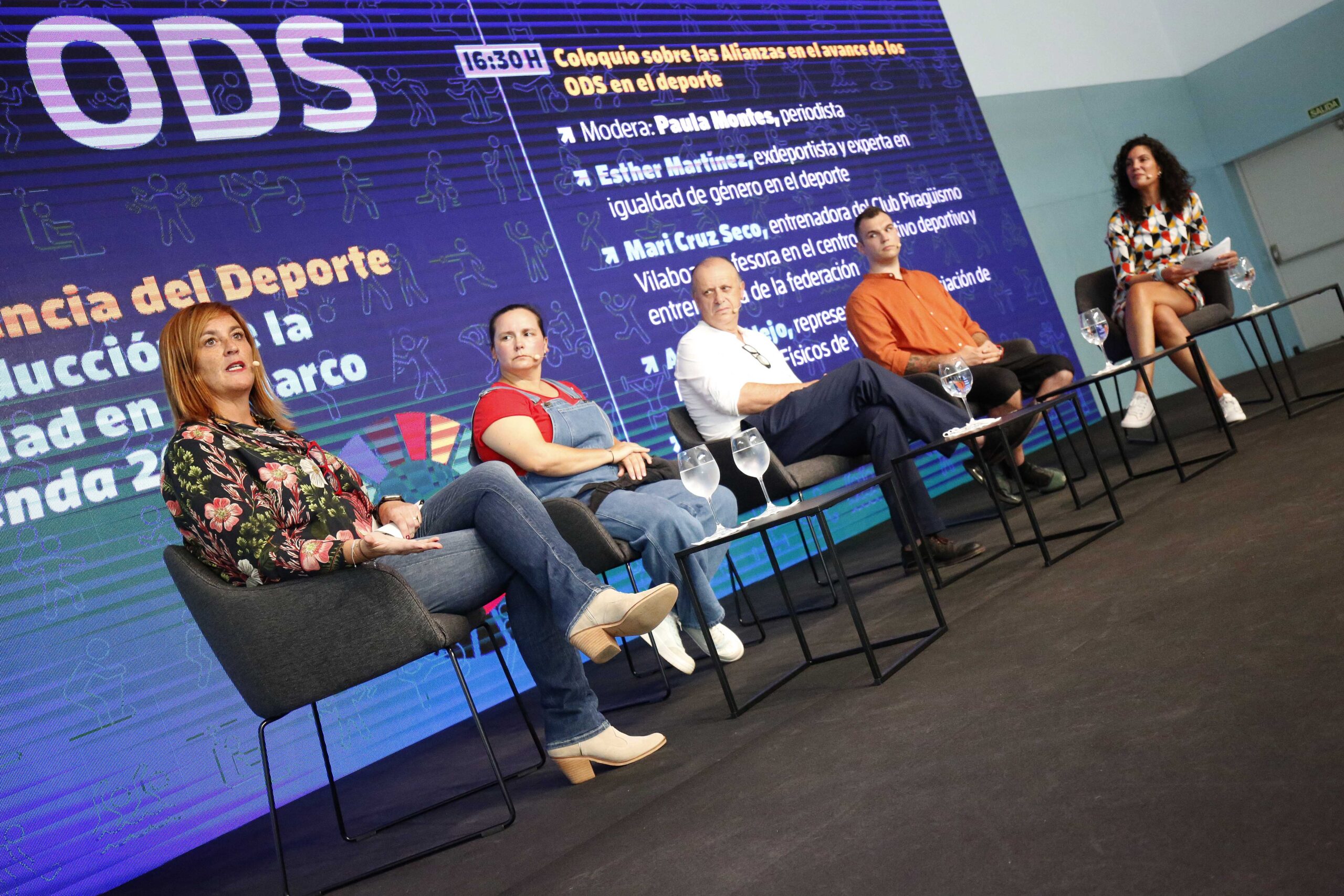
The afternoon session included a discussion on partnerships between the various social, economic, educational, cultural and sports sectors—partnerships that are key to making progress in meeting the 2030 Agenda. The panel was moderated by journalist Paula Montes and featured Esther Martínez, former athlete and expert in gender equality in sport; Mari Cruz Seco, coach at the Vilaboa Canoeing Club and teacher at a sports education centre; Agustín Alejo, representative of the Vigo Association of People with Physical Disabilities in Basketball; and Juan Antonio Segura Lucas, director of the CEPAIM Foundation.
This final meeting was conceived as a tool to understand, from the perspective of sport, which aspects must be taken into account to make progress in meeting the Sustainable Development Goals, focusing on the challenges women’s sport faces in reaching positions of responsibility, as Martínez explained (“if there are not enough women, let’s train them to reach the highest level”); and on experiences in multi-level sport, such as Seco’s career as a coach, the actions carried out by the CEPAIM Foundation, or the new opportunities for inclusion that sport can offer (“A lot of work is done on including people with disabilities, but I would like to see people without disabilities do what we do”, Alejo said).
After this presentation, a Q session was opened in which the audience and speakers delved into the current circumstances of different projects to achieve real equality in sports structures, and new initiatives to extend the values of inclusion and development aligned with the 2030 Agenda.
Finally, the event was closed by Carmela Silva and José Hila. Silva thanked everyone for taking part “because listening allows us to build and for everyone to feel included”, highlighting that all the panels were gender-balanced and the “incredible level” of the women in their contributions; and she expressed her intention to work with the different federations and clubs to award more points to teams that have women coaches. In this regard, Hila concluded by stressing the need to count on women, because “without that 50%, we cannot go anywhere”.