

Good practices
PRADOCASTAÑO ARCHAEOLOGICAL PROJECT
Hernán-Pérez Town Council
Description of the initiative
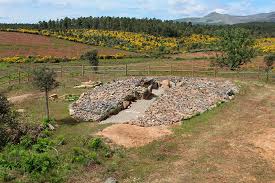
The Pradocastaño archaeological project is an initiative for the recovery and socialization of the archaeological heritage of the town of Hernán-Pérez. Through processes based on community archaeology methodology, it seeks to develop comprehensive work in the study, recovery, conservation, and dissemination of a series of archaeological sites located in the town.
This initiative aims to respond to various challenges, most notably the demographic issue. Aware of the difficulties faced by municipalities in “Empty Spain” to reverse demographic trends, this project explores the possibility of establishing floating populations of students and professionals who visit the town seasonally to train in methodologies for intervention in rural heritage.
Execution period
The project began in 2017 with the intention of continuing until 2030.
Methodology
The methodology for its implementation is based on the incorporation of local actors into the archaeological heritage management process, as well as a strong process of socialization of the work.
Resources
Resources consist of a specialist technical team, supported by volunteers (students in training) and local residents. It is funded by the Provincial Council of Cáceres, with an approximate annual amount of €13,000.
Involvement of actors and building alliances
Involvement has been a key factor: local and provincial institutions, companies in the sector, associations operating in the territory, and universities with which agreements have been signed have all been involved in the project.
Coordination
INTERNAL: Direct participation of personnel involved in municipal management.
EXTERNAL: Constant work that has primarily sought the support of provincial and regional institutions such as the Provincial Council of Cáceres and the Regional Government of Extremadura.
Innovation: What are the most innovative aspects provided by the initiative?
The main source of innovation in this project is based on seeking the participation of the local community in the excavation, study, rehabilitation, and socialization process. In this way, part of the responsibility for project management has been transferred to the local population itself, which assumes, to a certain extent, its role as a guarantor of the protection and intervention of a heritage that belongs to them from the perspective of the territory in which it is located.
What elements should be considered for the replicability of the initiative in another Local Entity?
This project can be replicated in any rural Spanish environment, provided there is social and political will emanating from the territory itself. This is the main drive that must be sought to develop initiatives of this type. After an initial process of structuring the action methodology, a training process for local agents must be addressed for medium and long-term development.
Obstacles: What have been the main obstacles encountered in the different phases of the project?
The main hurdles were initially the lack of knowledge and institutional neglect of this type of heritage, and a certain denial of its importance by the social majority of the town.
Although this issue has been gradually reversed, it still requires greater involvement and full adoption of the discourse by provincial and regional institutions.
Triple impact: Is the project sustainable from an environmental, economic, and social point of view?
The project cannot be understood without a holistic social, economic, and environmental vision. The social challenge is implicit in the vision of local development through the arrival of specialists and students to train in a rural context, an issue that undoubtedly affects the economic level with a return on investment that is difficult to express quantitatively, but is clearly seen qualitatively. Regarding environmental impact, the protection of the site at a heritage level has led to greater interest from local authorities in conserving the surrounding area, which has high natural value as it is located in a dehesa landscape dominated by an oak grove in a process of degradation and retreat due to the impact of climate change.
The project is completely sustainable from an environmental, economic, and social point of view.
Results, measurement, and impact
To date, after 6 years of interventions at the Hernán-Pérez necropolis, we can speak of a positive impact that has achieved the full recovery of the Pradocastaño dolmen and the start of the excavation processes for the Majadilla dolmen.
In terms of dissemination, more than 800 participants in guided tours and more than 150,000 impacts on social networks and the internet have been documented.
This dissemination has been supported by communiqués, press releases, radio interviews, and various promotional videos. At a technical level, more than 100 volunteers from different universities and entities have been trained in archaeological methodology through the various excavation campaigns. Likewise, various disused municipal facilities have been recovered, and local cultural activity has been revitalized through talks, conferences, and workshops.
Further information:
Academic publication: dialnet.unirioja.es/descarga/articulo/8770501.pdf
Videos:
www.youtube.com/watch?v=BahdVnr5Ph0 www.youtube.com/watch?v=6_FB59wLYrI
Interviews:
www.youtube.com/watch?v=sH4xs2uhkUA www.youtube.com/watch?v=LuyX5drrPlU
www.youtube.com/watch?v=s67zuDFhEes
View more cases
Local Entity name: Hernán-Pérez Town Council
Province: Cáceres
Autonomous Community: Extremadura
Number of inhabitants: 424
Contact person: Pablo Iglesias Ordóñez. Mayor. E-mail: pablodex87@gmail.com
SDGs involved: