

Good practices
TRAIN PROMENADE
Fuenlabrada City Council
Description of the initiative
The city of Fuenlabrada is located in the Madrid metropolitan area. Situated in the southwest of the region, about 20 kilometres from the capital, it borders the municipalities of Alcorcón and Leganés to the north, Getafe and Pinto to the east, Parla and Humanes de Madrid to the south, and Moraleja de Enmedio and Móstoles to the west. The municipality of Fuenlabrada covers an area of 39.21 km2 and has a total population of 196,880 inhabitants, resulting in a high population density (5,021 inhabitants/km2). This makes Fuenlabrada one of the densest and most populated municipalities in the region.
The strategic project “Train Promenade”, which was incorporated into Fuenlabrada’s Urban Agenda Action Plan, aligns its objectives with the United Nations 2030 Agenda and the SDGs.
The project “Train Promenade” takes advantage of the opportunity offered by a linear infrastructure that runs through the city to create a new backbone for urban green infrastructure, connecting rest areas, facilities and existing green spaces along its route.
In figures:
- 695 m2 in length
- 577 m2 belonging to ADIF
- 18 facilities and two undeveloped plots totalling 131,250 m2 and 200 m2 of green areas
- 356 m2 allocated to parking
The railway infrastructure creates a significant discontinuity in the urban fabric and a disconnection between neighbourhoods, but opportunities have also been identified and are addressed through the following strategies:
- Improving the continuity and quality of routes
- Improving the quality of existing cross-connections and creating new ones.
- Refurbishment of the commuter rail stations.
- Defining criteria for landscape integration.
Each strategy is broken down into a range of actions.
The project’s key objectives are:
- Integrating the railway line into the urban landscape.
- Creating new green infrastructure.
- Improving pedestrian and cycling mobility and regenerating the surrounding urban environment.
All of this will, in turn, deliver additional benefits, such as improving civic coexistence and social cohesion by promoting urban connectivity, increasing perceived safety in friendly environments, and encouraging a healthier, more active lifestyle.
Implementation timeframe
The project is being developed over a very long timeframe, extending beyond 2030, due to the diversity of actions and stakeholders involved. Some actions have already been completed, others have projects already drafted and under way, while the long-term actions depend on other instruments, such as the new General Plan, which is currently being drafted.
Methodology
Sequencing the implementation of actions according to the availability of funding, the impact on residents, and the complexity of management.
Resources
It began with municipal resources and staff, and actions have been progressively aligned with the new financial resources provided by the Recovery, Transformation and Resilience Plan and with the shared objectives agreed with ADIF and RENFE.
Stakeholder engagement and alliance-building
Since the project’s earliest sketches, meetings have been held with ADIF to inform them of the municipal strategy and foster synergies between the actions of both administrations.
Various stakeholders have been involved in defining the strategies and specific components:
- Unorganised residents and neighbourhood associations.
- Collaboration with students and lecturers from Rey Juan Carlos University, who contribute student work from the Fundamentals of Architecture degree programme.
- In the professional sector, through the call for a project competition in collaboration with COAM, contracts for drafting various projects, and technical assistance for drafting the Train Promenade project.
Coordination
INTERNAL. The strategy has been defined and coordinated by the Urban Planning department of the Urban Development Area, with the collaboration of other departments and areas, such as Environment, Infrastructure, Citizen Participation, Procurement or Financial Control, which have provided support as needed.
EXTERNAL. At the start of the project, a joint call was made to define the strategy included in the Urban Agenda Action Plan, followed by ad hoc contacts with the various stakeholders depending on the action to be implemented.
Innovation: What are the most innovative aspects of the initiative?
Moving away from expectations of burying the railway in Fuenlabrada in order to propose an ambitious and more realistic strategy in which the railway is integrated into a new urban space. Transforming residual spaces, which were part of the city’s formation on both sides of the wall of the railway tracks, into a new urban landmark with distinctive interventions along its entire route.
What elements should be considered to replicate the initiative in another Local Entity?
That it can be developed spatially and that there is a municipal vision that, from the perspective of urban regeneration, enhances the opportunities of the spaces.
Obstacles: What have been the main obstacles encountered in the different phases of the project?
The scale of the project in all its dimensions.
In the professional sector, through the call for a project competition in collaboration with COAM, contracts for drafting various projects, and technical assistance for drafting the Train Promenade project.
-
- Economic: the need to constantly seek funding for its implementation.
- Dimensional: requiring very diverse solutions and, at times, highly complex management.
- Railway constraints: requiring direct contact with the infrastructure managers, and even credibility, as it involves reversing a long-standing situation.
- The fracture and undervalued, underappreciated spaces against the physical barrier of the infrastructure fencing.
Triple impact: Is the project sustainable from an environmental, economic and social point of view?
The project is an orderly set of actions in the city around the new promenade that crosses the municipality through its central area. Most of these are remodelling and environmental improvement actions that the Train Promenade project has organised and prioritised for the benefit of the city as a whole. The triple impact is assured.
The actions are based on improving the environmental quality of the existing space, with planting adapted to the surroundings, low maintenance, and with the aim of turning it into a pedestrian and cycling promenade that runs through the municipality. Pedestrian mobility is increased, which means a reduction in emissions; the surroundings of facilities and residential areas adjacent to the promenade are improved, which will lead to social and economic improvements for this area and for the whole city, given the city-wide scale of the solution proposed.
Results, measurement and impact
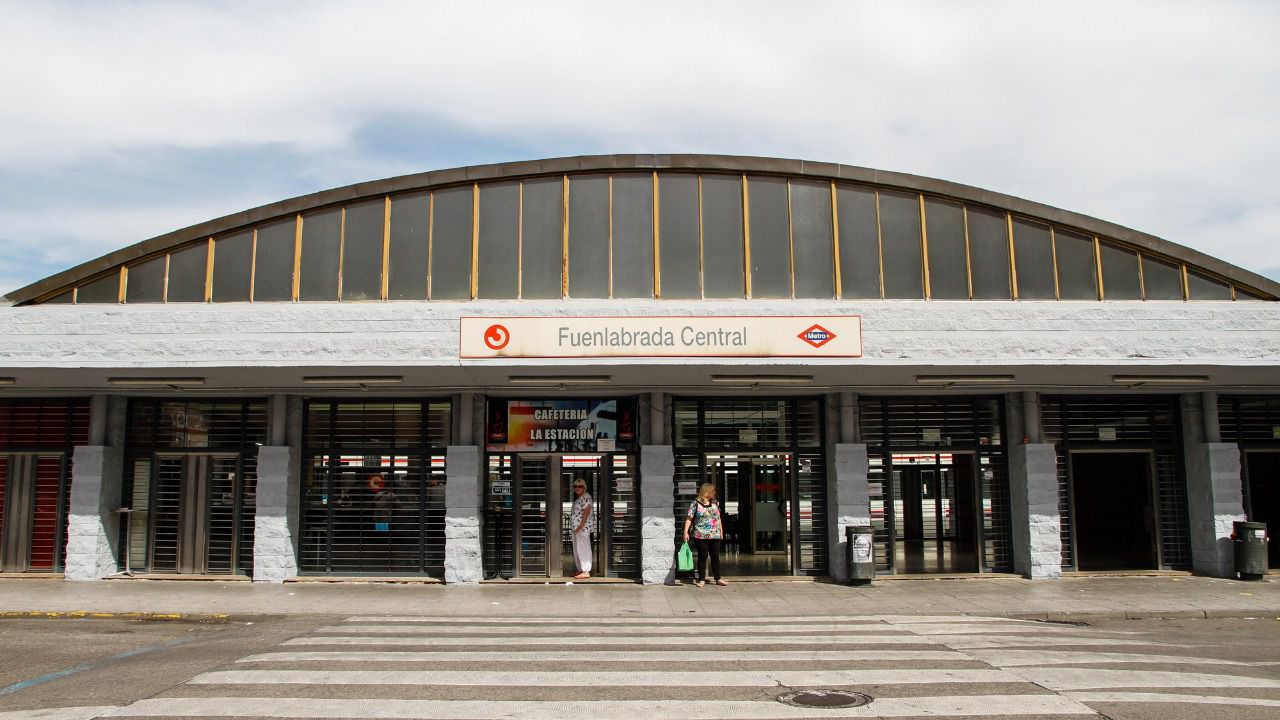
Impacts have been immediate in the areas where actions have already been implemented. For example, there has been a significant increase in foot traffic through the Pozuelo Street underpass, as it is safer, more accessible and more attractive, directly affecting residents’ daily lives as well as local commercial activity. The interventions in Huerto del Cura Park have increased its visibility and use by residents, and the same has occurred with the covered square in front of Fuenlabrada Central station.
View more cases
Local Entity name: Fuenlabrada City Council
Province: Madrid
Autonomous Community: Community of Madrid
Number of inhabitants: 189.981
Contact person: Marta Nieto Varela
SDGs involved: