

16/03/2023
Balancing the economy, society and the environment: key to local sustainable development
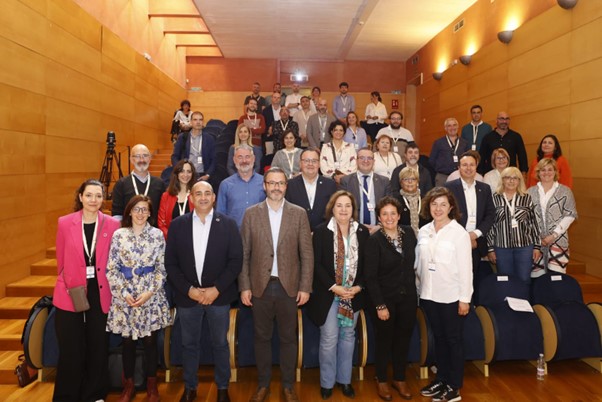
The FEMP, through its Network of Local Entities for the 2030 Agenda, brings the debate to Palma on the social, economic and environmental balance of the 2030 Agenda at local level, with a new event held in Palma.
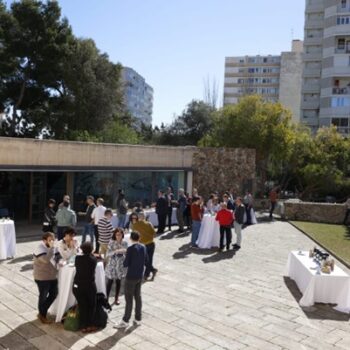
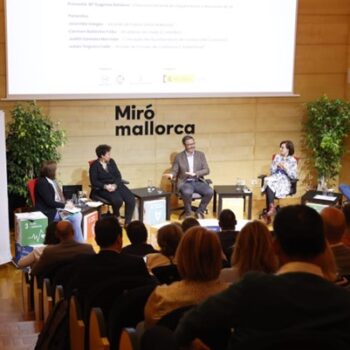
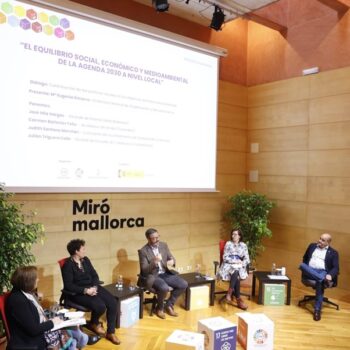
“The objectives and targets are integrated and indivisible in nature, and bring together the three dimensions of sustainable development: economic, social and environmental.” This is one of the main ideas set out in the 2030 Agenda, and one that the FEMP has taken up for its latest event, held at the Auditorium of the Pilar i Joan Miró Foundation in Palma on March 9 and 10. Under the title ‘The Social, Economic and Environmental Balance of the 2030 Agenda at Local Level’, municipal representatives from the Network of Local Entities for the 2030 Agenda presented the initiatives carried out in this regard in their respective local councils.
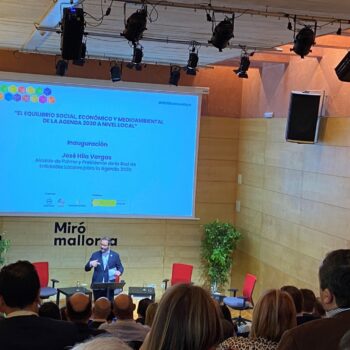
The event began with a reflection that is now common to all FEMP meetings. This time it was voiced by José Hila, Mayor of Palma and President of the Network, who stressed that it is essential to convey the importance of the Sustainable Development Goals to the public so that they become more aware of the weight that the local level carries in achieving the SDGs. Because “the reality is that we can only face a more sustainable and fairer future,” as Juan Cruz Carrasco, Island Director of the Consell de Mallorca, noted. In fact, the SDGs “are the tool that can guarantee our survival,” emphasised Mercedes Garrido, Minister of the Presidency of the Balearic Government.
And they are the essence of the 2030 Agenda, an indispensable guide for local government, especially for smaller local councils. This was highlighted by Antoni Salas, President of the Federation of Local Entities of the Balearic Islands, who added that “it enables balanced development and guarantees consistency between values and quality of life”.
Cross-cutting leadership
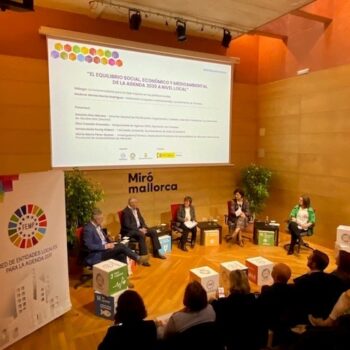
One of the pillars in this search for balance in sustainability is mainstreaming. This was precisely the main topic of the first panel discussion, moderated by Montse Borrás Rodríguez, representative for European and International Relations at the Terrasa City Council, who noted that local governments face the “important challenge of creating cross-cutting coordination between areas and departments to create an exponential movement” around the 2030 Agenda. A path that “is a learning process for everyone, because we have to design innovative solutions to very complex problems, while engaging in dialogue” with other stakeholders and with the public.
The mission, therefore, is not easy. That is why events like this one held in Palma are essential to analyse different perspectives on the local implementation of the SDGs. For example, in Alcobendas, they began with a preliminary analysis and a session to engage with the main stakeholders, as explained by Antonio Díaz Méndez, Director General for Planning, Organisation, Quality and Citizen Services at the City Council. “We created participation labs, we involved all colleagues extensively and the different areas, helping them grow and lead,” he detailed.
At the Provincial Council of Córdoba, by contrast, they observed the need to “map the actions of different areas around the SDGs. In this way, we generated a cross-cutting leadership movement, which made us see that each part has a fundamental role in sustainable development,” said Elías Casado, Head of the 2030 Agenda at the Córdoba Provincial Council. This idea was also explored by the City Council of Onda, in Castellón. Its Environmental TAG, Inmaculada Escrig, noted that the key in their case was “to involve the different municipal technical staff from the very beginning so that a cross-cutting process could be generated. We must look for people who demonstrate real leadership and who truly drive integration”.
For her part, Gloria María Pérez-Bustos, technical researcher at the Provincial Observatory for Sustainability of Albacete, brought the first panel discussion to a close by explaining that her municipality opted for joint collaboration with 72 municipalities. “We created a momentum plan aligned with the 17 SDGs and invited them to update it through a transition process from Agenda 21 to the 2030 Agenda,” she explained.
Creating balance from the local level
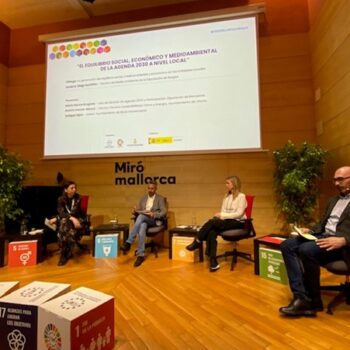
The concept of sustainability has changed over the years. While at the beginning it was attributed to a purely environmental area, now, with the SDGs and the 2030 Agenda, it has taken on a more cross-cutting perspective. “Fortunately, we have evolved and moved beyond that view,” agreed Diego Santillán, Environmental technician at the Provincial Council of Burgos, during the presentation of the second panel discussion entitled ‘Creating social, environmental and economic balance in Local Entities’. This triple balance, Santillán added, “makes us more effective in local administration, because different policies and lines of action are integrated and more heterogeneous working groups are formed”.
A clear example of this can be found at the Provincial Council of Barcelona. With more than 4,000 employees and 300 municipalities, they had to create a protocol to integrate the 2030 Agenda across all areas. The greatest effort came when it came to combining sustainability and participation, as explained by María García Brugada, Head of the 2030 Agenda and Participation Service. In fact, they have encountered several challenges in this regard. “We have not properly identified the targets. We need to create good strategies to define the process and, to that end, we have created an internal working group and the 2030 dashboard with 85 indicators,” she detailed. However, “our capacity for transformation is slower than our capacity for planning,” so when it comes to putting participation at the heart of the 2030 Agenda it is necessary to commit to digitalisation, she added.
Difficulties and challenges are, in fact, part of the process of implementing the 2030 Agenda at local level. And each municipality must adopt it in a tailored way, with bespoke solutions adapted to its own needs and demands. In the City Council of Vitoria, for example, they found inspiration far beyond Spain’s borders. “The visit by technical teams from New Zealand has given us a great insight that the problems we have in our municipalities are identical to those on the other side of the world,” stated Beatriz García-Moncó, technician in the Sustainability, Climate and Energy Service of the Vitoria City Council. “We are reflecting a great deal on how we are carrying out participation processes. We are segmenting by location and by theme, looking for people with concerns to generate leadership,” she detailed. And that is the idea behind their ‘Neutrality Mission’ project, which consists of an office or citizen service point in each neighbourhood to involve residents and build working networks.
For his part, Enrique López, advisor to the City Council of Rivas Vaciamadrid, stressed that the 2030 Agenda “is an opportunity for economic and social reactivation and to reorient local perspectives”. But the key, he indicated, is to ask “how do we make the leap from awareness-raising actions to active participation?”. For example, in their plan to reduce school emissions, they have opted for a multifactor approach, seeking to involve the private sector, as well as promoting a children’s forum for children aged 6 to 12.
Observer and Collaborating Partners of the Network
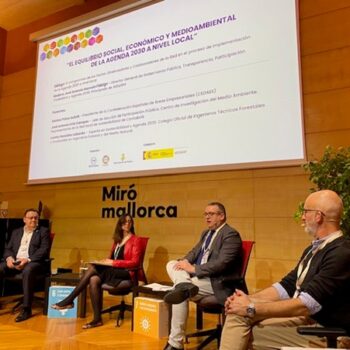
“The SDGs are not going to be met, but what matters is the path we are taking.” This is how bluntly José Antonio Garmón, Director General for Public Governance, Transparency, Citizen Participation and the 2030 Agenda of the Principality of Asturias, began his speech. And on that path, the 2030 Agenda is the roadmap, but “it cannot remain in the abstract; it must be brought down to earth and made tangible” and, not only that, it cannot be seen “as a single project of the Public Administration”. It is necessary to involve other stakeholders in this change, and that was the focus of the panel discussion presented by Garmón, entitled ‘The commitment of the Network’s Observer and Collaborating Partners in the process of implementing the 2030 Agenda at local level’.
Santos Prieto, President of the Spanish Confederation of Business Areas (CEDAES), used his intervention to focus on a part of cities that, in his view, often goes unnoticed. “We must bear in mind that industrial estates are the most forgotten neighbourhoods,” despite the fact that 53% of GDP is produced in them. Prieto explained that they currently carry out agreements with local councils and provincial councils to analyse actions that can be established in relation to the SDGs, but there is still a long way to go.
And this is a conclusion shared by other collaborators of the network, such as José Antonio Uría, Head of the Public Participation Section at the Centre for Environmental Research and representative of Cantabria’s local sustainability network. The main challenge when implementing the 230 Agenda, he concluded, “has been bringing territories together, as well as making the benefits of its integration known. The lack of staff in technical areas makes it difficult to carry out agile integrations”.
Likewise, there is also a lack of connection with key external professionals in achieving the SDGs. The clearest example in this regard was provided by Loreto González, expert in Sustainability and the 2030 Agenda at the Official College of Technical Forestry Engineers and Graduates in Forestry and Natural Environment Engineering. “Forestry activity directly influences CO2 offsetting. We have lost traditional uses, and they are really what could get us out of this unsustainable situation,” she argued. “Our main challenge is to make our functions known in relation to the SDGs,” she added.
From local policies to the SDGs
How do local policies contribute to the Sustainable Development Goals? The participants in the final panel discussion of the event, presented by Mª Eugenia Simarro, Director General for Organisation and Resources at the FEMP, sought to answer this question. The debate around this topic is very broad and varies depending on the particularities of each municipality, but some common conclusions were drawn.
The Mayor of Palma, José Hila, backed technical teams, who “are the ones who can make the impact of the 2030 Agenda succeed thanks to their commitment”. However, there are many challenges to face, given that “the SDGs are cross-cutting and need a lot of time to improve, and above all we need to be brave to govern”. Among them, the involvement of all generations, including the youngest, as noted by Carmen Ballester, Mayor of Onda (Castellón). “We must generate actions that have an impact” and establish measurable indicators that “allow us to evaluate and improve policies to respond to the public,” she added.
And there are also local challenges, such as those faced by the City Council of Torrejoncillo, in Cáceres, as conveyed by Councillor Judith Santano. “We have been building different lines of action despite the difficulties due to the lack of staff,” she explained. An example of this is their intergenerational plan “so that all the municipality’s actions aligned with the SDGs are cross-cutting”.
The ultimate goal is to bring the 2030 Agenda down to earth and take steps towards sustainability. To this end, some local councils opt for specific actions associated with each SDG. This is the case of Pozuelo de Calatrava, in Ciudad Real. Its Mayor, Julián Triguero, explained that, for example, “we have brought SDG 5 into sport through handball thanks to the involvement of the FEMP” and in the future they will implement SDG 6 by “improving the municipality’s water facilities”.
In conclusion, to achieve balance between the economy, society and the environment on the path of the 2030 Agenda and the SDGs, meetings like this one held in Palma are essential. Sharing difficulties and challenges faced by local entities, presenting different points of view and proposing innovative solutions is key to moving forward towards sustainability.
Hydrogen buses, an example of Good Practices
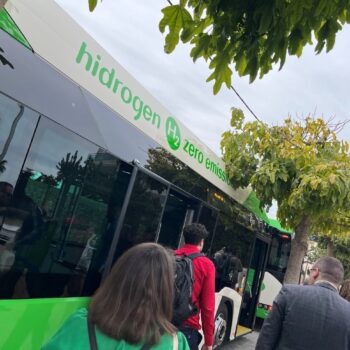
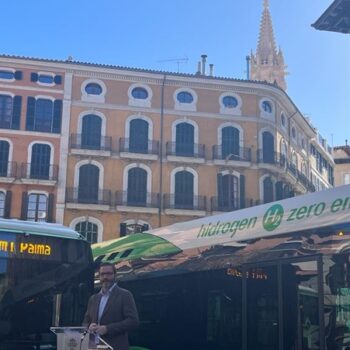
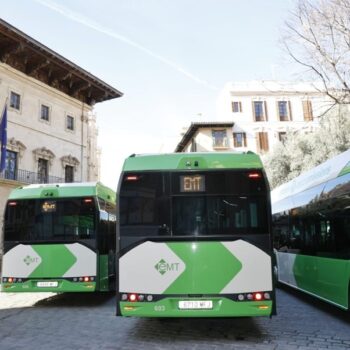
As part of the event, and as a clear example of a Good Practice by the City Council of Palma in relation to the SDGs (SDG 7 Affordable and Clean Energy; SDG 9 Industry, Innovation and Infrastructure; SDG 11 Sustainable Cities and Communities; SDG 13 Climate Action), attendees had the opportunity to tour the city in Palma’s first green hydrogen buses, which the Mayor of Palma and President of the Network, José Hila, would officially present on Friday 10 March as the latest initiative carried out by the City Council to achieve the local SDGs.
Next, participants visited the EMT facilities to learn more about this pioneering project, which represents a revolution in mobility and a clear commitment to a just energy transition, as the main advantage of these buses is that they produce no emissions and are quieter. In addition, they run on fuel produced at the green hydrogen plant in Lloseta, Spain’s first industrial renewable hydrogen plant.
The vehicles represent a further step in the City Council’s commitment to sustainable mobility and new fuels, making Palma the second Spanish city, after Barcelona, to have a fleet of vehicles powered by green hydrogen fuel cells. The initiative is part of the European Green Hysland project, whose ultimate goal is to build a renewable hydrogen ecosystem in Mallorca and thus contribute to the environmental objectives of the 2030 Agenda.