

14/03/2022
Nearly four hundred Local Governments are already implementing policies in their territories aimed at achieving the SDGs.
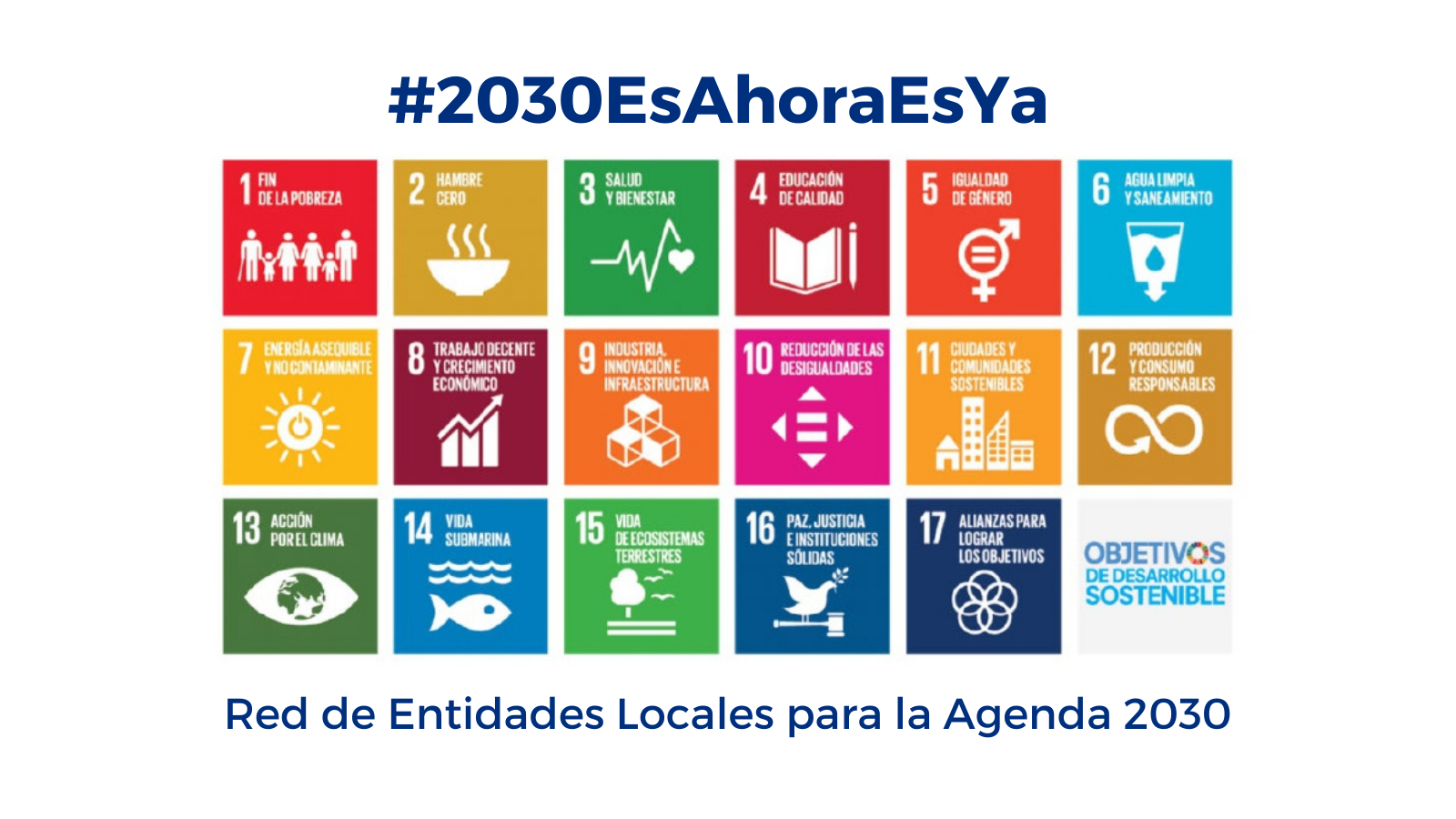
The Network of Local Entities for the 2030 Agenda is making tangible progress in sustainable development.
Nearly four hundred Local Governments are already implementing policies and actions in their territories aimed at achieving the Sustainable Development Goals (SDGs). This is a collective effort that brings together the Network of Local Entities for the 2030 Agenda and paints an optimistic outlook for addressing the challenges of social, political and economic transformation required by the targets set.
At the halfway point of the time set to achieve the 17 goals of the 2030 Agenda, the Network of Local Entities is seeing progress in this area take shape thanks to the direct implementation of municipal and provincial public policies, and the exponential growth in the commitment of numerous local administrations that have joined the initiative led by the FEMP.
This increase in the number of entities is explained by the strong interest shown by them in having a direct impact on citizens’ well-being. In this way, they are able to roll out, at local level, a set of actions that make it possible to address effectively the challenges posed by the imbalance in the triple impact: environmental, social and economic.
The coordinated work of Local Governments reflects their commitment to assume the role that corresponds to them as a lever for change. This driving work is essential to activate action that helps implement, with criteria of equity and social justice, the SDGs established in the 2030 Agenda.
In addition, the growing relevance of the work of the Network of Local Entities for the 2030 Agenda is strengthening alliances with other institutions, such as the one recently established with the Spanish Olympic Committee (COE). The COE, for its part, joins in by helping to implement initiatives subject to sustainability criteria in local sport.
This is one of many examples of the cross-cutting approach required by the paradigm of the Sustainable Development Goals, set by the United Nations General Assembly: an action plan that is localised in line with the particularities of each territory and that implements the 2030 Agenda under the leadership of Local Governments, in active collaboration with citizens, the business and social fabric, the third sector, the academic and cultural spheres and, ultimately, the commitment and involvement of society as a whole to meet the SDGs within the agreed timeframe.


