

21/10/2025
The Network’s Working Group of Intermediate Local Entities meets within the framework of the 5th Assembly
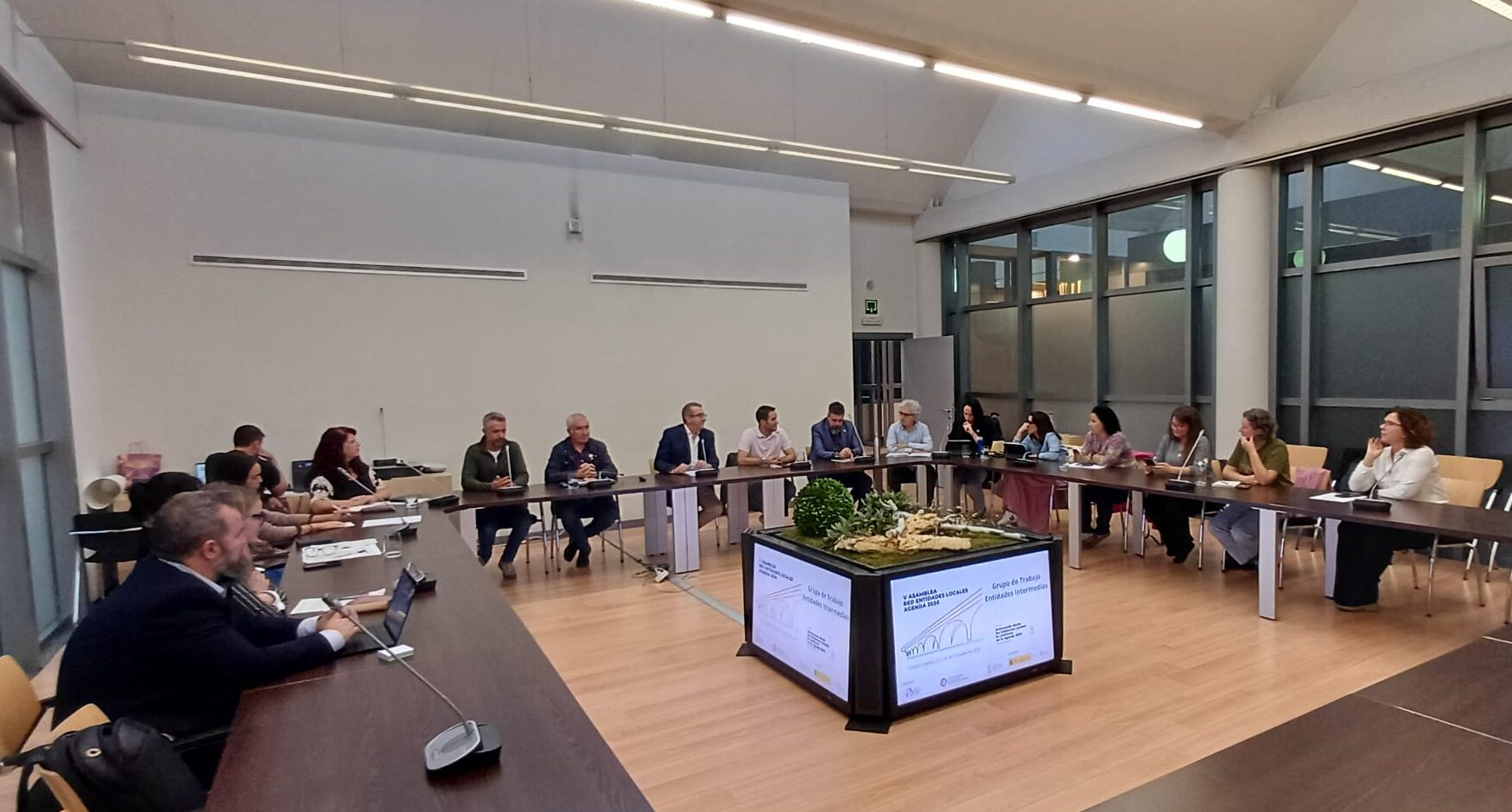
Last October 21, within the framework of the 5th Assembly of the Network of Local Entities for the 2030 Agenda, a new meeting of the Working Group of Intermediate Local Entities, in which Provincial Councils, Cabildos, and Island Councils shared good practices and experiences aimed at promoting the implementation of the Sustainable Development Goals from the provincial and island levels.
During the opening, the president of the Network of Local Entities highlighted the importance of this collaborative space, which seeks to “share experiences that contribute to integrating the SDGs into the structures, policies, and actions of each administration”. He also stressed that sustainable development requires first-hand knowledge of how different territories are addressing this common challenge.
Throughout the day, various initiatives related to key aspects for achieving the SDGs were presented, such as the preparation of Voluntary Local Reviews (VLRs), budgetary alignment with sustainable objectives, internal training processes, citizen awareness campaigns , and mainstreaming strategies for the SDGs across all government areas.
On this occasion, the Provincial Council of Burgos, the Provincial Council of Cáceres, the Provincial Council of Córdoba, and the Island Councils of Gran Canaria and La Palma were responsible for presenting their experiences.
Each intervention provided insight into significant projects and advancements, as well as, opening spaces for dialogue and exchange with the other participants.
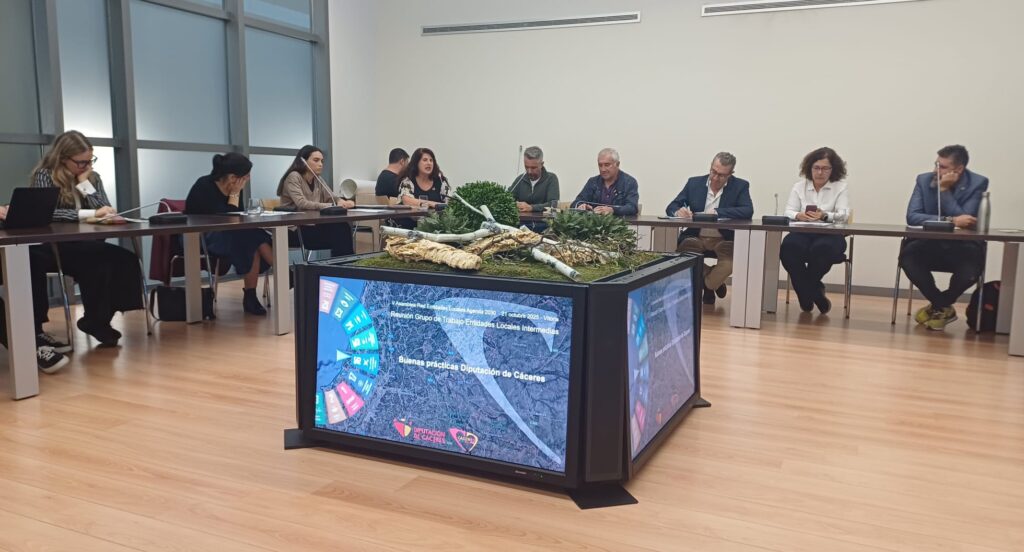
The president of the Network emphasized that “these sessions are an opportunity not only to showcase what we have achieved but also to inspire each other and strengthen an inter-institutional collaboration network that enhances our collective impact”.
With this event, the Network continues to consolidate the joint work initiated in previous sessions, held both in-person and virtually, with the aim of fostering cohesion and advancing in the localization processes of the 2030 Agenda.
The session concluded with thanks to all participating entities for their commitment and willingness to share their achievements and challenges, reaffirming the common desire to move towards more sustainable, inclusive public administrations committed to the future.
The next meeting of the Working Group is scheduled for January 2026, where this network of knowledge and action in favor of sustainable development will continue to be strengthened.
Learn about the experiences
Provincial Council of Burgos
The Provincial Council of Burgos presented the Provincial Sustainability Itinerary “CaminODS Burgos”, a pioneering initiative that seeks to bring the 2030 Agenda closer to rural areas through the direct involvement of municipalities.
The project identifies 17 pilot municipalities, each with a municipal project aligned with one of the Sustainable Development Goals, and combines training, educational, and awareness-raising actions aimed at citizens.
Through workshops, exhibitions, and informative materials, CaminODS Burgos promotes the practical integration of the SDGs into local policies, strengthens synergies between institutions, and highlights the commitment of small municipalities to sustainable, inclusive, and balanced development.
Provincial Council of Cáceres
The Provincial Council of Cáceres presented an extensive set of initiatives that reflect its commitment to sustainable, inclusive provincial development aligned with the SDGs. Through its Provincial Agenda Technical Office, the institution promotes institutional coordination and the integration of the SDGs into local policies, strengthening participatory governance and territorial balance.
Among its good practices are projects in the areas of international cooperation, gender equality, energy transition, sustainable water management and protection of natural heritage, as well as training, employment, and social action programs.
A transversal approach that makes the Provincial Council a benchmark for sustainable planning and for supporting small municipalities in their adaptation to the 2030 Agenda.
Provincial Council of Córdoba
The Provincial Council of Córdoba shared its experience with the project Alliance 2030: Transforming the Province of Córdoba, a process that consolidates more than two decades of work in sustainability and has allowed progress from Local Agendas 21 towards the full integration of the SDGs into provincial policies.
The initiative promotes multi-stakeholder planning and coordination among administrations, universities, businesses, and civil society, fostering budgets aligned with the SDGs, training technical staff, and preparing Voluntary Local Reviews.
With the creation of the 2030 Agenda Office and the network of committed municipalities, the Provincial Council positions itself as a benchmark in collaborative governance and in the practical application of the SDGs as a framework for sustainable territorial development.
Island Council of Gran Canaria
The Cabildo of Gran Canaria presented the program-campaign “A Gran Canaria 2030 for a 2030 World Cup”, an innovative initiative that leverages the island’s designation as a host for the FIFA 2030 World Cup to project its commitment to sustainability and the 2030 Agenda.
The project combines communication, participation, and action, involving citizens, public and private entities in initiatives that promote ecological transition, equality, social innovation, and sports culture.
Through actions such as the creation of a sustainable FanZone, reforestation campaigns, networks of restaurateurs committed to local products, or the organization of the Ecoisla Gran Canaria 2030 Symposium, the Cabildo transforms a global sporting event into an opportunity to promote sustainable development and position the island as an international benchmark in SDG integration.
Island Council of La Palma
The Island Council of La Palma highlighted its 2030 Agenda Localization Document, a pioneering tool that allows measuring and visualizing the degree of compliance with the Sustainable Development Goals on the island.
Developed from an exhaustive institutional, economic, social, and environmental diagnostic work, the document systematizes information by SDGs, departments, and dimensions—people, planet, prosperity, peace, and partnerships—offering continuous monitoring of the territory’s evolution.
This methodology, developed internally due to the lack of previous models, has allowed the Cabildo to build a solid database to guide public planning and adjust its sustainability strategies, reinforcing its commitment to a 2030 Agenda adapted to the island and rural reality.